
Now your land is ready. Once you have seeds in your hand, you will feel like starting sowing immediately- that is natural. But before sowing the main crops, I would say, pause for a while. After preparing the beds, spread water properly. Make sure the whole bed is fully wet. Then wait patiently for seven days.
Border Plantation: This is Where the ATM Story Begins: During these seven days, take up another task. According to the size of your land, plant curry leaf, papaya, drumstick, lemon and other light-canopy trees all around the boundary. This is where your “ATM” story begins.
If you have 10 decimal land, plant lemon saplings at the four corners. Between two lemon plants, you can easily plant two drumstick trees and three curry leaf plants. If you want, you can replace one or two lemon plants with mango or guava with a lighter canopy. You can also plant papaya with proper spacing. Even in the middle of the land, around ten papaya plants can grow easily without any problem.
Why Wait for Seven Days: Waiting for these seven days before sowing your main crops will reduce your worry about removing weeds.How? Soil carefully protects every seed. Until the right condition is created, it takes care of them like a mother. It does not matter whether the seed is of a valuable crop or just a weed-soil treats all equally.During these seven days, as the beds remain moist, weed seeds will germinate in large numbers. So after seven days, whatever grows on the beds, remove everything without thinking.
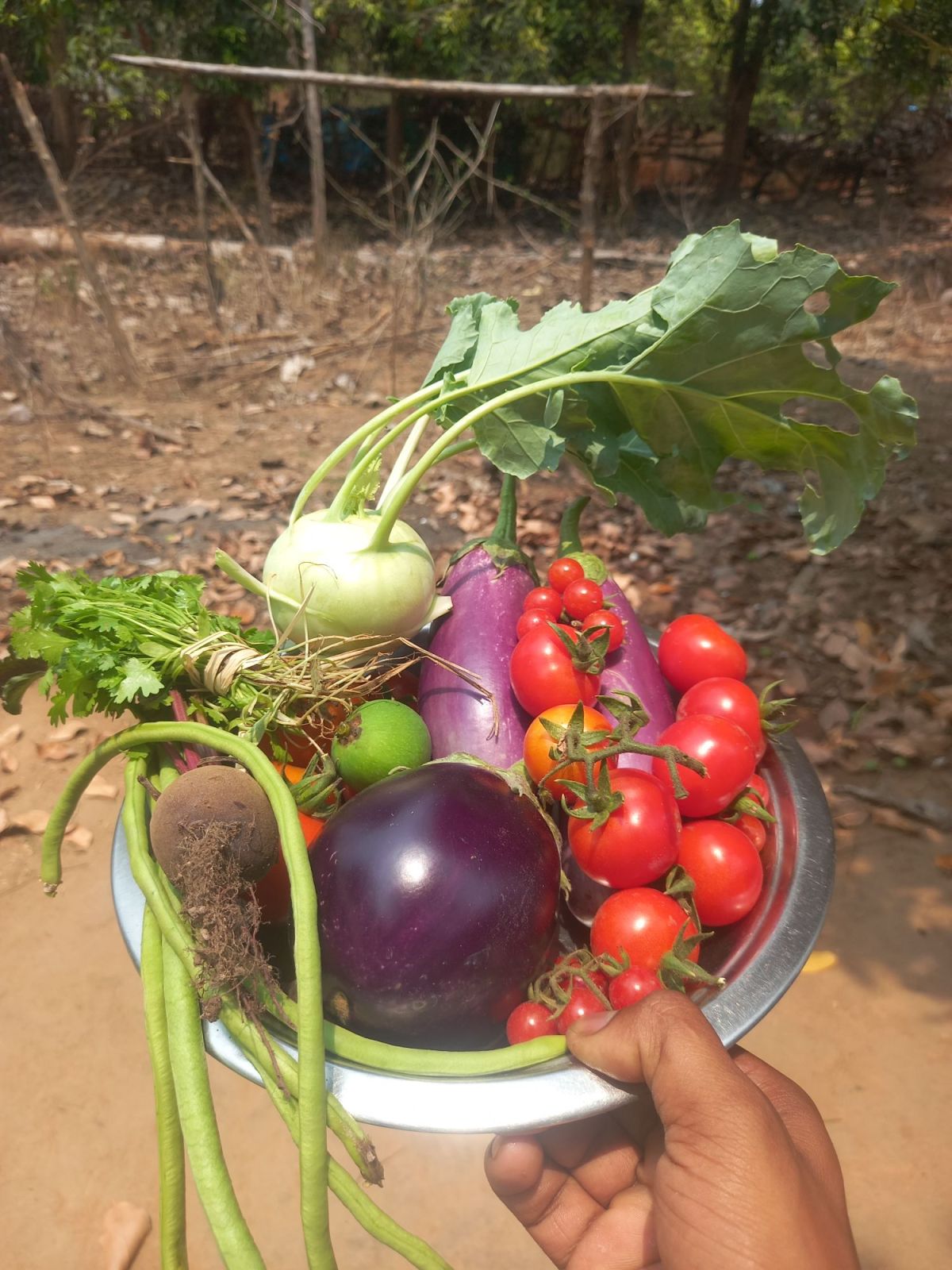
Then start sowing your desired crops. Mainly, you will choose your crops based on climate and season.Crop Selection: In a 10 decimal plot, you can grow okra, bitter gourd, ridge gourd, brinjal, peas, tomato, cauliflower, chilli, knol khol, cabbage, carrot, beetroot and cucumber as main crops. Along with these, you can keep leafy greens, maize, groundnut, moong, sesame, beans, cowpea etc. If you want more production of any specific crop, choose that as your main crop. Along with it, you will have to combine other supporting crops in different layers.
An Example- Planning for Peas: Let’s understand this with an example. Suppose you want to get more peas from your land. Then peas will be your main crop. Along with that, you can grow leafy greens, beans, carrot, brinjal, bitter gourd and maize as supporting crops.
First, sow pea seeds in ten beds one after another. Sow them along both sides of the bed with about 8 inches spacing. Then spread seeds of red amaranthus, spinach, white greens and coriander all over the bed. They will work as friends to each other.
Between every two pea plants, place one seed of carrot, radish or beetroot.In the next two beds, plant bitter gourd on one side and maize on the other. In between, sow quick-growing red greens. It works best if you plant bitter gourd when the maize plants are around 15 days old.
After that, again plant peas on both sides in five more beds. But this time, first plant brinjal saplings. Keep about 1.5 feet distance between two brinjal plants. Then sow four pea seeds between them. Don’t forget to sow greens in the middle space like before.If you want, you can replace peas with beans and brinjal with chilli or tomato. Everything depends on your plan. Rotate crops and try to keep diversity in your land.
Pest Control: This diversity itself becomes a natural way to control pests. Although, within one week of germination, set up a few yellow traps, one or two pheromone traps and one light trap in your plot. If you apply neem-based solutions like Neem Astra, neem oil or handi solution every 20 days, you will not have to worry much about pests. If harmful insects suddenly increase, use 3G solution.
If there is a virus attack, use Trichoderma. You will be able to manage the situation easily.Nutrient Management: The way we are preparing the beds, bio-stimulants will already supply nutrients to the plants. But stopping there will not give strong plants. So every 25-30 days, apply a small amount of cow dung manure or vermicompost in the beds or near the roots. Between two applications of manure, if you apply Jeevamrit once, all your plants will become strong and yield will increase.
Remember, the same plan will not work in every season. In summer, leafy vegetables may not always be profitable. During that time, do mulching in the middle of the beds. You can do live mulching by growing groundnut or moong, or you can use straw mulch. Crops will also change with season.
That’s all for now. If you want to know more details about anything, or want planning for crops like peas, do let me know. If you want to learn how to increase microbial activity in your soil, or how to use good bacteria and fungi- do comment. The next part will come when you ask for it.
 iVolunteer Blog - everything about volunteering