Beed is a drought-prone, migrant-affected area. Rural communities in search of livelihood, migrate for sugarcane cutting in nearby districts of Maharashtra, Karanataka and Tamil Nadu. Due to out migration for nearly 7 months in a row, many government schemes do not get proliferated down to the migrant beneficiaries..
While studying for civil services exams, I had learnt about issues in governance like lukewarm behaviour of authorities, lacks of funds, unskilled functionaries, no clear distinction of functions and one of the great move, 1/3rd reservation of seat for the women in local bodies. But the reality is more disheartening, more different when examined from a closer range.
Some of the enthusiastic changemakers from GramUrja Foundation, took the initiative of exploring the state of governance in rural setups. They began with understanding communities, through general talks, organised camps for Maha DBT, a lucky draw for accessing agriculture support from the government. But this brought relief only for those who were chosen, for the majority, it was still challenging. Quiting this, they began rolling out camps to do registration for Abha Card for accessing health related support from government. But, nothing worked out. One of the major issues that the team came to understand that 90% of the people didn’t knew what Abha Card is, how to take the benefit of this, why it is needed, how to get it, from where to get it.
While one of the change makers began narrating the story of how it all began, I caught notes. One was that to be a village sarpanch, public support is not needed, all he should do is to give money and become sarpanch. Another is the concept of “Sarpanch Pati” where the husband of a women wo has been elected, looks after the governance and political affairs on her behalf. And whenever they asked someone about having pan card, ration card or anything of a kind, people always get suspicious of why the team was asking.
The major issue was lack of awareness in the community. He mentioned one lady from Mangayvadi Village, who was struggling to get her pension card and have given 5000 Rs to the agent twice to get it. Even then, she couldn’t enroll herself in the pension scheme. When this came to the notice of one of the field coordinators, Nathaji Sakhare, he took the initiative to get it done in a week with minimum of Rs 300 to get an affidavit. When her first pension came, the lady filled with gratitude and tears in her eyes, lovingly touched his cheeks and thanked him.
The team began conducting awareness camps for medical and health schemes, insurance, farming support related schemes and dug into the issues deeper. Community engagement increased, more responsibility came to them, the team confidence rose up. This called for the understanding of a full picture closely and charting out a plan and model of intervention that is sustainable, focusing on the core issue. Baselines surveys were rolled out in 5 villages understanding migration its cause and effect, and understanding of penetration of government schemes in the villages. After the findings and survey analysis, the team decided to work majorly on awareness and community engagement, female participation in local samitis and panchayats, and bring an element of sustainability and behavioural change in the community.
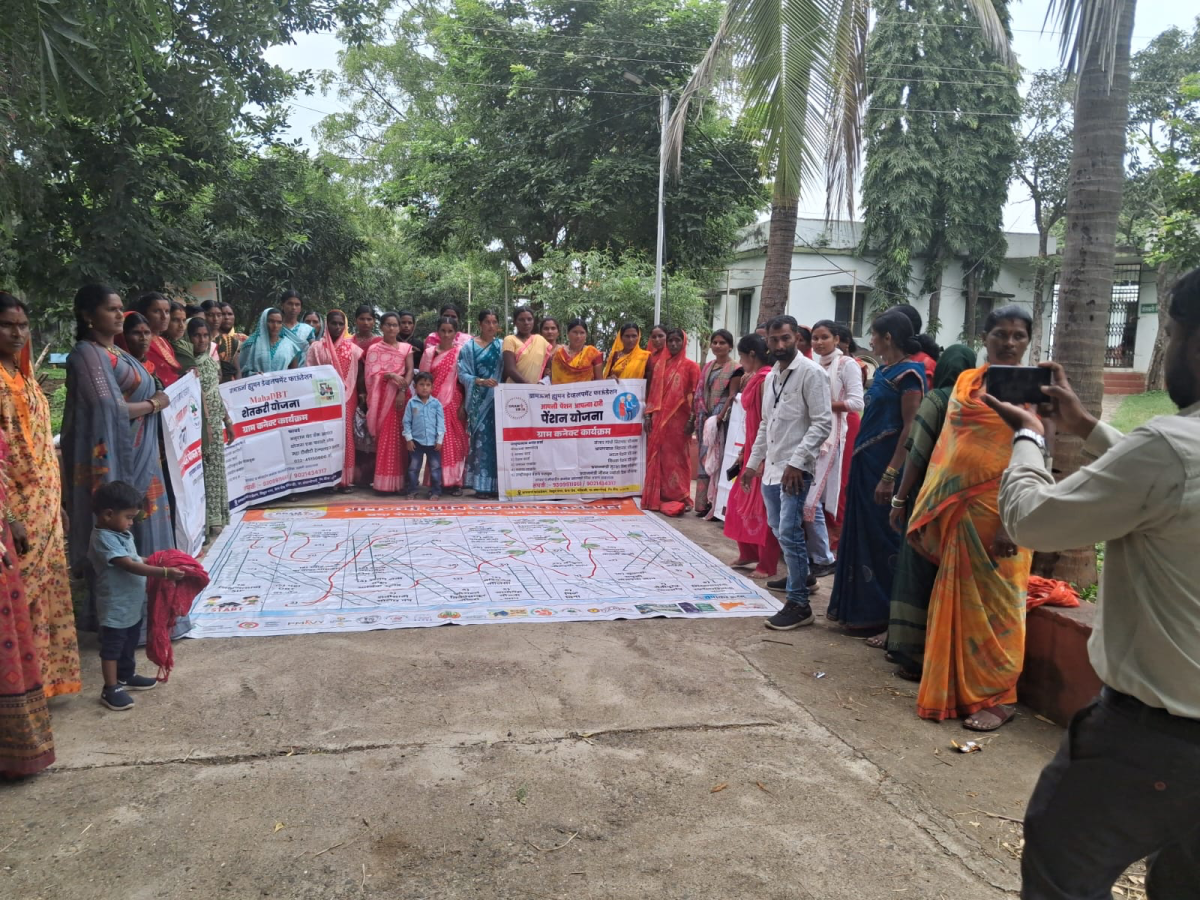
Many activities were rolled out in the communities to make them aware of the government schemes. Team conducted prabhat pheris with the support of children of the school. Some activities like Chalta Bolta, where a box holds many prompts about government schemes and while walking throughout the village, someone from the community picks up and responds to prompt – is a one on one peer learning initiative about government schemes. Others are more engaging like a game of snakes and ladders, where the community understand the significance of enrolling to various government schemes, and issues and challenges of not enrolling in government schemes. You move up the ladder for the former and you came down when a snake bites for the latter. Through this activity, the community also get aware of the benfits of various schemes and how to enroll in them. Many other activities like poster pradarshan, yojana katta are rolled out in various community events like community feasts, Saptah – a 7 day religious event. The team also organises street play to bring entertainment with awareness drives. For those who didnt join any of the community event – door to door visits are conducted. In every engagement process, the community and the youth from the village are guided how to self enroll themselves for the scheme and they are asked to enroll the people of their family and call them if any support needed. They also organised “MAHILA VIKAS BAITHAK” for the women who did not participate in panchayats or I can say were not allowed or required to, MVB creates a safe space for the women, led by the women who openly put forwards their issues. One of the another key activities is leader training camps, like sarpanch capacity building programme, Community Resource person training session aiming to build skills and the motivation to lead community change.
The outcomes of the project was beyond expected. From zero to participation of more than 200 people were seen attending the activity, many women started showing up, putting forward their questions. One of the lady, who was attending Snake and Ladder activity for the first time, asked the question if any support for single women. People began enrolling for the government schemes like insurance and health on their own. Those who still faced difficulties reached to the field coordinators. Around 8 MVBs were organised where women talked about problem of water, lack of employment opportunities or just discussed about their lives, their achievements and have fun. Now people ask about if there any new schemes launched related to farming. Dependency on any agent who promise to bring pension cards or others was reduced. People’s trust in the team and the organisation increased. Now these interventions are rolling out in 10 villages in two years improving beneficiary count day by day.
Nathaji Sakhare, one of the chief leader of the project envision to bring accessibility of various government schemes to almost all the migrant communities in Beed district and provide them a life of dignity and some relief of living. For that he requires support of the readers who bring inputs to this initiative like figuring out new activity for community engagement activities or planning training modules, or just some motivation to lead the initiative and bring better community impact.
 iVolunteer Blog - everything about volunteering