
Nine months in the field changes you. It changes the way you look at a forest, the way you listen to an old woman sorting through dried amla berries, the way you calculate the worth of a single tree. When I first arrived in Chhattisgarh, I came with maps, data sheets, and a vague understanding of what “forest resources” meant on paper. What I didn’t expect was to be genuinely stunned – not by the beauty of the forests, though that’s real too – but by the sheer, staggering economic potential sitting quietly in those trees, unharvested, undervalued, and almost completely ignored by the modern world rushing past outside. Let me take you into that world for a few minutes, because I think once you see what I’ve seen, you won’t be able to unsee it either.
Right now, India’s health and wellness industry is one of the hottest conversations in every startup circle, every investor meeting, every urban café where young entrepreneurs are scribbling ideas on napkins. And the numbers back the excitement. The wellness market is growing faster in India than the global average, driven by rising incomes, a shift toward preventive healthcare, and a generation that’s reading ingredient labels for the first time. Specific segments like fitness and health foods are clocking compound annual growth rates of 15 to 20 percent, and the market is poised to double in value by 2030. Every major city is watching this wave and trying to ride it. Meanwhile, in the forests of Chhattisgarh, the very ingredients that wellness brands are fighting to put on their product labels are literally growing wild on trees – and the communities living among those trees have little idea that what they collect casually every season might be worth more than what most small businesses turn over in a year. That gap, between what exists and what’s recognized, is what brought me here.
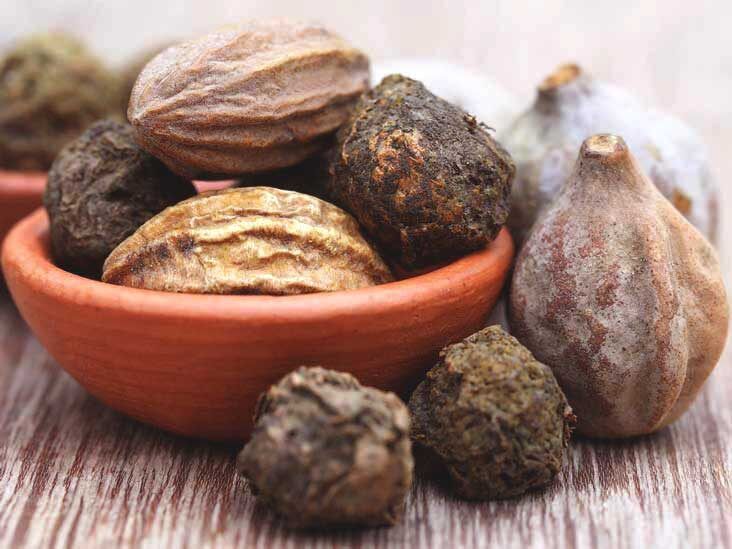
Take Triphala powder. If you’ve spent any time in wellness spaces, you know it. It’s one of Ayurveda’s most celebrated formulations, a blend of three fruits – Harra, Behra, and Amla – each with its own distinct role. Harra is a gentle laxative and a rejuvenator, one of those rare things that cleanses without depleting. Behra supports detoxification and respiratory health. Amla, loaded with Vitamin C, cools the body, balances Pitta, and has earned a permanent place in everything from traditional medicine to premium health supplement shelves in Delhi and Mumbai. These three ingredients together, in the right ratio, form one of the most consumed herbal products in the country. Now here’s the part that stays with me. Kanker district in Chhattisgarh has 7 blocks, around 1,004 villages, and a total forest area of over 3,455 square kilometers. Out of its population of roughly 7.5 lakh people, more than 4.3 lakh are forest produce collectors. If each of those collectors brings in just 12 kilograms of a single produce in a season – and I want to emphasize how conservatively modest that number is – you’re already looking at over 51 lakh kilograms of raw material. De-seed that, account for processing loss, and you’re still sitting on hundreds of tonnes of product that the global wellness market is actively hungry for. Run it against the Minimum Support Price, which for Harra stands at just 25 rupees a kilogram, and a single produce from a single district translates into roughly 77 lakh rupees. Add Behra at a similar rate – another 64 lakhs. Add Amla at 30 rupees a kilogram – another 64 lakhs. And remember, we haven’t touched value addition yet. We haven’t talked about what Triphala powder actually sells for once it’s processed, packaged, and placed on a shelf with a wellness brand behind it.
Now let me paint an even more grounded picture, because sometimes big numbers lose their meaning. Picture a village of 500 households. Half of them collect tamarind – that’s 250 households. Each family collects from just three trees, and each tree, on a very conservative day, gives 25 kilograms. That alone gives you 18,750 kilograms from one village in a single season. Scale that to a block with 50 such villages and you’re at 9.37 lakh kilograms. Scale that across just four blocks of a district and you’re looking at 37.5 lakh kilograms of tamarind. If a portion of that, say 24.5 lakh kilograms, sells directly at 35 rupees a kilogram, that alone crosses 7.9 crores. The remaining volume, processed into pulp, paste, or concentrate, could conservatively return 100 rupees a kilogram, adding another 1.5 crores. One district. One produce. One season. Over 9 crore rupees. I’m not sharing these numbers to impress you with multiplication. I’m sharing them because the people living in those forests do not yet see them – and that invisibility is quietly costing them everything.
Here’s what most well-meaning interventions get wrong. They arrive with processing units, machinery, training modules on sustainable harvesting, and perfectly designed project reports. Some of that infrastructure has its place, eventually. But the first problem is never logistical. The first problem is always about ownership. When a community doesn’t truly believe that a forest resource belongs to them – not legally, but emotionally and economically – they will not fight for it, they will not invest in it, and they will certainly not think twice about selling it for whatever price the first trader on the road offers. The conservation efforts we try to install from the outside cannot outlast the indifference they’re trying to fix. You cannot paste a sense of belonging onto people who have been told, directly or indirectly, that the real decisions happen somewhere else. What I’ve come to believe after nine months of sitting with collectors, walking forests at dawn, and listening to conversations that never make it into official reports, is that the most important work is ignition. It’s helping a community actually see the economic value of what their hands already know how to do. Once that light comes on, they become the best conservationists anyone could ask for – not because we told them to be, but because you simply don’t cut down what you know is feeding your family.
And in all of this, there is one asset that no project budget can purchase and no consultant can replicate – the knowledge held by the old men and women who have spent their entire lives in these forests. They know which tree yields more after a dry summer. They know which amla grove was planted by their grandfather and why. They know what Behra tastes like at peak ripeness and what it tastes like when it’s been harvested two weeks too early. They carry, without even knowing they carry it, a living database of ecological and economic wisdom that the wellness industry would pay handsomely to access. These are the people who need to be at the center of this conversation – not as beneficiaries, not as subjects of a baseline survey, but as the primary experts in the room.
Before I close, I want to be honest with you. Everything I’ve described here involves assumptions. The calculations are illustrative, not audited. The potential is real, but the path from potential to reality is never as clean as a blog post makes it look. There are market linkages to build, quality standards to meet, and middlemen who won’t step aside without resistance. Communities have been promised things before and seen very little follow through, and that history matters. But I’ve also spent enough time in these forests to know that the opportunity is not a myth. The resource is there. The knowledge is there. The market is there and growing fast. What’s missing is the bridge – and more than any structure or scheme, that bridge is built from understanding, from communities seeing themselves not as passive inhabitants of a forest but as its rightful owners and its most capable guardians.
If you’ve read this far and found yourself thinking about your own region, your own village, your own patch of green somewhere – I’d genuinely love to hear from you. Maybe you’re sitting on an untapped resource too and haven’t quite named it yet. Take care of yourself, and take care of what grows around you. See you in the next one.
 iVolunteer Blog - everything about volunteering