

Public health systems are often understood through policies, schemes, and institutional frameworks. However, their functioning becomes most visible at the last mile in rural areas where systems, people, and practices intersect on a daily basis. During my fieldwork in the Pati block of Champawat district in the Kumaon region, I had the opportunity to closely observe how the rural public health system operates, particularly in the context of maternal and child health.
At the core of rural healthcare delivery is a tiered system designed to ensure accessibility, referral, and continuity of care. This system is broadly structured across Sub Health Centres (SHCs), Primary Health Centres (PHCs), and higher-level facilities such as Community Health Centres (CHCs) and District Hospitals.
The Sub Health Centre (SHC) is the most peripheral unit and serves as the first point of contact for rural communities. Typically managed by an Auxiliary Nurse Midwife (ANM), SHCs are responsible for providing basic healthcare services, including antenatal and postnatal care, immunisation, family planning services, and health awareness activities. Regular outreach and home visits form a crucial part of their functioning, particularly for tracking pregnant women and young children.
The Primary Health Centre (PHC) functions as the next level in the system and provides more comprehensive services. PHCs cater to a cluster of villages and are equipped to handle outpatient care, basic diagnostics, and certain emergency services. During field interactions, I learned that PHCs can be broadly categorised into two types based on service capacity.
PHC A generally provides basic outpatient services and routine care. In contrast, PHC B is relatively better equipped, offering expanded services such as 24×7 outpatient/emergency care and, in some cases, additional facilities like dental services. This differentiation reflects variations in infrastructure, staffing, and service availability, which directly influence access to healthcare in rural areas.
Beyond PHCs, Community Health Centres (CHCs) and District Hospitals serve as referral institutions. Cases that cannot be managed at the PHC level particularly complicated deliveries or emergencies are referred upward in the system. District hospitals, in particular, act as the highest level of care within the district, equipped with specialised services, advanced diagnostics and trained medical personnel.
However, what truly enables this system to function at the grassroots level is the AAA framework – ASHA workers, Auxiliary Nurse Midwife (ANM’s), and Anganwadi Workers (AWWs). Together, they form the backbone of rural health service delivery.
- ASHA workers act as community mobilisers and the first point of contact. They identify pregnant women, encourage institutional deliveries, support immunisation drives, and provide basic health information.
- ANMs are responsible for clinical aspects at the village level, including antenatal check-ups, postnatal care, and maintaining health records.
- Anganwadi Workers (AWWs) focus on nutrition, early childhood care, and supplementary feeding under ICDS, while also supporting health-related activities.
This triad works in close coordination to ensure that services reach households, particularly for maternal and child health.
An important component of this system is the Village Health and Nutrition Day (VHND), which is usually conducted on designated days, often Saturdays. During these sessions, the Community Health Officer (CHO) visits the village and conducts awareness sessions on a range of health-related topics. These include maternal health, nutrition, and family planning.

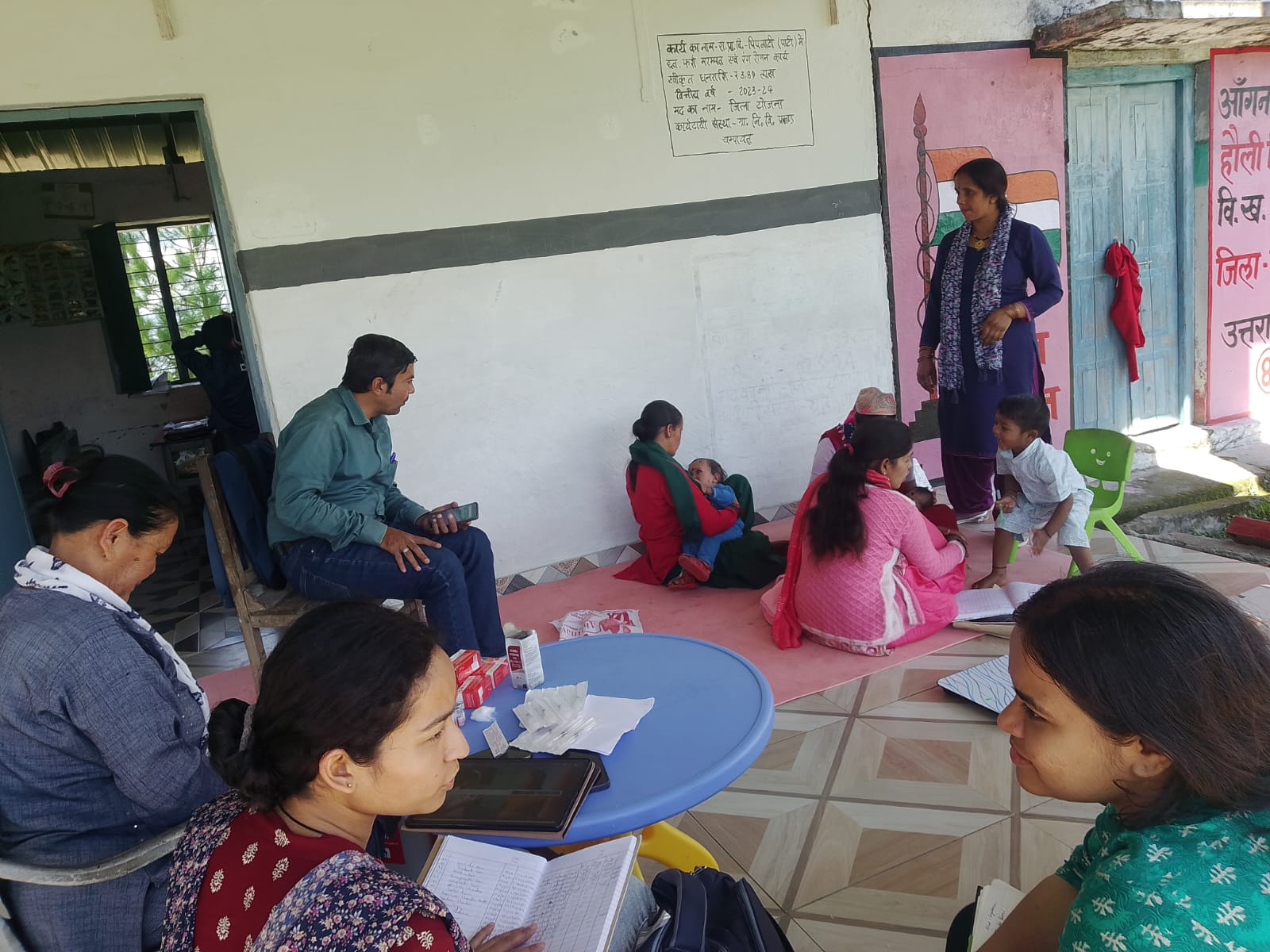
What makes these sessions particularly significant is their inclusive approach. In cases of family planning counselling, not only the couple but also influential family members such as mothers-in-law are often invited. This reflects an understanding that health-related decisions are rarely individual and are shaped by household dynamics.
In addition to VHNDs, clinic days serve as regular touchpoints for service delivery. These days are crucial for ensuring continuity of care. Activities such as immunisation of children, weight monitoring of pregnant women, and antenatal check-ups are conducted. During these sessions, mothers are also given the opportunity to hear the baby’s heartbeat, which often becomes a moment of reassurance and connection, reinforcing their engagement with the health system.
In the context of maternal health, this system operates through a structured continuum of care. Pregnant women are identified early, registered, and monitored through antenatal check-ups conducted at SHCs or during outreach sessions. ASHA workers play a key role in ensuring that women attend these check-ups and are aware of their importance.
As the expected date of delivery approaches, arrangements are made for institutional delivery, usually at PHCs, CHCs, or district hospitals, depending on accessibility and risk factors. In areas like Pati, geographical terrain and transport availability often influence these decisions. ASHAs frequently assist in coordinating transport and accompanying women to health facilities.
Following delivery, postnatal care becomes critical. ANMs and ASHAs conduct home visits to monitor both the mother and the newborn, ensure immunisation schedules are followed, and provide counselling on nutrition, breastfeeding, and supplementation such as iron and calcium intake.
While the structure of the system is well-defined, its functioning in practice depends heavily on coordination, trust, and consistent engagement. Field observations revealed that while services are largely available, utilisation is influenced by awareness, cultural practices, and household dynamics. For instance, despite the availability of supplements, consistent consumption often requires repeated counselling and follow-up.
The rural public health system, therefore, cannot be understood solely through its institutional design. It is a dynamic system shaped by both formal structures and informal relationships. The presence of facilities such as PHCs and SHCs ensures access, but it is the everyday work of frontline workers that sustains the system.
From Pati in Champawat to the wider Kumaon region, the public health system reflects a combination of policy intent and ground realities. It operates through multiple layers – institutional, community-based, and interpersonal each playing a distinct role.
Understanding this system requires looking beyond infrastructure and service delivery to recognise the human effort that connects them. It is within these interactions between workers and communities, between services and beliefs that public health truly comes alive.