As part of my fellowship programme, I undertook a three-day exposure visit to Kutch Mahila Vikas Sangathan (KMVS) in Bhuj, Gujarat. The entire journey right from leaving the NGO and reaching back however took an entire week. The purpose of this visit was to observe how a long-standing grassroots organization designs and sustains community-led interventions in a socially difficult sphere. While my own fellowship work currently focuses on increasing millet productivity, strengthening self-consumption, and establishing processing unit sheds in villages in Uttarakhand, the visit to KMVS offered insights that extended far beyond agricultural pursuits.
The exposure allowed me to observe how community institutions are built, how trust is cultivated over long periods of time, and how programmes are designed based on lived realities rather than assumptions. Through orientations, field visits, and discussions with staff members and community participants, I was able to gain a clearer understanding of how interventions evolve through collective participation and sustained engagement.
The Journey to Bhuj
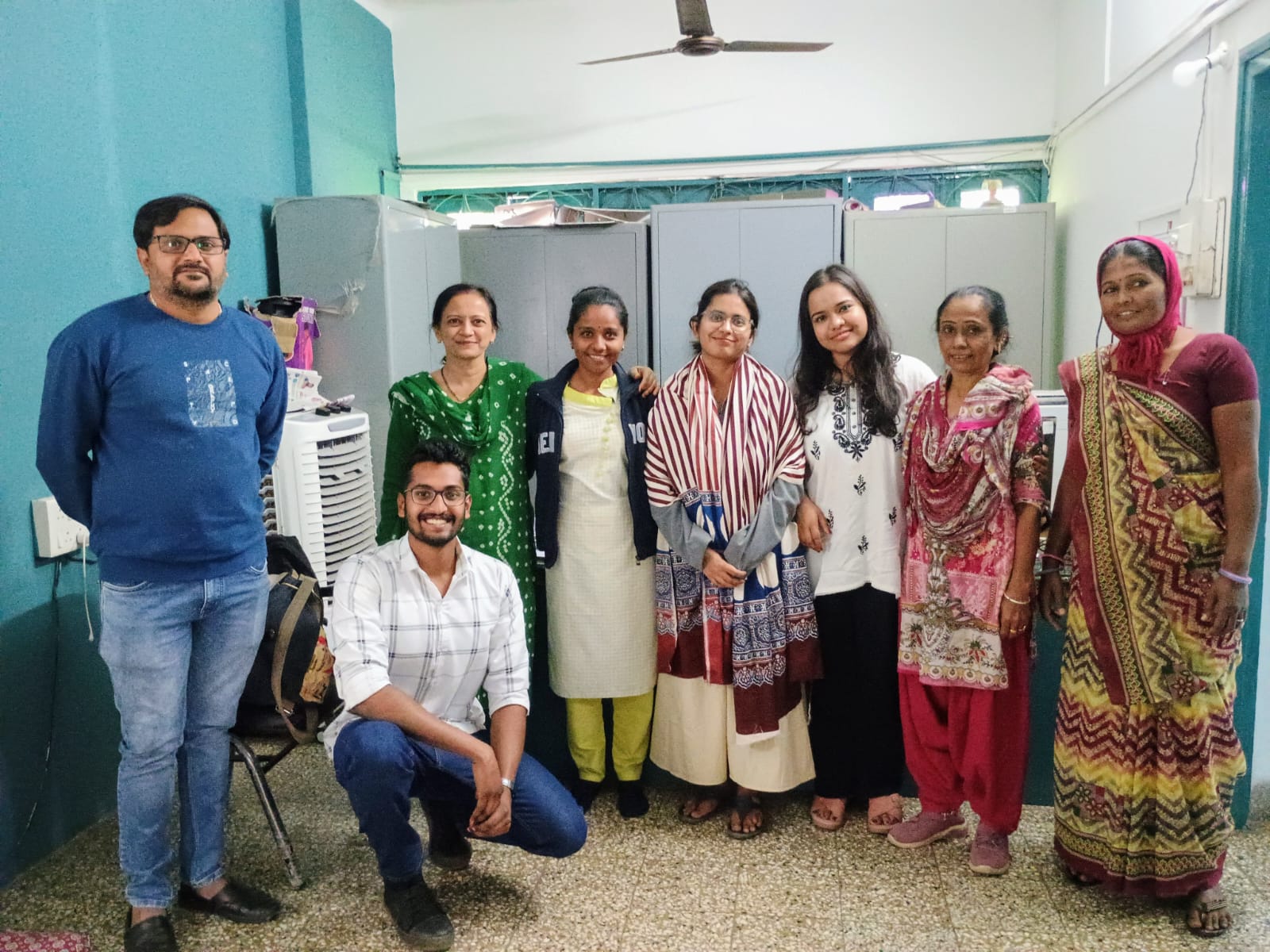
Reaching Bhuj from Uttarakhand felt like a whole journey in itself. It took nearly two days of travel from Uttarakhand because we had to first reach Delhi and then head down further west. I travelled with my co-fellow and friend Sampurna. Being a native of Kerala, my Hindi is quite limited, so having someone more comfortable with the language was really helpful. Although the local language in Bhuj is Gujarati, most people within the organization were able to communicate in Hindi, which made the interactions easier, at least for Sampurna.
The train journey eventually ended at Gandhidham – the closest major station before Bhuj – because there was some track work occurring and hence IRCTC cut short the journey. Hence from Gandhidham we had to take a bus to Bhuj. The problem was everybody else within the train also had to do the same. What followed was a small but memorable experience. Almost all the remaining passengers from our train spilled out into the bus stand, and everyone appeared to be eagerly waiting for that first bus to Bhuj. Naturally, as soon as that bus arrived, it was completely overwhelmed within seconds. We stood there watching people squeeze themselves into every possible inch of space, even clutching the door frames and miraculously hanging on. It felt like watching those ‘Mumbai trains during rush hour’ videos.
Sampurna and I decided not to fight that battle. Instead we waited and thought we’ll go for the second bus. The next bus arrived and it too suffered the exact same response from the crowd. Then came the third one and there was still no difference in the outcome. It felt like we were stuck in a time loop. Yet nothing to do but wait because we definitely can’t squeeze into an over-crowded bus with all our luggage. Nearly two hours later, a Volvo bus arrived. It was slightly more expensive, which probably explains why the crowd did not rush toward it with the same enthusiasm. For us, that turned out to be the better and, quite possibly, the only available choice. We finally reached Bhuj in a fairly comfortable and checked in to our respective rooms.
About KMVS
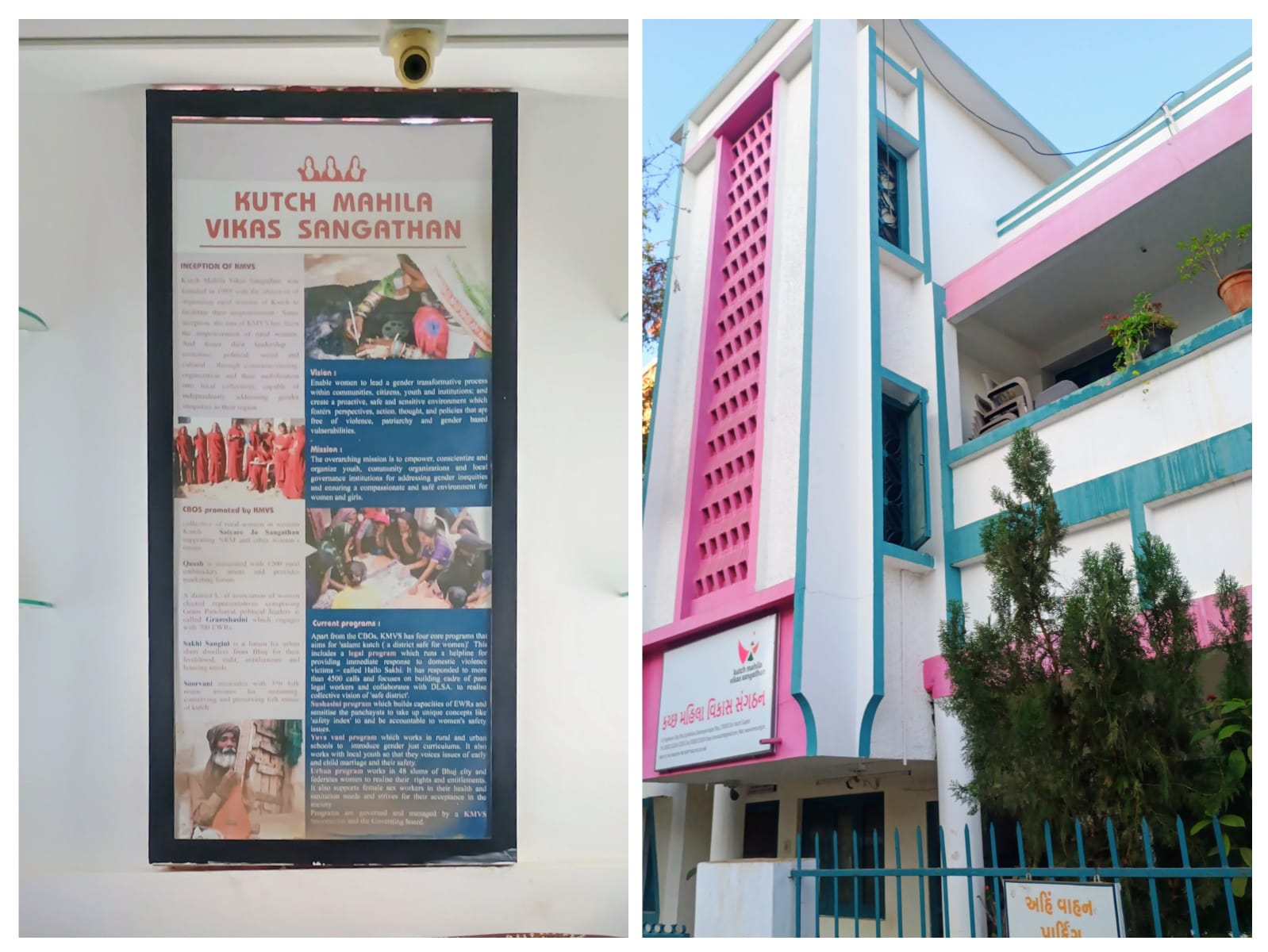
Kutch Mahila Vikas Sangathan (KMVS) was established in 1989 and has been working across the Kutch district of Gujarat for more than three decades. It is a women-led grassroots organization that works with women, youth, and marginalized communities through a rights-based and collectivization approach.
Over the years, KMVS has built strong village-level institutions that enable communities to articulate their concerns, negotiate with governance systems, and access their rights. Their programmes span across several thematic areas including gender justice, youth leadership, governance strengthening, violence response mechanisms, and mobilization in urban informal settlements.
One of the most notable aspects of KMVS is its emphasis on community leadership from within. Many staff members and leaders are themselves from the communities they work with, which strengthens both trust and accountability. A style of functioning I adore about KMVS is that it focuses on building community collectives that allow people to discuss problems, negotiate with institutions, and take collective action. Collectivisation is their key strategy.
Day 1: Samvedna Programme and Susasini Orientation
The first day began with a field visit under the Samvedna programme, which works with women engaged in sex work. The programme focuses on collectivisation, crisis response, and improving access to health and legal systems. What stood out during the meeting was the emphasis on agency rather than rescue.
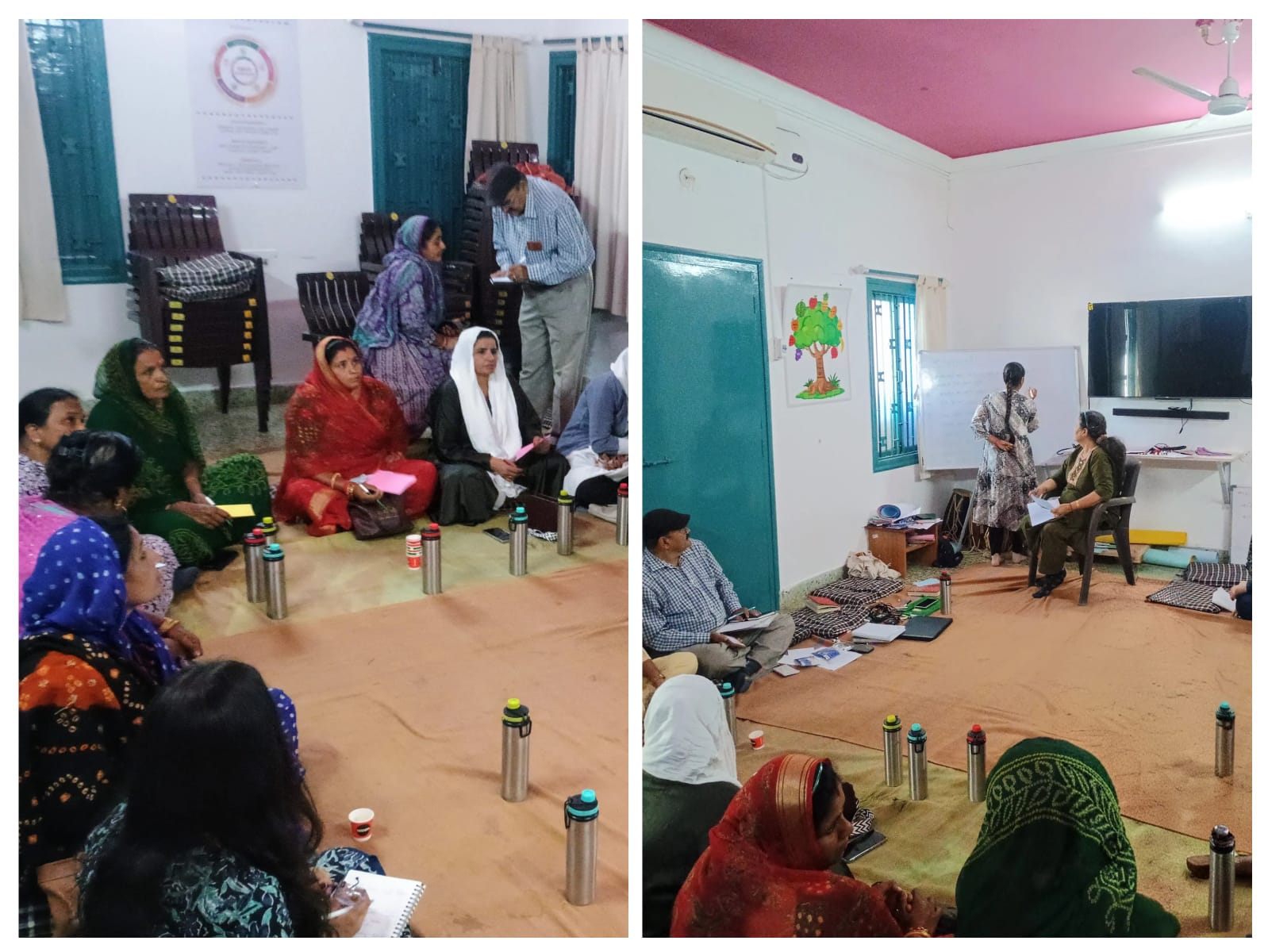
The meeting we attended happened to be an annual reflection session for the collective. At the beginning, the facilitator distributed sheets of paper and asked the participants to write down two things: what they hoped to learn from the meeting and how they would define the term “sex worker.” The responses were then collected and written on a board, which became the starting point for discussion. Many of the women spoke openly about their lives, financial challenges, violence, family responsibilities, and hopes for their children. One point that came up repeatedly was how the interventions by KMVS had helped them feel recognized as individuals rather than being reduced solely to their profession. The collective had given them a sense of identity beyond their profession and fostered mutual support.
The programme currently has around 500 members with about 20 community leaders working across six blocks of Kutch. Though the participants are rather spread out, through the collective, the women are able to discuss problems, share strategies, and negotiate with institutions.
An important discussion during the meeting revolved around the difficulty of exiting the profession. Many women earn around ₹30,000 per month, which makes it difficult to transition into other forms of employment without alternative skills or opportunities. Some women who age within the profession eventually become brothel owners — a practice that is technically illegal but often emerges as the only available livelihood option. Typically, they take loans to purchase buildings and then operate brothels, taking around 50% commission from the earnings of the sex workers operating under them in order to repay their loans.
Despite these circumstances, the women expressed a strong determination to ensure that their children do not enter the same cycle. Education of their children is one of the primary priorities within the collective, and KMVS actively supports this effort – in fact, it is one of their prime objectives under the program.
Later that afternoon we attended an orientation session for the Susasini programme, which focuses on strengthening the participation of elected women representatives in Panchayati Raj Institutions. India already has 50% reservation for women in panchayat governance, but numerical representation does not always translate into meaningful participation. Many women leaders lack exposure to administrative procedures, government schemes, and budgeting processes. Also the male counterparts of these women sarpanches tend to dominate and overtake administration by using the authority resting with their spouses – the concept of sarpanch pati. The Susasini programme attempts to bridge that gap through structured training sessions, peer support forums, exposure visits, workshops, etc. KMVS reported that there are approximately 400 women Sarpanch across 1,932 villages, and this year they conducted three training sessions covering about 30–40 women Sarpanch. That is a good number considering we visited in the second month of the year.
Day 2: Yuvavani Programme and Maro Awaaj
On the second day, we visited an Akhar centre in Ratiya village under the Yuvavani programme, which started in 2017. An Akhar centre is essentially a centre that serves as a learning space for girls who have dropped out of school. However, the centre goes beyond vocational training. It is designed as a space where girls can rebuild confidence, learn technical or practical skills, and develop leadership abilities. The atmosphere inside the centre felt relaxed and encouraging. It was clear that the space served as more than just a classroom – rather it functioned as a supportive environment where they can express themselves and regain a sense of direction.
Later in the day, we attended an orientation for the Maro Awaaj programme, led by the programme head ‘Argo’. This programme focuses on addressing caste hierarchies and transforming caste-based panchayats. One particularly interesting strategy discussed during the orientation was how social change in villages is rarely straightforward and thus instead of confronting generations of entrenched hierarchies directly, the programme initiates entry to a certain community by engaging with the elderly women within that community. Elder women often hold significant respect and influence within the community. By engaging them first, the programme gains legitimacy and access to the broader village network.
Another interesting strategy involved encouraging newly married couples who are relatively progressive, to sit together during meetings as in many villages, men and women traditionally sit separately during gatherings. Thus small behavioural changes are capable enough to challenge existing social norms and shift perceptions. As Argo explained, gaining trust within a village and implementing social change is far more complex than it appears on paper.
Day 3: Hello Sakhi Helpline and Maru Sheher Programme
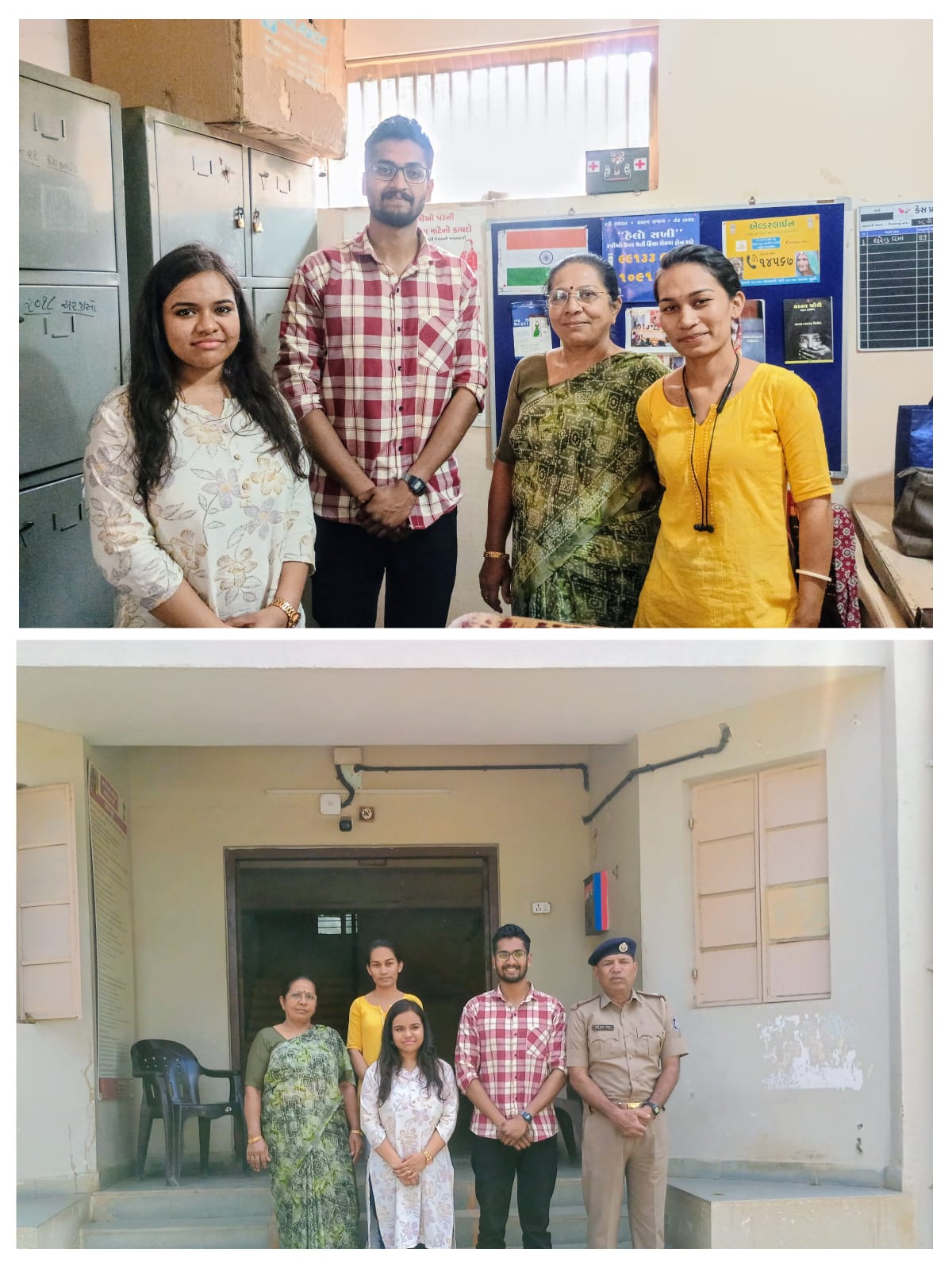
The third day included a visit to the Hello Sakhi helpline centre, which operates as a collaborative initiative with the Kutch Police to respond to cases of domestic violence and related issues. Most of the calls – almost 90% – received by the helpline involve domestic violence cases, often linked to alcohol abuse by husbands. However, the helpline also handles cases related to rape, molestation, and offences under the POCSO Act.
The system is well structured. When a call is received, key details are recorded in a large register — including location, nature of the complaint, major details of abuse, and other relevant information. Counsellors are then sent to the location to assess the situation. In many cases, efforts are made to resolve the issue through counselling and mediation before proceeding with formal legal registration, as many families are hesitant to pursue formal cases due to the time and effort involved in repeatedly visiting police stations and attending court hearings. Trust me, I’m a lawyer – there is no such thing as ‘prompt delivery of justice’ within India; at least not via court proceedings.
An interesting aspect was the follow-up system of the case. Even after a case is resolved, follow-ups continue at regular intervals — typically two weeks after resolution, then after one month, three months, and finally after six months. This consistent monitoring helps ensure that the situation does not relapse. The helpline is supported by a large network of 500 paralegals and 50 core paralegals connected to the District Legal Services Authority (DLSA). These paralegals also conduct door-to-door awareness campaigns to inform communities about legal rights and available support systems.
Later that day we attended an orientation for the Maru Sheher programme, which focuses on organising women in urban informal settlements to access government schemes and services. One major area of work involves helping families secure housing through schemes such as Pradhan Mantri Awas Yojana (PMAY). While such schemes appear straightforward on paper, accessing them often requires resolving several bureaucratic hurdles, starting with obtaining basic identity documents.
Key Learnings
The three day exposure visit provided several insights, some of which are directly relevant to my fellowship project. A few key learnings are:
1. The Power of the Collective
Individuals often remain vulnerable when acting alone. However, when organised into collectives, they gain identity, power and confidence. For my work with women farmers, strengthening their functioning as SHGs can improve their ability to access benefits and advocate for their needs independently.
2. Dialogue Over Information
KMVS does not simply disseminate information. Instead, they facilitate discussions that encourage communities to analyse their own problems and develop solutions. This participatory approach ensures that interventions remain sustainable even after the organisation leaves the picture.
3. Understanding Structural Causes
Many social problems have deeper structural roots. Addressing only surface symptoms produces temporary solutions. In my own project, the issue of low millet consumption must be understood through its direct factors such as labour-intensive processing, economic incentives, and social perceptions.
4. Institutional Linkages
Community assets survive only when connected to larger systems — government departments, markets, or local governance structures. They do hold greater strength and sooner or later, that would be needed for long term excellence and growth of a community.
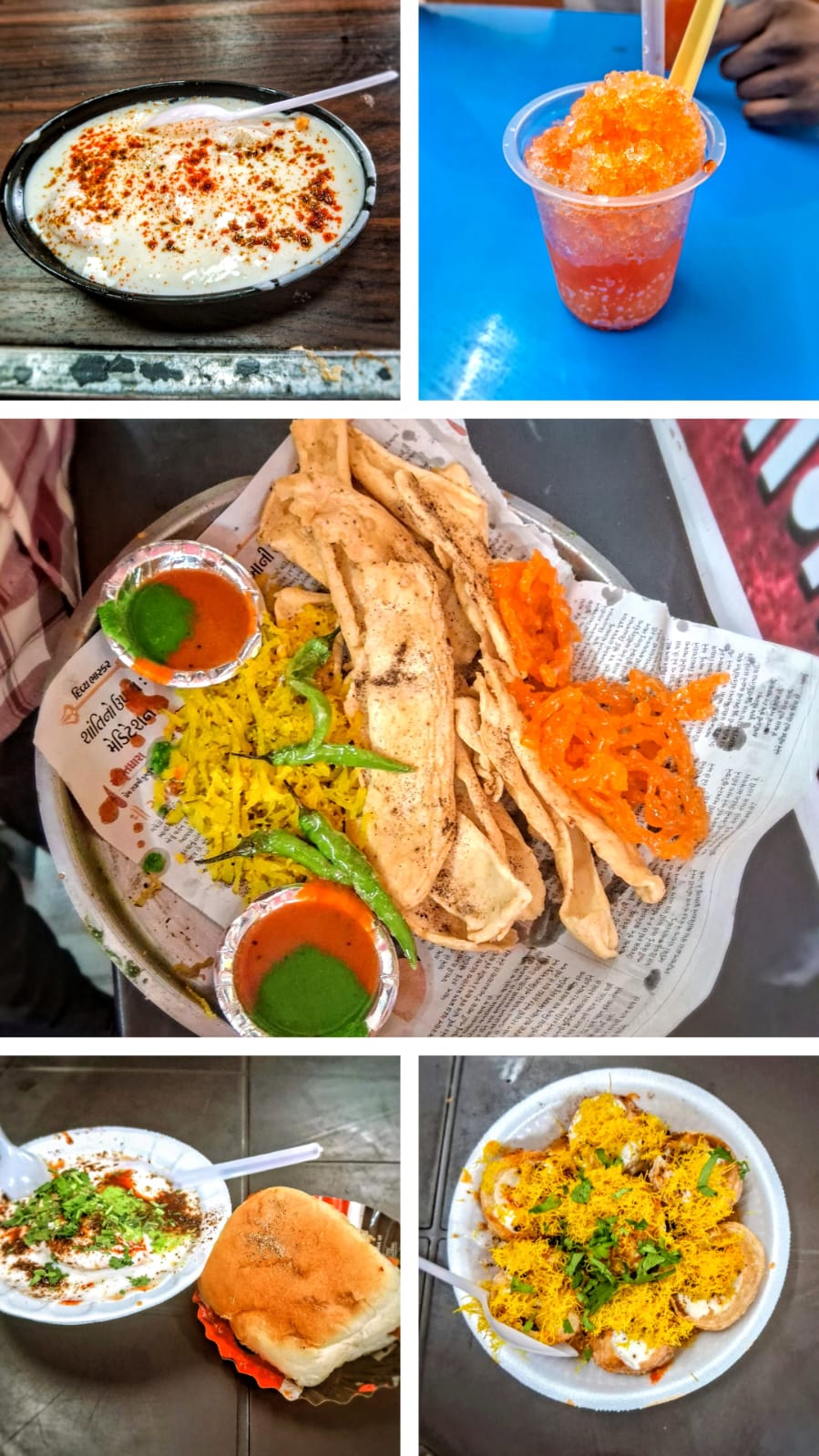
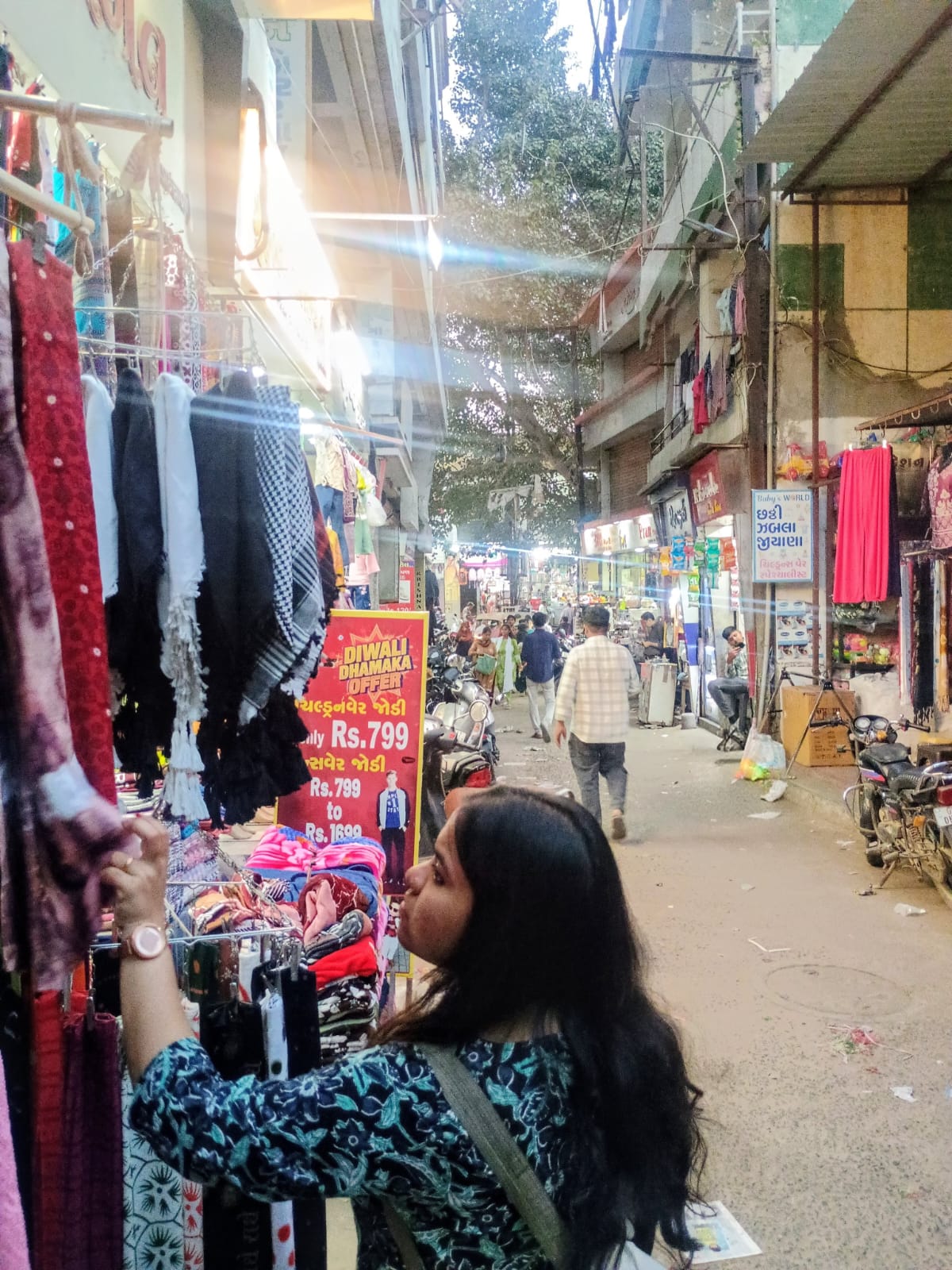
On the fun side of things, I tried Jaleebi fafda, gola, dhokla and dabeli for the first time. Loved them all. I think I had at least 10 dabelis in those three days. We also managed to get some time to glide through markets in Bhuj and visit the Shree Swaminarayan Temple. Sampurna bought lot of traditional kurtas and tops, mainly for her family, and I purchased a handkerchief for myself. The Bhuj markets were buzzling with life and the architecture along with the stone works within Shree Swaminarayan temple were truly marvelous to witness.

Conclusion
The exposure visit to KMVS was an important learning experience. It reinforced the idea that development work is not simply about implementing technical solutions. It is about building relationships, facilitating dialogue, and enabling communities to organize themselves. For my own project, this was a useful reminder that installing a millet processing shed is only one part of the work. It is equally important to strengthen trust among farmers, encourage collective participation, and ensure that the community feels ownership over the intervention.
Thus I left Bhuj with a dabeli filled tummy and the realization that sustainable development happens when communities see themselves not as beneficiaries of a project, but as its primary stakeholders and decision-makers.
 iVolunteer Blog - everything about volunteering