
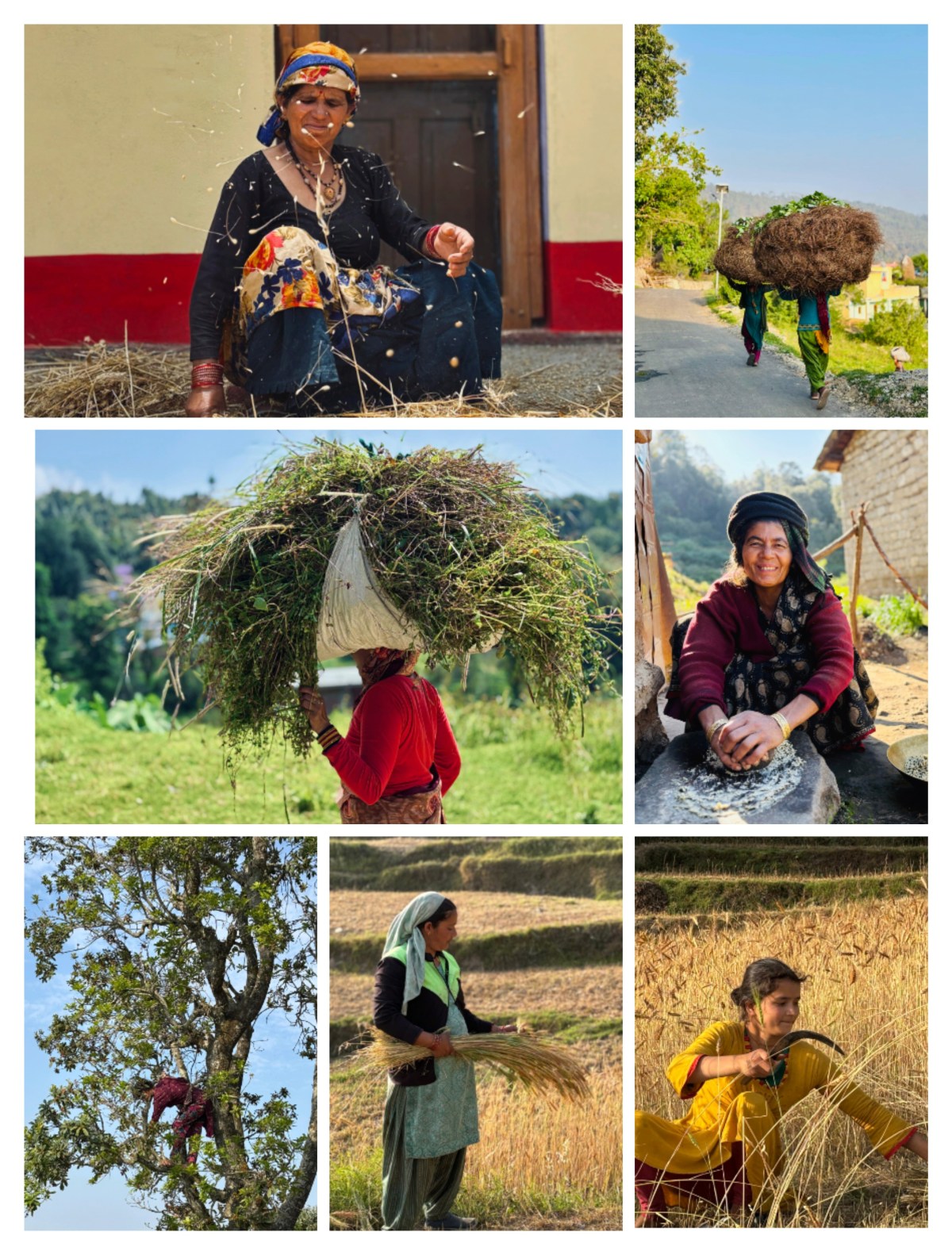
There is a word in Bangla “স্থিতপ্রজ্ঞা” which means a person who stays calm, balanced or steady no matter what the situation is – good or bad. If I had to describe the woman of the mountains in one word, then it would essentially be this word.
Living in the Kumaon region of Uttarakhand has changed the way I look at strength. Here I see women whose lives are so interwoven with the mountains that you cannot separate one from the other. Their days begin before sunrise and stretch long past sunset, filled with endless tasks that often go unnoticed, unspoken, and unappreciated.
A regular day here doesn’t begin with the sun rising over the hills rather it begins when the women wake up. Long before the sky even begins to lighten, they have already stepped into their first responsibilities of the day. The quietness of the early morning is broken not by birds, but by the clang of vessels, the sound of brooms sweeping mud floors, the sizzle of the chulha, and the soft voices of women preparing their homes for another long day. Their labour begins at home—cleaning, cooking, fetching water, feeding children, preparing fodder, and getting the household going.
In the fields, they bend for hours, planting seeds, removing weeds, harvesting crops. The forest is another home for these women: climbing uphill to cut grass, gathering firewood, collecting leaves, carrying back those massive bundles balanced on their backs with the support of a ring on their heads. Their bodies move with a rhythm that has come from generations of learning. They know exactly how much weight they can carry, which path is the safest, which slope is slippery, how they can balance the weight.
What amazes me every day is how naturally they move across the uneven slopes with loads of grass or firewood that would exhaust anyone else. It is as if the mountains have shaped their bodies and the forests have shaped their instincts and resilience. Their connection with the land is intimate—they know every steep turn, every patch of soil, every tree that gives shade at the right moment. It seems like they know the land so well almost like an extension of themselves.
Yet most of their labour remains unseen. Not because it is invisible, but simply because it is something expected out of them and rarely acknowledged. A pregnant woman walking up a steep slope with loads of grass is normal or a woman who delivered a baby last week sweeping the courtyard or washing heavy blankets is normal.
This normalcy is what hurts.
There are days when I walk through the villages for field visits and feel this rising frustration inside me—an anger that is quiet but sharp. I see men sitting together smoking, talking, or simply watching life passing by. And also at the same time women working in the background like shadows, their labour so constant that people have stopped noticing it. It’s not that men here never work; many do. But the imbalance is undeniable. And worse, it is accepted as the natural order of things.
What makes it even more worse is that these women never complain. They don’t speak of their exhaustion, their body aches, their desires, or even of their dreams. Most of them haven’t been asked about their dreams and desires in the first place. They simply do what needs to be done. Day after day. Year after year. And to see that unfolding is sometimes painful and frustrating.
Their only rest—if we can even call it that—are the five days during menstruation, when they step back from some tasks because of cultural beliefs. And yet, through all of this relentless labour, they carry a certain grace and softness that is almost unbelievable. They will smile and greet the guests warmly, offer them tea, ask them about their day, and speak gently while their own days are full of hardship. Their laughter echoes through the hills in a way that makes you forget, even for a moment, how much weight they carry.
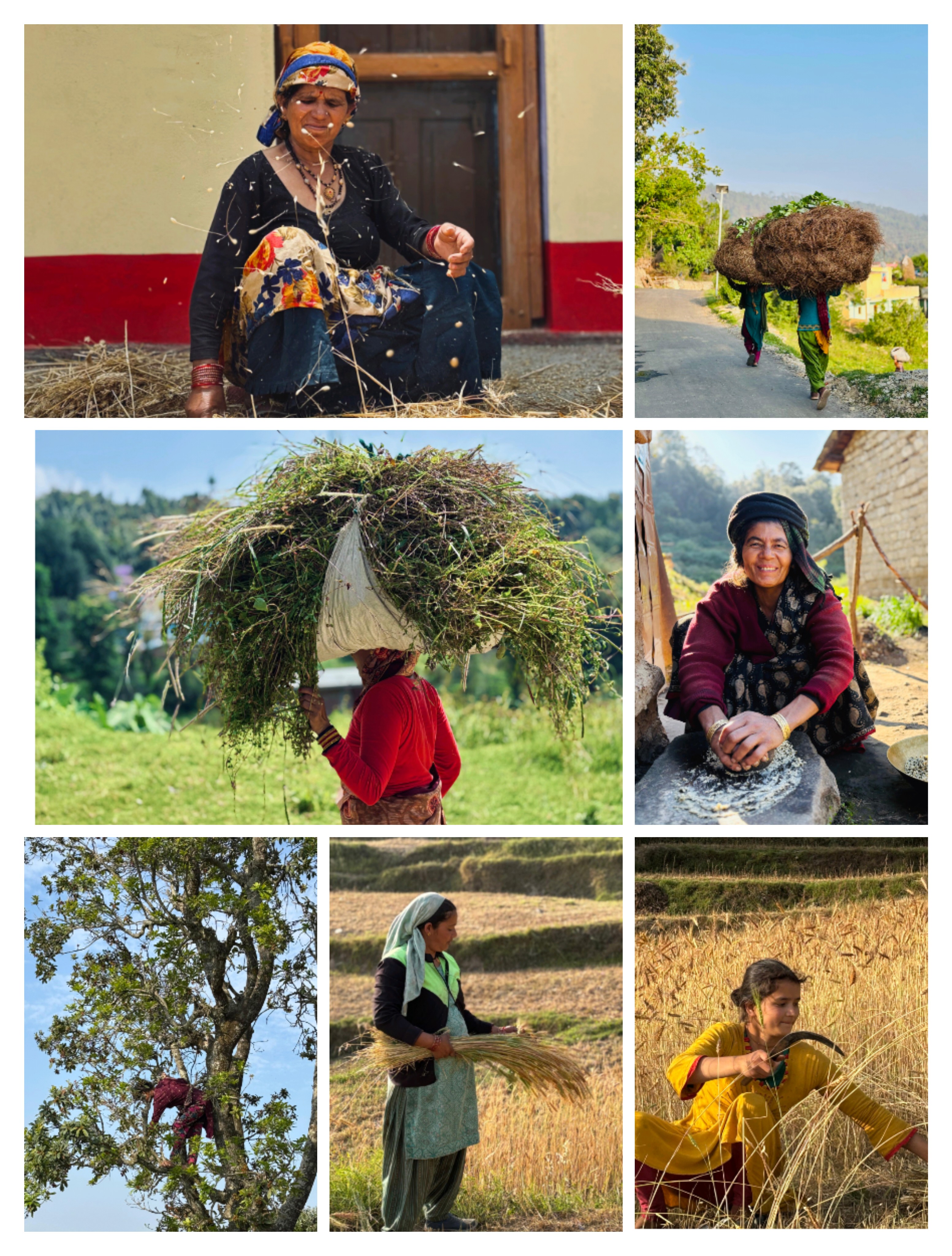
The more time I spend here, the more I realise that the women of Kumaon are the real heroes of this region. It is because of their sacrifices that life goes on so smoothly here and the families thrive. And still sometimes it feels like that their effort is not enough, as if they are secondary contributors to their own households.
The way their hands move without pause, their bodies push through exhaustion, their minds hold together a thousand small responsibilities all at once. Their lies a quiet strength—one that doesn’t demand to be admired, yet deserves admiration more than anything else. I see resilience that is not loud or dramatic, but steady like the mountains themselves. They endure, adapt, survive, and keep going.
The women of Kumaon remind me that strength isn’t always loud and resilience isn’t always visible. Sometimes, it is the quietest people who carry the heaviest loads and it is the unnoticed labour that holds up entire communities. And sometimes, the greatest courage lies in simply waking up every day and doing it all over again.
Their stories deserve to be told,not just once but again and again—until the world finally begins to notice the mountains these women carry within themselves.
 iVolunteer Blog - everything about volunteering