
Menstrual Health and Hygiene—a topic that still remains a taboo, a phrase that makes many of us feel awkward to even say out loud, let alone discuss in a normal conversation with friends or family. And yet, this very topic became the core of my fellowship journey—a mission to create a sustainable change that the community could carry forward even after my departure.
At the start of this journey, I was filled with uncertainty:
- Will I be able to do it?
- Can I design and implement a project that leaves a lasting impact?
- Will I get lost in the process, overwhelmed by the barriers and resistance?
- How far can I truly reach this goal?
And now, after a year and a half, I can finally answer—this far.
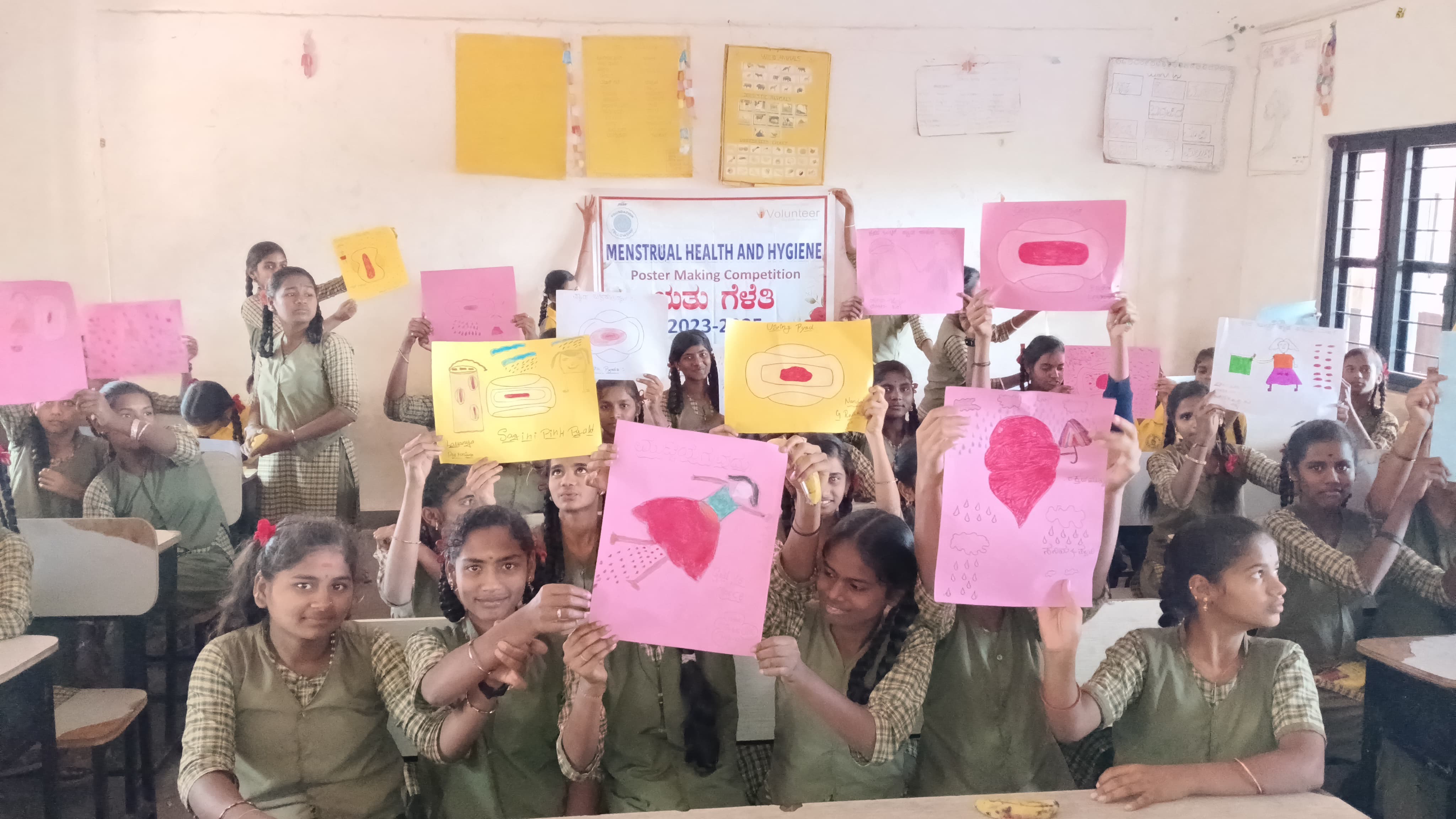
Through persistent efforts, conversations, and creative interventions, I have witnessed a shift, however small, among adolescent girls in the community. One of the milestones of this journey has been the Poster-Making Competition—a platform that encouraged students to express their thoughts on menstruation, challenge societal taboos, and embrace menstrual health with confidence.
This accomplishment is a testament to change, proving that even the smallest initiatives can create ripples. It reaffirms my belief that with sustained efforts, open conversations, and community involvement, the stigma around menstruation can be dismantled, one step at a time.
Let me introduce myself. I am Valli Padma, a JSW Foundation Fellow, who has organised poster-making competitions for 8th and 9th grade students across 10 schools, with approximately 500 participants. Over the past 6 months, these students have been attending training sessions on menstrual health and hygiene. The goal of the competition is to gauge the students’ understanding of menstruation and evaluate how openly they are able to express what they’ve learned during the sessions.
This activity helps in several ways:
- Knowledge: Shows how much the students remember from their lessons.
- Comfort: Reveals how open they are about discussing menstruation.
- Cultural Influence: Reflects how cultural norms may affect their views on menstruation.
- Emotional Impact: Shows how students feel about the topic—whether it’s something they are embarrassed by, empowered by, or confused about.
- Creativity: Highlights how students think and feel about menstruation, through their artwork.

The competition also helps raise awareness about menstrual health among the community, as the posters may be displayed to educate others in the villages.
When I first began my project and visited villages and schools, I encountered students who were extremely nervous about the idea of learning about menstruation. Many were reluctant to attend sessions, as the topic resurfaced traumatic experiences they faced every month. Addressing such a sensitive issue required patience and understanding.
I started by comforting the girls, engaging in friendly, one-on-one conversations to build trust and ease their apprehension. For the first two to three months, sessions were conducted behind closed doors, as the girls considered menstruation a taboo subject. They were strongly opposed to having boys or male staff present during these discussions.

Over time, with consistent encouragement and a safe space to share, the girls began to embrace the subject. They expressed a desire to hold sessions in open verandas and balconies, reflecting a significant shift in their mindset. They even started creating posters and displaying them on their school notice boards, showcasing their learning and creativity.
What was once a topic shrouded in shame and silence has now become normalized. The fact that the students are confidently illustrating their understanding and sharing it openly highlights the transformative impact of this project. It is incredibly rewarding to witness this change and the empowerment of these young girls.
 iVolunteer Blog - everything about volunteering
2 replies on ““Whispers of Change: A Journey from Silence to Strength””
Great effort !!
LikeLike
Great job for raising awareness about the menstrual cycle.
LikeLike