ON MEHANDI, CHART PAPER, AND A MOMENT THAT STAYED WITH US
We go to the villages every week for MHM sessions — talking about menstrual health, hygiene, bodies, care. It is quiet, important work. And at the end of one such session, before we left, we asked the women something simple:
“Next week, what would you like to do? Something fun, something just for you?”
They looked at each other and smiled. Then they said — “Whatever you are planning, we will do.”
So we planned something small. Something that would belong entirely to them.
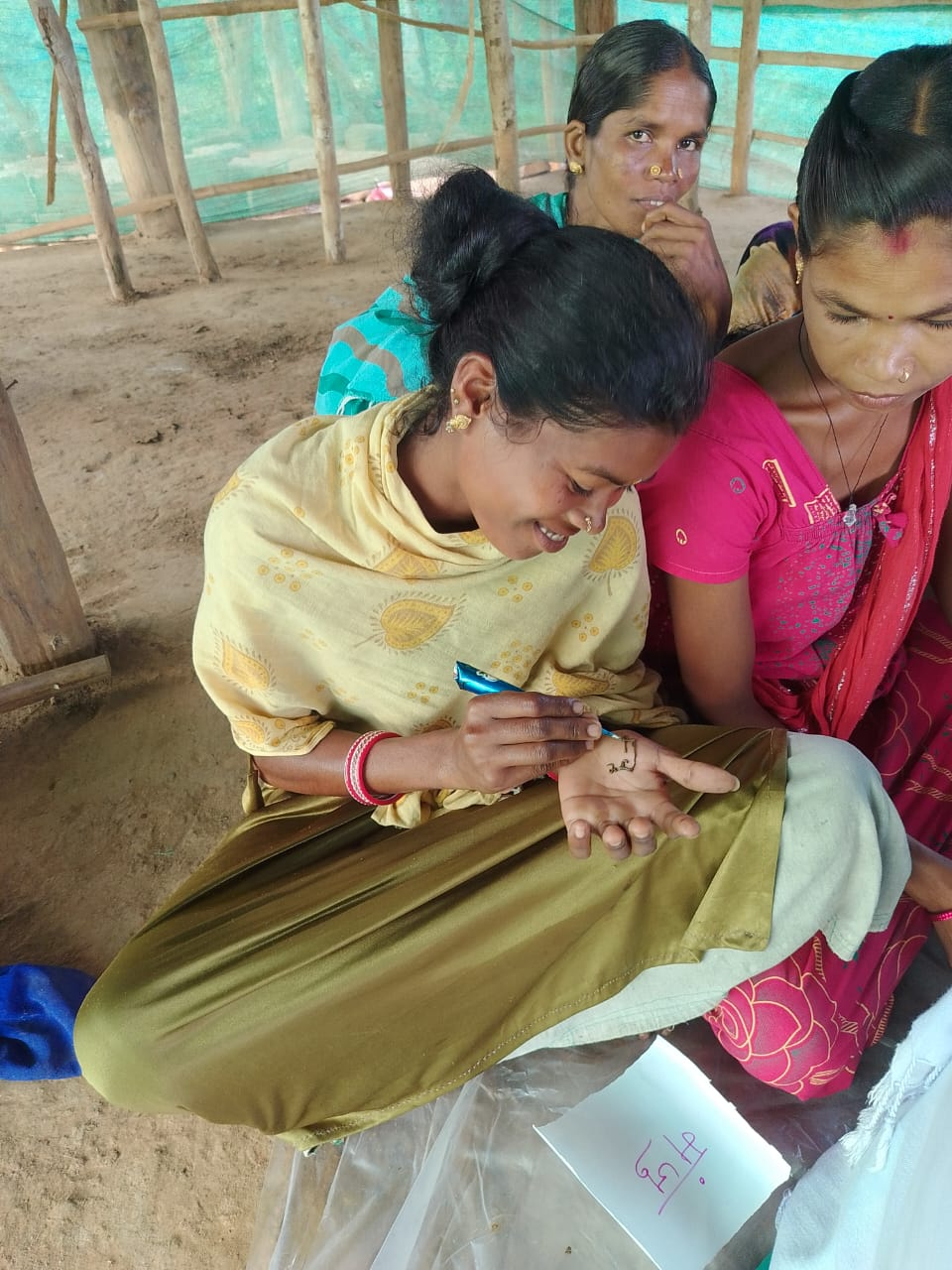
We bought chart papers, colours, and mehandi. We decided to help each woman write her own name. And then — we would paint that name on her palm in mehandi. For five days, every time she looked at her hand, she would see it. She could trace it at home. Practice it quietly. Make it hers..
The day we arrived
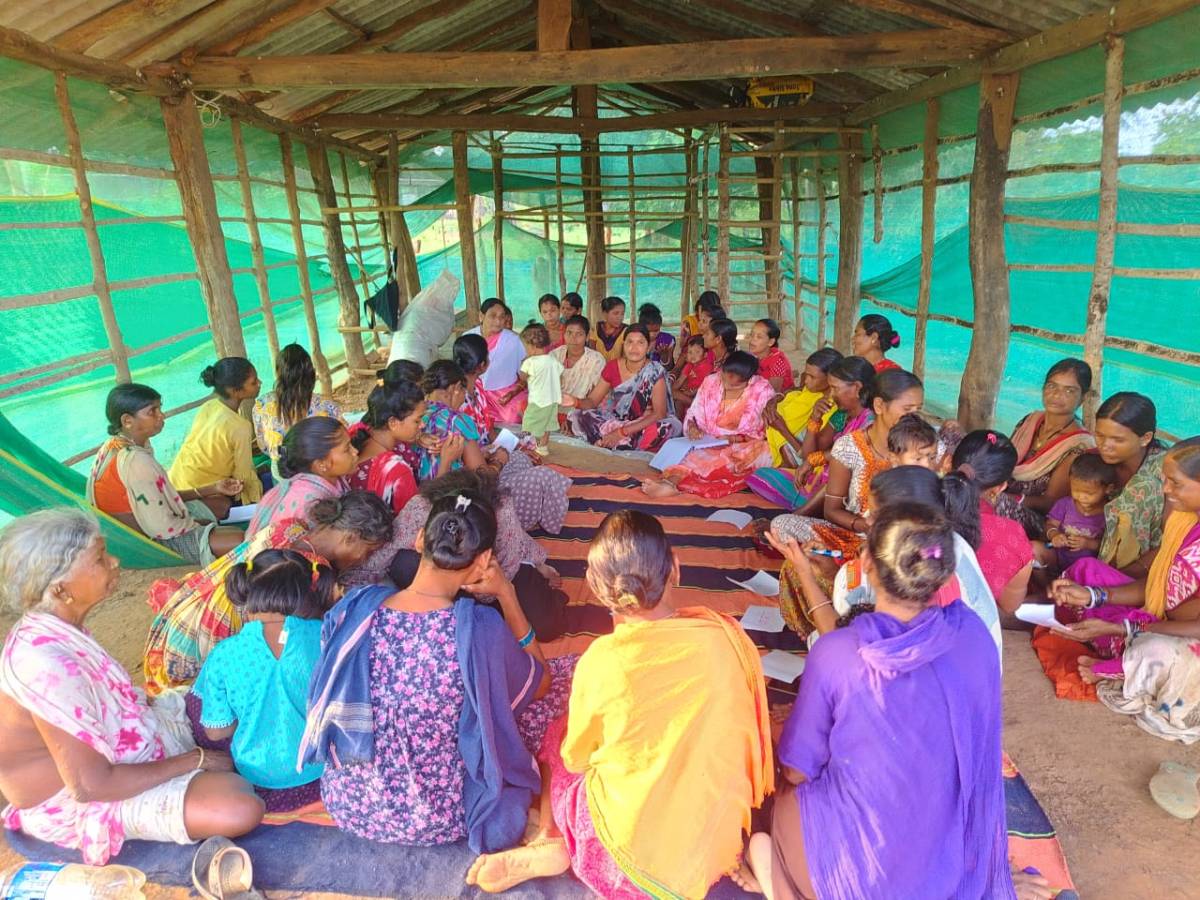
The women gathered. We sat beside them — not in front, not above. Chart papers spread open. Colour caps came off. And some of the women — grown women with strong, capable, extraordinary hands — held a pen for the very first time in their lives.
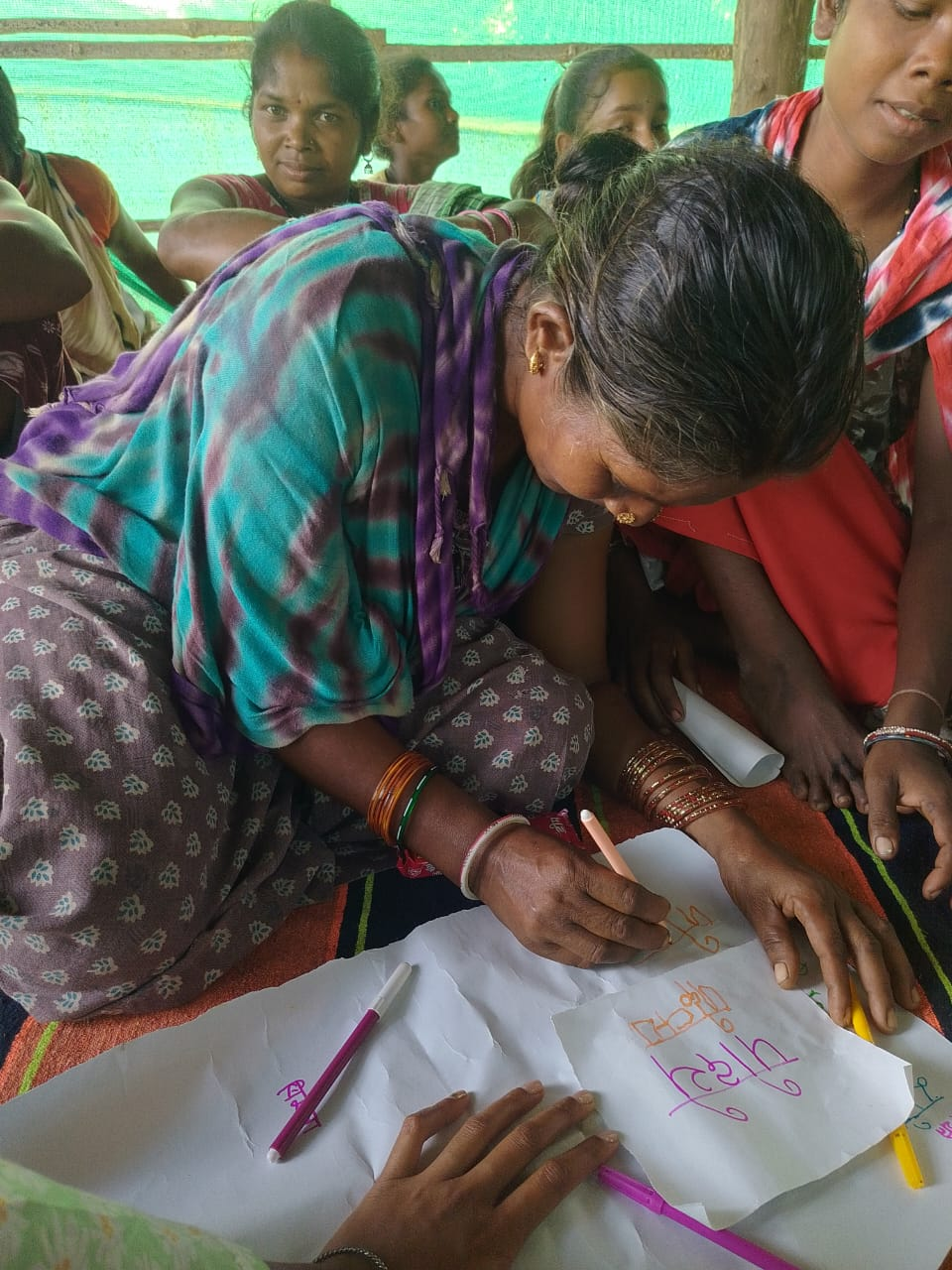
The children watched from nearby. They saw their mothers bent over paper, serious and focused, trying to get the letters right. Some kids laughed with delight. Some just went quiet and watched. They were seeing something they didn’t have a word for yet — but they felt it. Their mothers, learning something new.
“The hand that stirs the pot, tends the field, carries water — now holds a pen. And she is not surprised by its weight. She was always strong enough.”
Mehandi has been a part of women’s hands in this part of the world for thousands of years — for weddings, festivals, celebrations. It has always meant something. But that afternoon, it became a classroom. The most personal one — your own skin. When a name lives on your hand for five days, you don’t just read it. You carry it. You practice without trying to.
She already knew so much
Let me be honest about something. The women in that room were not empty or lacking. They were — and are — among the most skilled people I have ever been around.
AGRICULTURE – MAHUA MAKING – CATTLE REARING-MARKET TRADING – FOREST KNOWLEDGE – COOKIING ACROSS SEASONS – CHILDCARE – HOME MANAGEMENT – COMMUNITY CARE
They know things that take generations to learn. They run households and farms on memory, intuition, and skill that no textbook has ever properly recorded. They wake before the sun. They sell in the market. They keep families alive and healthy with what they grow and make.
The only thing they hadn’t been given was time, space, and access to formal learning. That’s not a failure of the person — it’s a failure of the system around them. Two thirds of the world’s illiterate adults are women. Not because they couldn’t learn. Because the world didn’t make room for it.
“Literacy is not intelligence. Not being able to read is not the same as not being able to think. We confused the tool for the person — and called it education.”
The place was warm and a little chaotic in the best way. Women calling across to each other — how does mine look? Laughter when letters tilted sideways. A young girl gently correcting her mother and both of them breaking into giggles. Mehandi being traced onto palms with the same care you’d give a festival.
The happiness in that room — it wasn’t polite or performative. It was the kind of joy that comes when you discover something new about what you are capable of.
“She has fed families, farmed land, and carried the weight of a home on her shoulders her whole life — and today, for the first time, she held a pen.”
 iVolunteer Blog - everything about volunteering