
Waiting! If the waiting is for a train, it brings irritation. But if, instead of a train, the waiting is for love—then surely hope outweighs irritation. Am I very wrong to say this? Many have written poems while waiting with hope; some have gone to coffee shops, some to rooftops, some have soaked their pillows with tears through mornings and nights.
I know that when the scent of a love story spreads somewhere, your heart—like mine—yearns to listen to that story. But today, I am not going to speak about waiting for love. This waiting has a completely different taste. This waiting is about bringing the farmers of the Binjam cluster one step higher. This waiting is about large-scale vegetable production in the Binjam cluster. This waiting is about fixing prices together and selling crops directly from home.
Even after six months, by the fourth week of January, that waiting had not ended. Yet, just like love, this waiting did not bring irritation. Much like going to a coffee shop once every month while waiting for a reply from a crush, these farmers keep nurturing my waiting—plant by plant—with gentle oxygen. Once again, the desire among the farmers of the Binjam cluster to see their own vegetable shop is becoming fresh and alive.
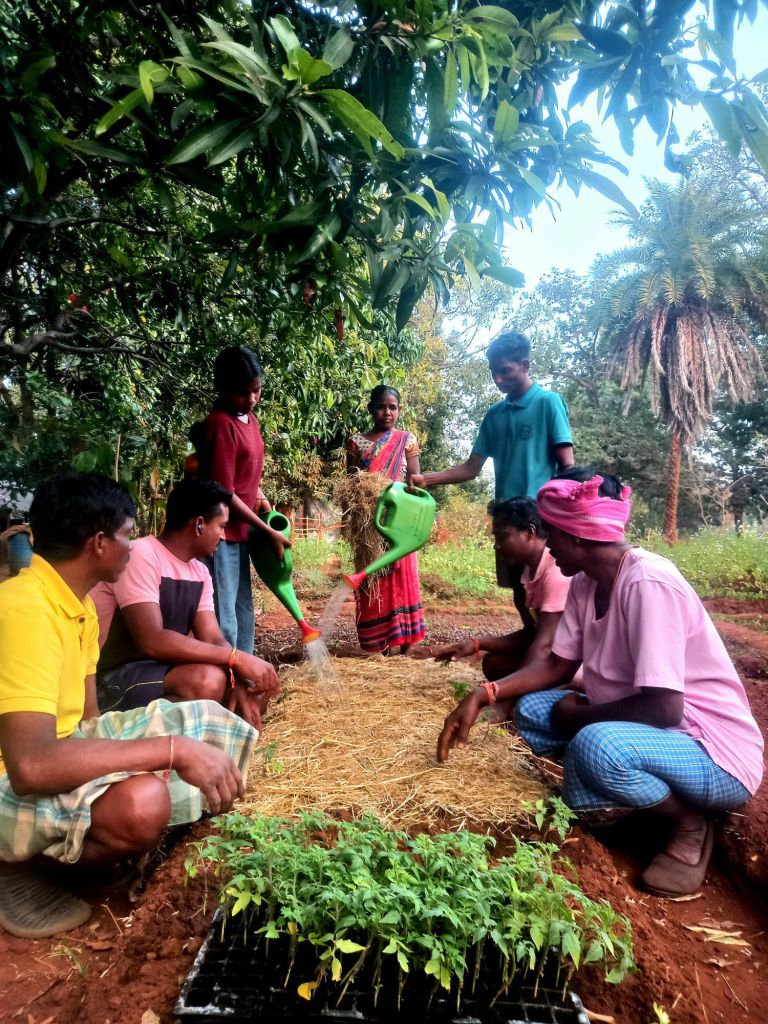
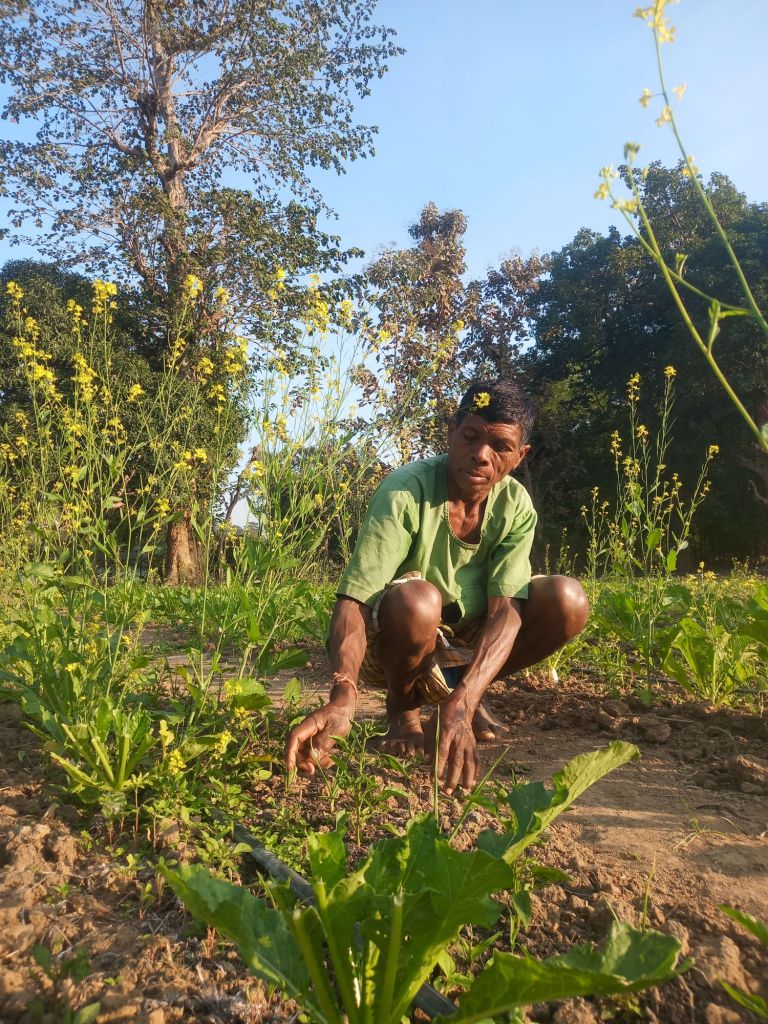
Before the end of November, dry, grey land had already filled up with leafy vegetables under the Kalpataru model. Then, before even one and a half months had passed, for the first time, farmers from Binjam–Kutulnar came together and sold their vegetables directly from home. On January 19, organic vegetables left Dantewada, heading toward Vijayawada.
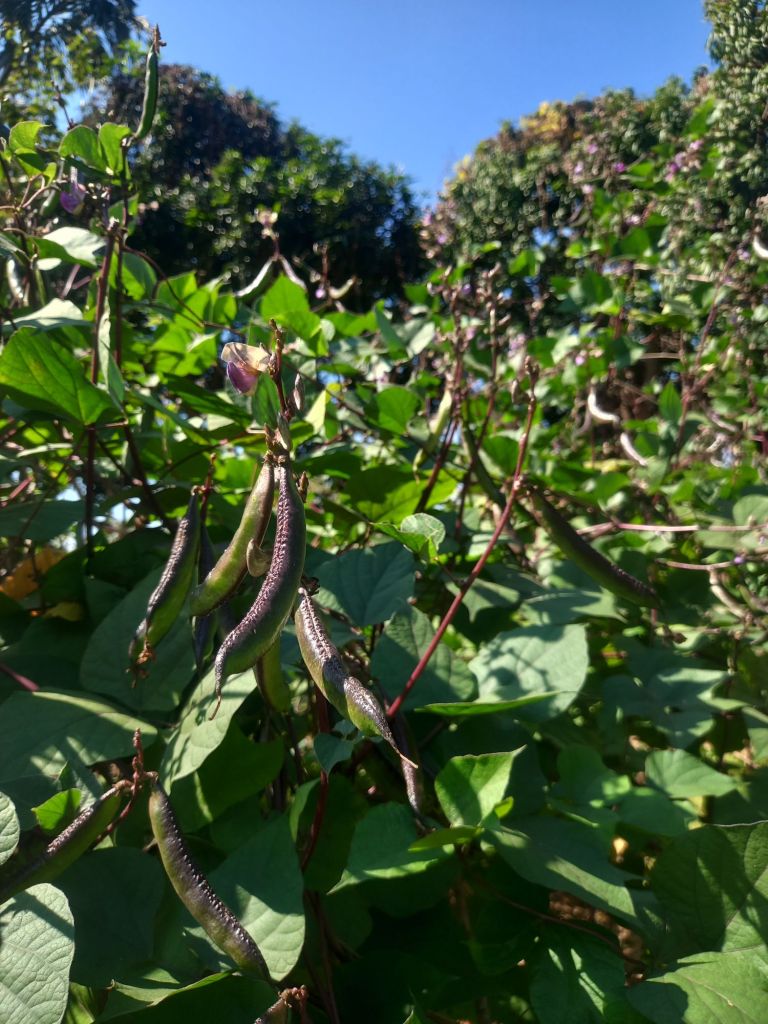
Before the end of November, dry, grey land had already filled up with leafy vegetables under the Kalpataru model. Then, before even one and a half months had passed, for the first time, farmers from Binjam–Kutulnar came together and sold their vegetables directly from home. On January 19, organic vegetables left Dantewada, heading toward Vijayawada.
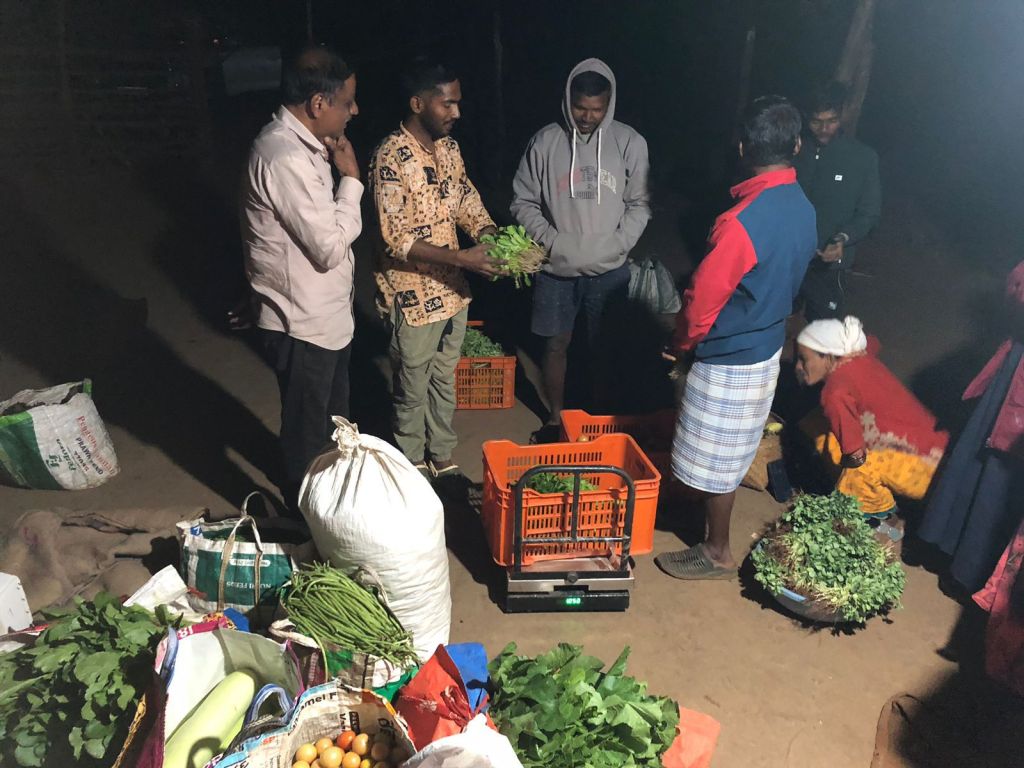
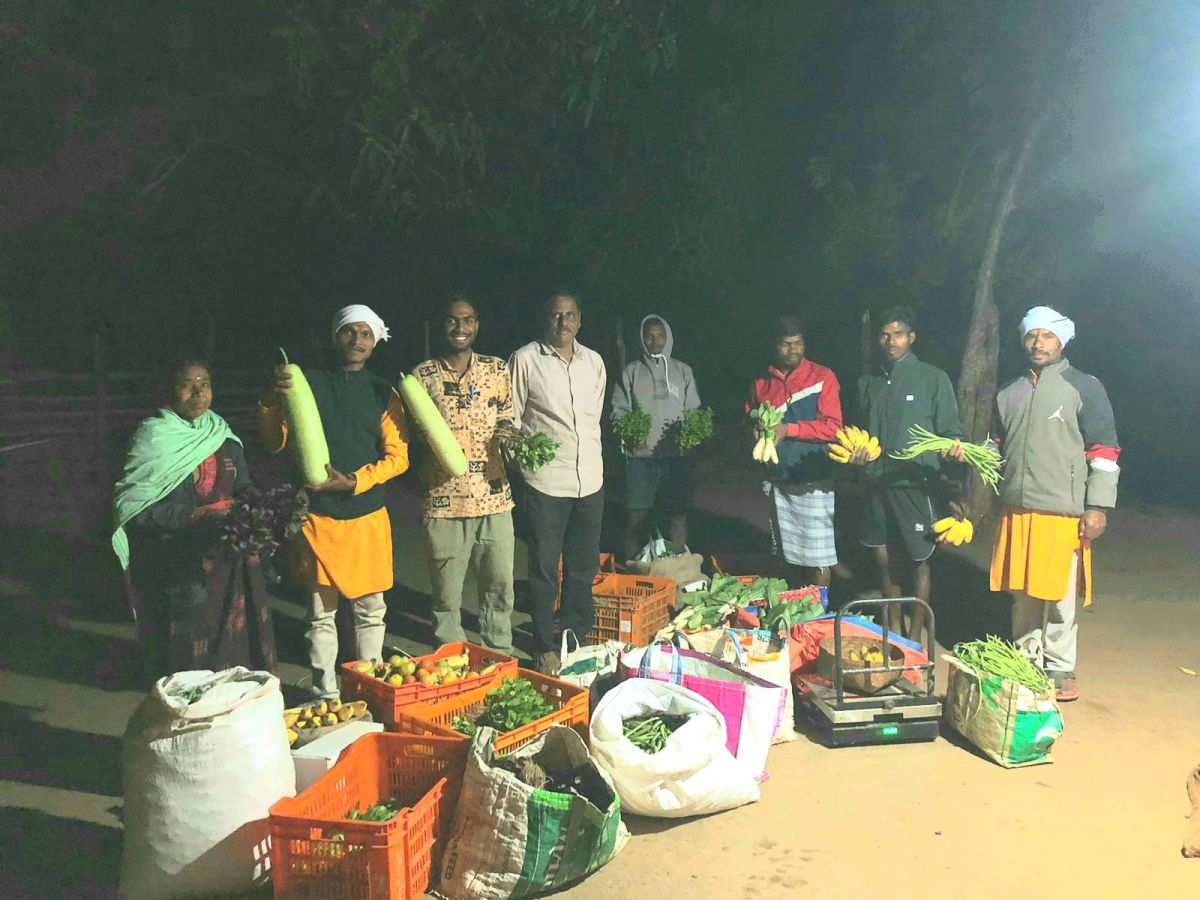
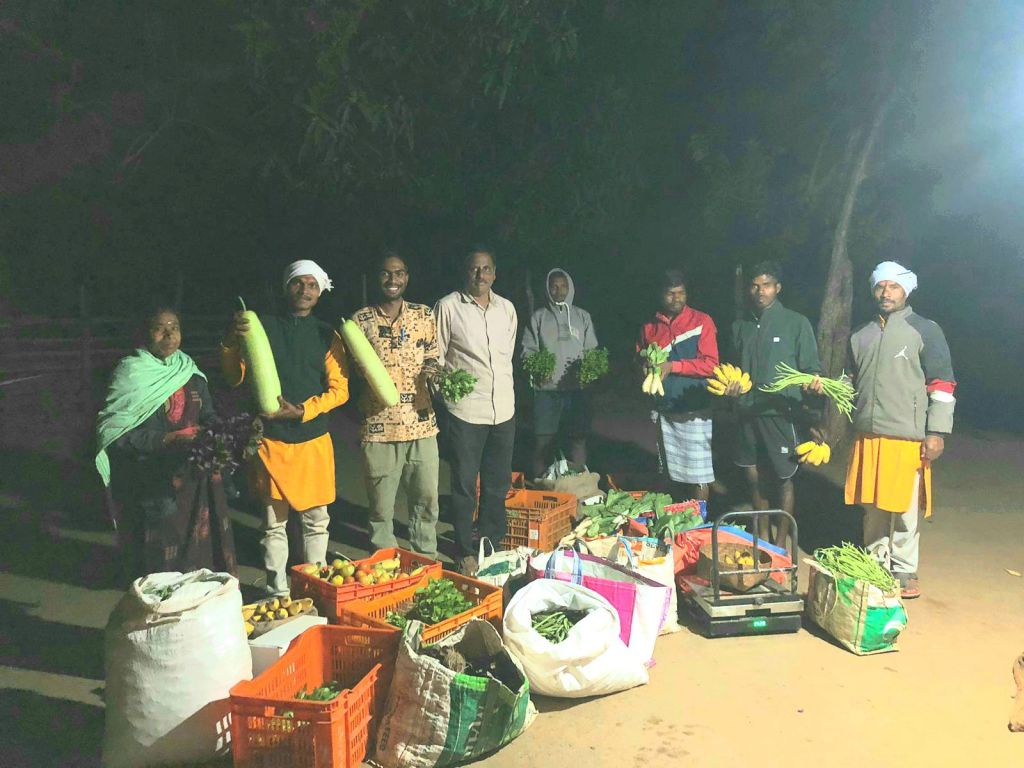
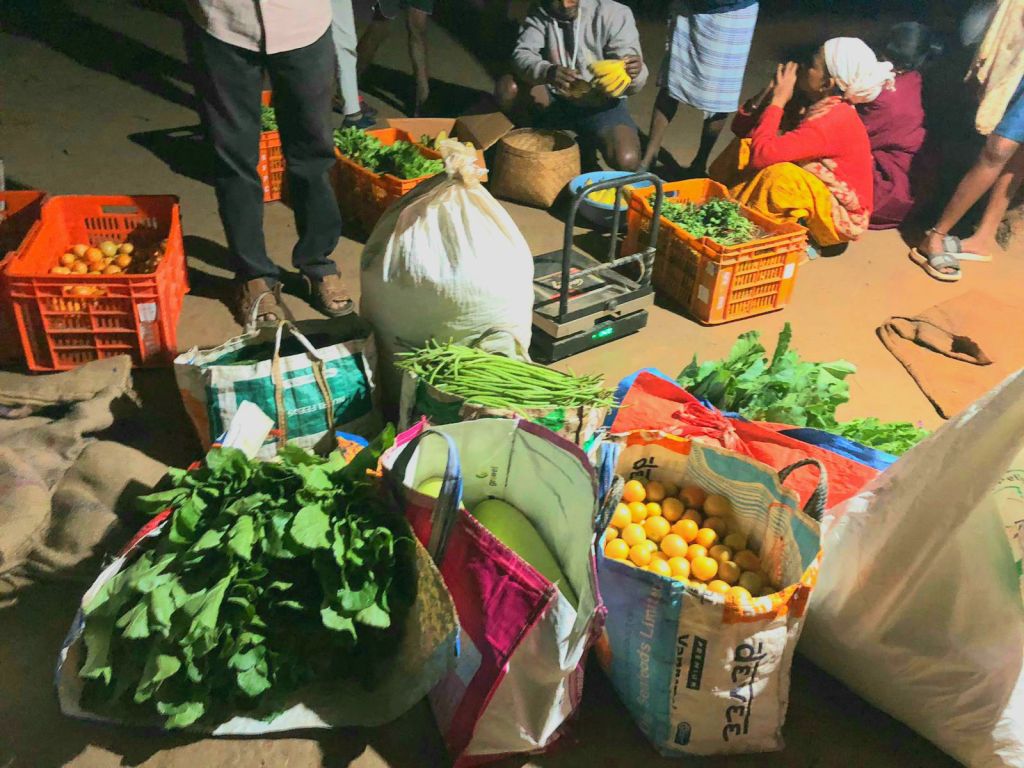
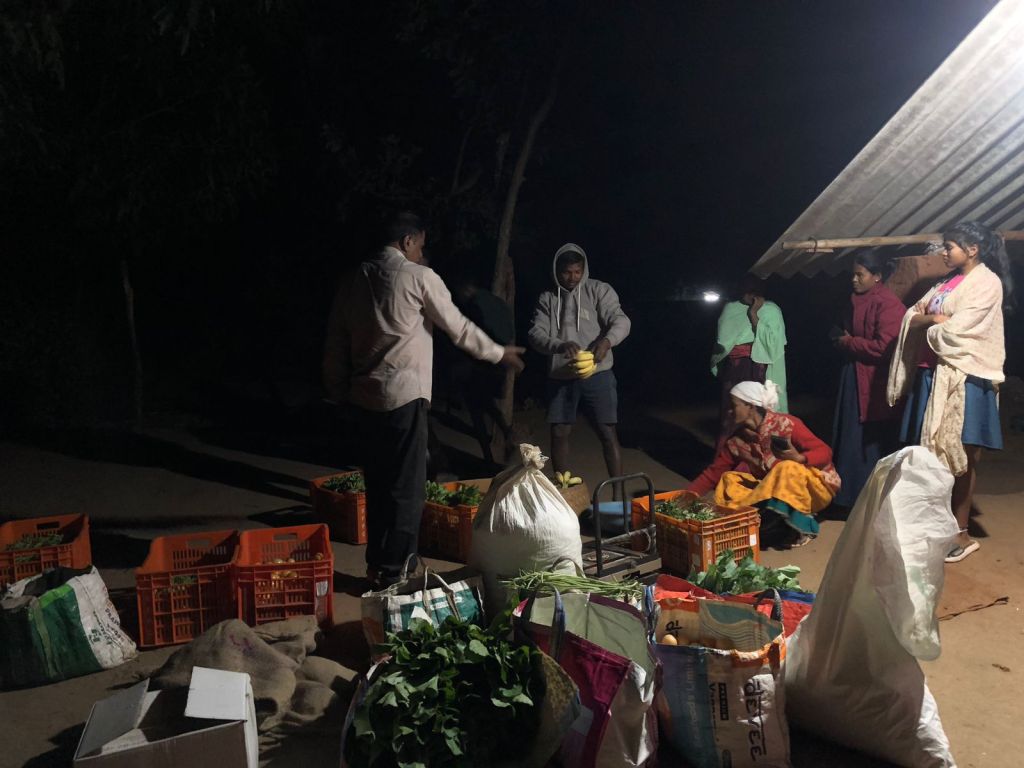
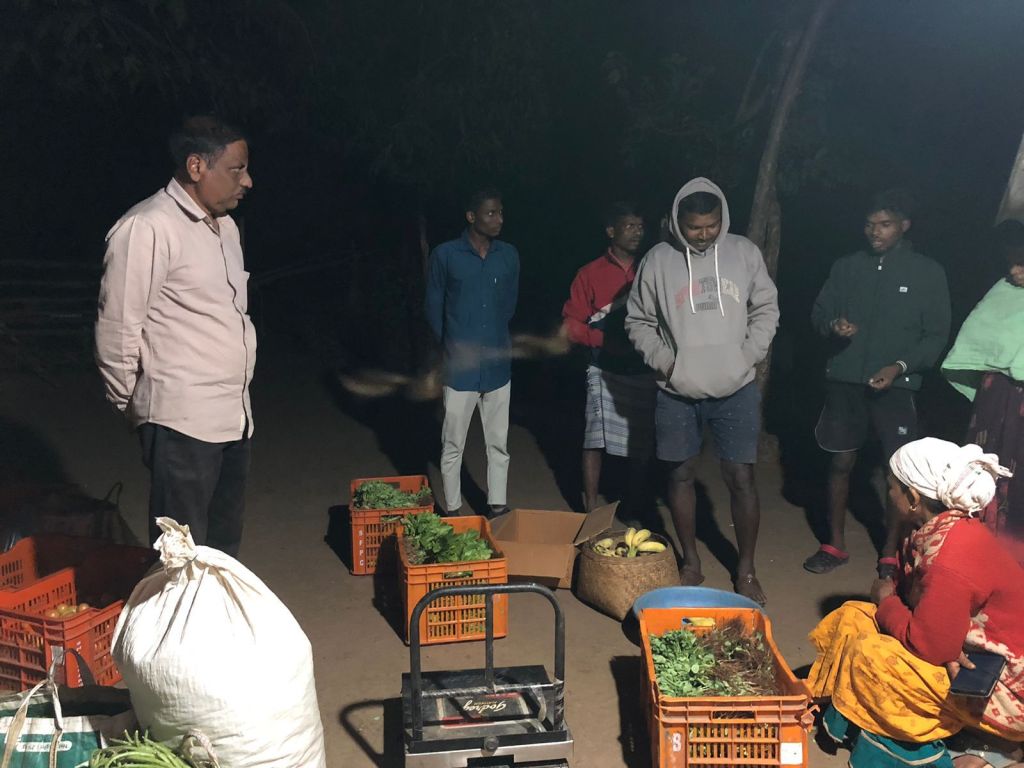
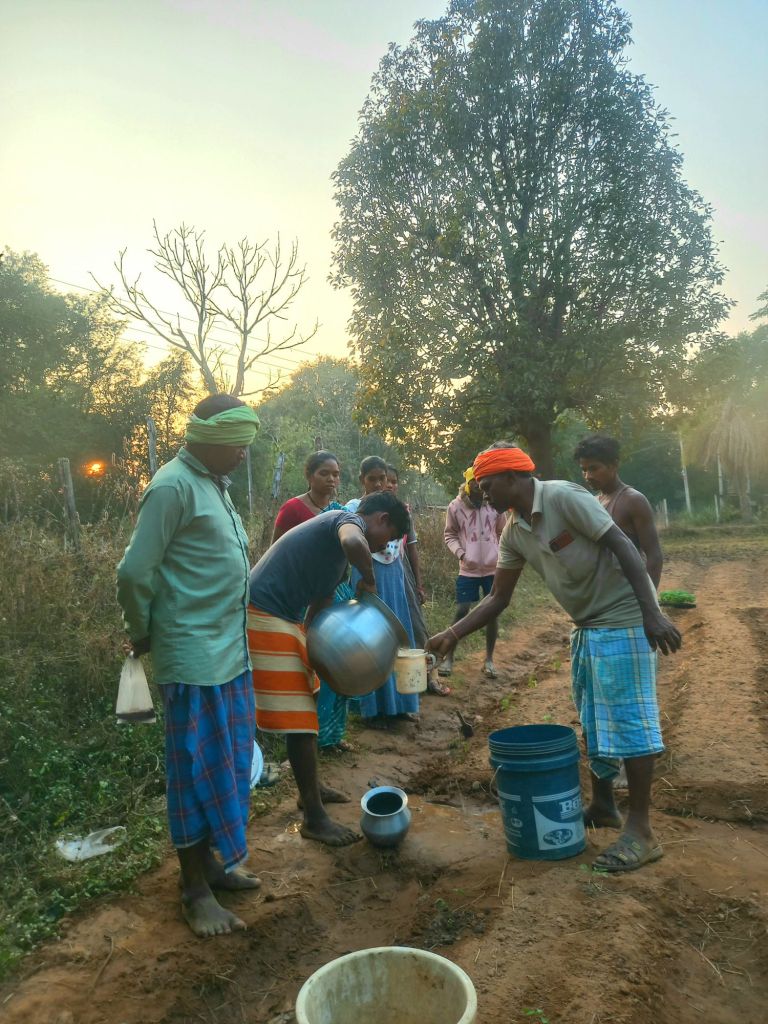
That evening—around seven-thirty—I witnessed the immense joy of receiving cash in hand just minutes after harvesting crops. Beside Raju Netam’s field in Kutulnar, dew shimmered on a lemon tree. Pulling aside the bamboo fencing, Mukesh Netam, Shyamabati Netam, Mukesh Wam, Sadhuram Kunjam, and others stepped inside. The fragrance of fresh produce mixed with waves of laughter, creating a small marketplace. Someone brought baskets filled with tree-ripened bright yellow bananas. Someone carried beans in jute bags; others brought carrots, tomatoes, coriander leaves, red spinach—so much more.
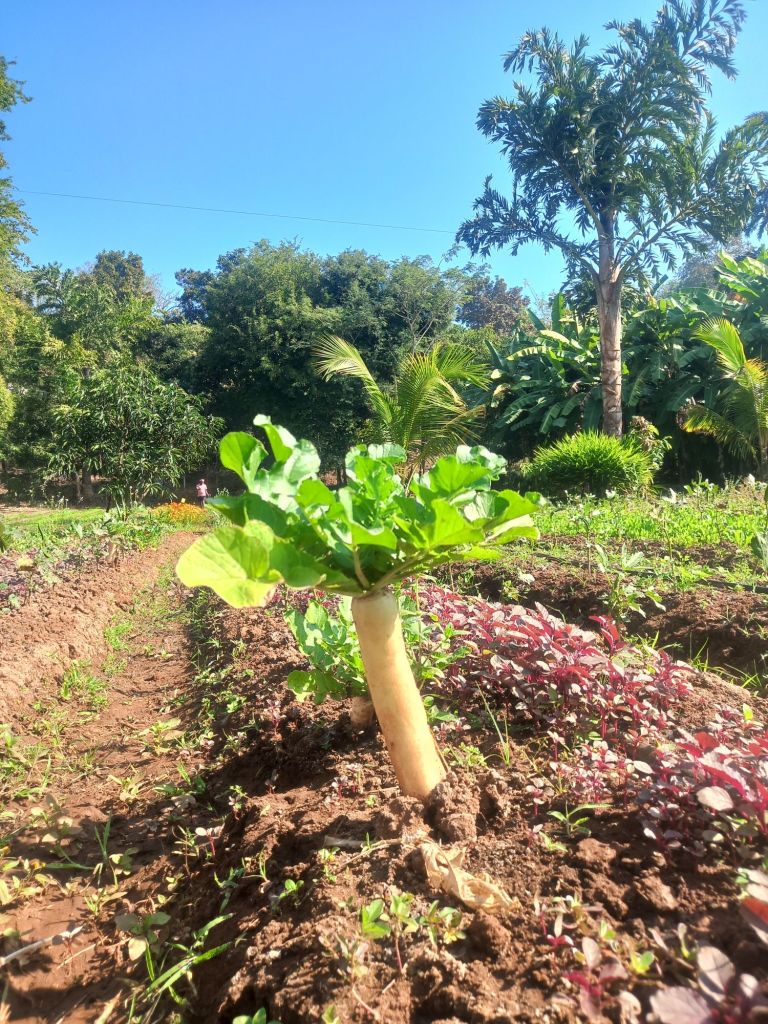
Across four villages—Kutulnar, Binjam, Siyanar, and Bade Surkhi—the desire to double vegetable production has been growing rapidly since last Diwali. In Siyanar, work could not progress much and remained limited to just four farmers. But that shortfall was fully made up by Kutulnar. A village that still does not have a proper road—I never believed it would pour so much oil into my lamp of hope. Today, in Kutulnar, more than ten farmers are cultivating vegetables on their land under the Kalpataru model.
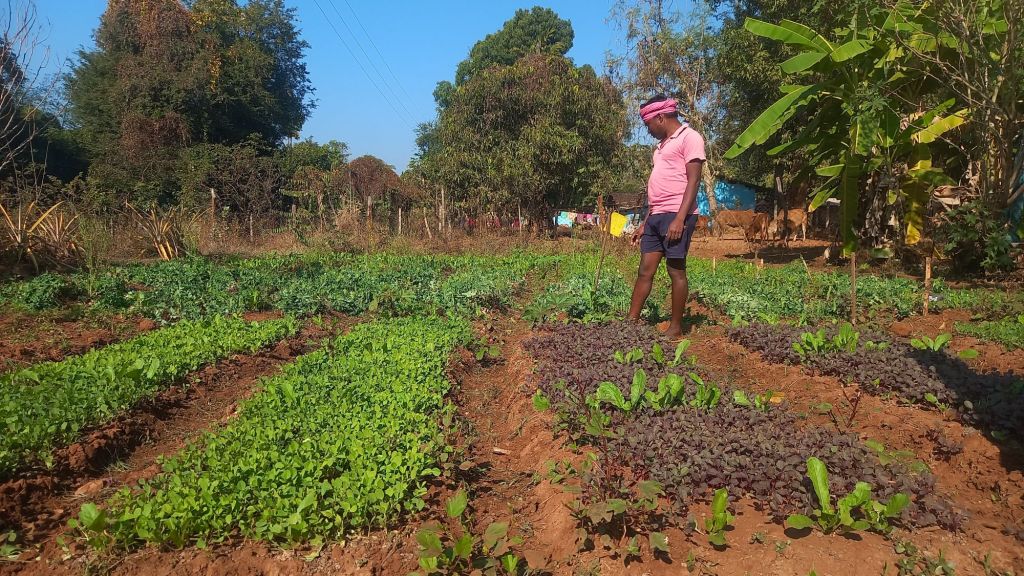
Producing more than what is needed to feed their families has made going to the market necessary. They now regularly go to sell vegetables. For the past one and a half months, I have felt happy seeing them return home smiling. At the same time, I feel a quiet regret when fatigue rises above those smiles—the fatigue of sitting for six to eight hours in dust and sun at the market. This is not the exhaustion of producing crops; it is the exhaustion of selling them.
Farmers in Dantewada have neither the system nor the habit of wholesale vegetable selling. And where would it come from? When production is half exhausted just to meet household needs, is there anything left for wholesale? But with faith in the Kalpataru model, with belief in organic vegetable farming, and with the application of various organic fertilizers and bio-pesticides, production is rising. With that rise, a vast possibility for wholesale selling has appeared. Yet the long-standing habit of retail selling—the love for selling at the highest possible price—can it be changed so easily?
Two options remain—sell from the doorstep at five rupees less per kilo than the market price, or open their own shop in the local market. Their own shop… in the name of the village itself.
I do not know which path the villagers will decide to take. Although the matter was discussed in the evening meeting on the 18th, it did not move toward a decision. I had mentioned that a gentleman from Vijayawada had come who wanted to take our organic vegetables to his home. He wanted his friends and neighbors to try our produce. If whatever is available in the fields is sold to him, the market would come to our homes. In just a few minutes, vegetable baskets would be emptied and money would be in hand.
Of the ten farmers from Kutulnar present at the meeting, six brought small quantities of vegetables on Monday evening. One more farmer joined after hearing about this small evening market from others. Altogether, ten farmers sold 246 kilograms of vegetables that day. Basant-da, returning after Puja, received the money in hand. In that one-hour home market, vegetables worth 7,268 rupees were sold. Just a one-hour market. There were no stories of auto fares to the market, no pain of sitting for long hours. There was only Shyamabati, who had put rice on the stove, weighing her produce and collecting her money.
I do not know when such a market can be held regularly. But when the desire for their own shop exists, it will happen. And even if that shop remains out of reach, I will not leave Dantewada without gifting the farmers such regular one-hour markets.
 iVolunteer Blog - everything about volunteering