As this is one of my first blogs, it is important to state that I am not familiar in writing them and hence this will feel like a sort of excerpt from my journal describing the initial days as I began this fellowship journey. Here we go–
It would be right to say that the journey actually started from my room back in Kerala; I was working as a junior lawyer within the municipal court system in my home district of Idukki. Though it sounds glamorous on paper, such was not the case. Every young lawyer starts out as a junior apprentice under the wing of a senior lawyer. You barely make any money, the hours are long and the pace with which you receive learning and insights within the system is painfully slow. It’s fine for someone who has a certain passion for litigation and fully intends to stay and prosper patiently within the field for the foreseeable future. I did not belong to such a category.
That brings up the question, “Then why did you choose law?”. Well, I always wanted to help people – ‘uplift the downtrodden’ and all that. Nothing like unrealistic idealism sprouting from young naivety. However, when you just turned 18, you tend to have an overly optimistic view on what you can do and how fixable the world could be. That changes by the time you turn 23 – completing 5 long years of pursuit in legal studies. I always did want to take up a degree in social work, but at the time, observing India’s corruption level, my thoughts were ‘I need a position with some sort of power and yet would be able to serve the deserving…’. Hence law. Another reason I left litigation apart from the above reasons is that it’s a totally money hungry world (and so is every other world). When I chose law at 18, I didn’t account for how much money one truly needs. I guess that’s why they say to put on your own oxygen mask first before being a good samaritan. At 18 I was well ‘oxygenated’ thanks to my parents but as I entered adulthood – where I had to stand on my own feet – was when the ‘oxygen’ started to get a little thin and soon I started huffing and puffing. I was content in making whatever little I could from the job and the same was enough to meet my basic needs (I am a minimalist). However the sector demands a never-ending drive to make more. Don’t get me wrong, you do need money, but c’mon, where does the greed end…The very intent with which I took up law could not be fulfilled there. There is no intention of service within that sphere (at least that was the case where and when I had worked) and I guess most things that are said about lawyers are true. I must emphasize that there is nothing wrong with lawyers being that way; it’s a cut-throat world after all. I left simply because I am not cut out for such a life and so I decided to jump ship.
I can confidently say that I have done enough introspection to generate change within myself, but how to go about contributing that change towards society was the question. For society ‘change’ is always yearned for and it assuredly occurs – sometimes for better and mostly for the worst. The scale tends to mostly lean over to the latter. A bit of a dull outlook on life, I’m aware, but I am a pessimist. Afterall, a pessimist is just an optimist with all the facts. Through this fellowship, I hope to give forth that positive change I’ve been yearning for, towards society, towards myself and thereby, hopefully tilt the scale in favour of the former.
Post-selection in the fellowship, my journey started in Madurai – Tamil Nadu, then climbed up to Pune and kept on reaching higher grounds, quite literally, because the final destination was Chinoni – a small beautiful secluded village, near Chaukhutiya in the upper hills of the state of Uttarakhand. Thus the starting layout of this fellowship journey was very much to my liking as it resembled ‘scaling up a ladder’ – from the base of plateaus in the South, all the way up to the edge of hills in the North.
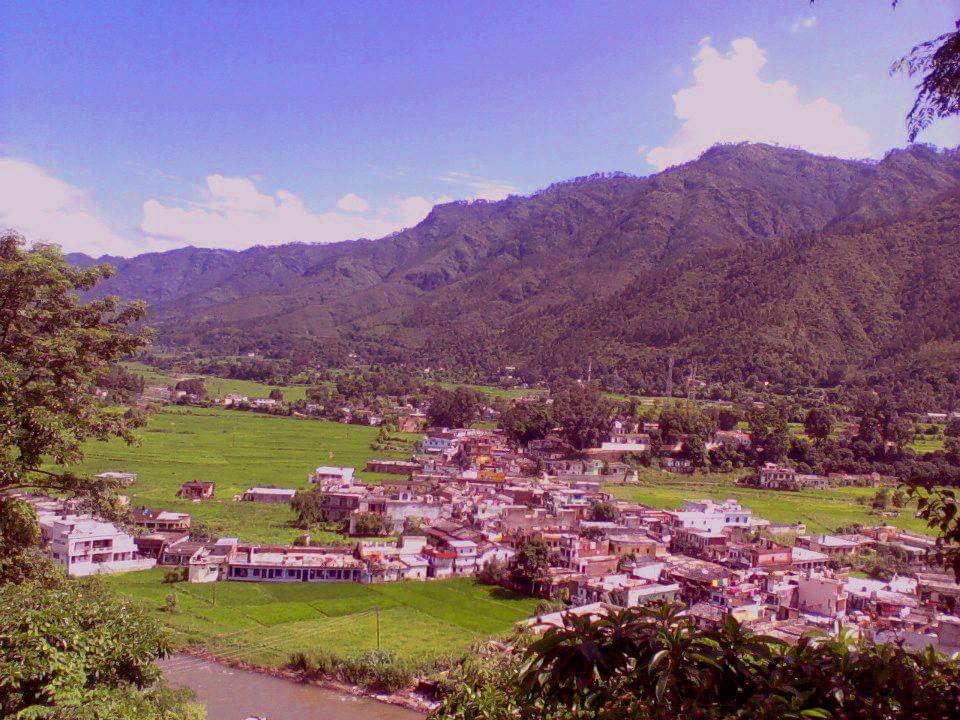
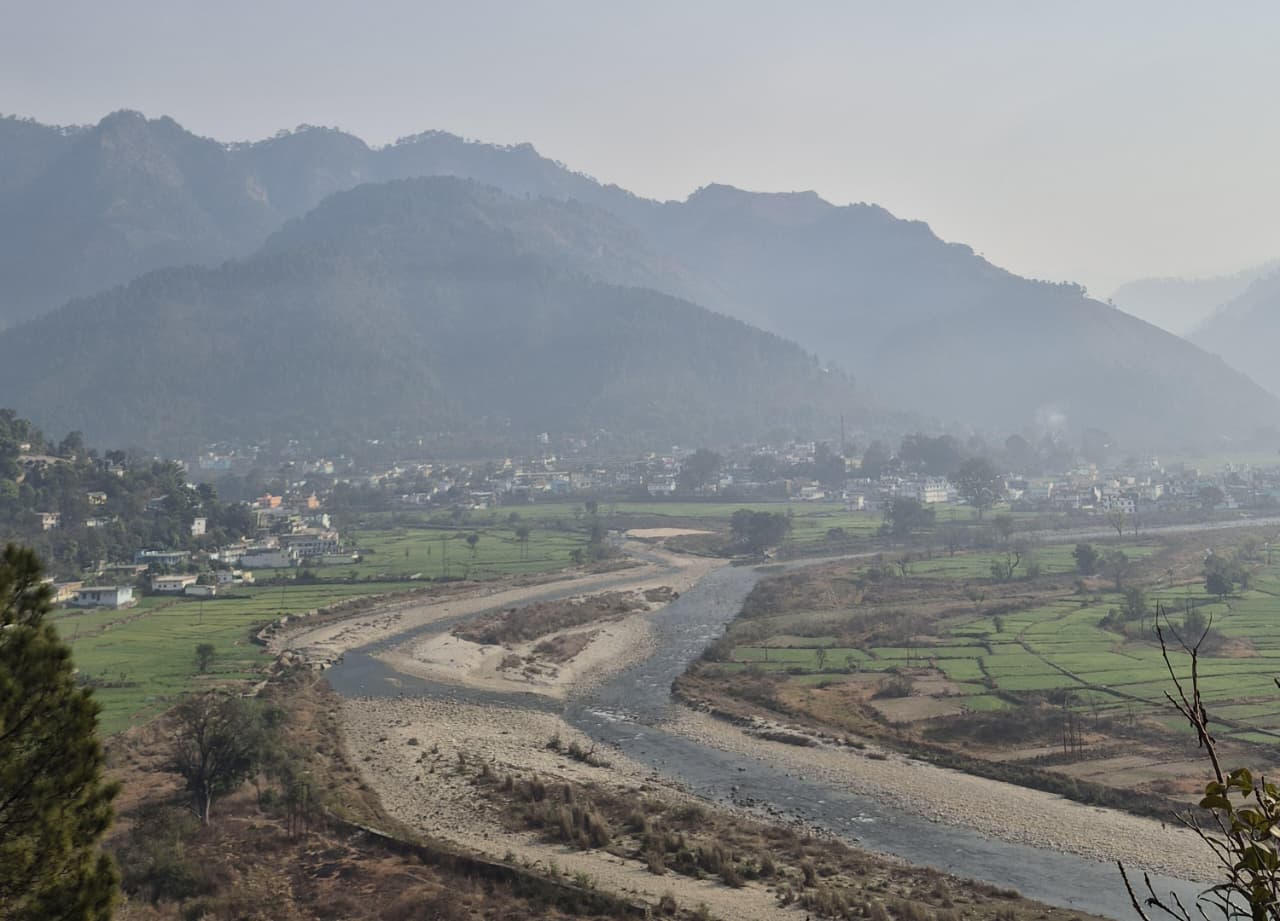
Arriving at Chaukhutiya was a hassle. The journey by train was horrible as I had a RAC ticket and the never ending and ever-turning rugged mountain roadways to reach my institute were equally draining. Fortunately, I had enough experiences in travelling to know that those were just preliminary temporary issues. The outlook I hold on life is such: things could always be worse; therefore the present is the far better alternative – hence be grateful. Surprisingly, I was wrong (as I know now). Things eventually turned out to be great. Chaukhutiya is a rather modest yet ‘sufficient’ town-like settlement – by that I mean sufficient enough to cater to almost all needs as it consists of an ample number of shops selling diverse commodities. Unfortunately, my institute and its ancillary campuses were situated in Chinoni – 6km away from Chaukhutiya. Chinoni seemed to me as what one might call ‘a typical rural village’. There were large beautiful mountains no matter which direction one gazed. The river Ramganga flowed through its center and irrigated almost every field one way or the other (gullies were constructed to channel the water).
The bus I took from Delhi to begin my new chapter dropped me off at the very foot of my NGO – The Institute of Himalayan Environmental Research and Education, INHERE for short. INHERE has been working with the hill communities for nearly 40 years in diverse areas ranging from water management projects to creation of community leaders through mobilization (I’ll write more on INHERE in another blog). As soon as I de-boarded the bus, I was greeted by the institute caretaker -Mr. Purannath, whom I now address as Puranji. He began speaking in Hindi to which I quickly interrupted, explaining my native origin and how little of a grip I had on the language – of course my explanation was given in whatever broken Hindi I knew, which he found rather amusing. Nevertheless I was warmly welcomed in.
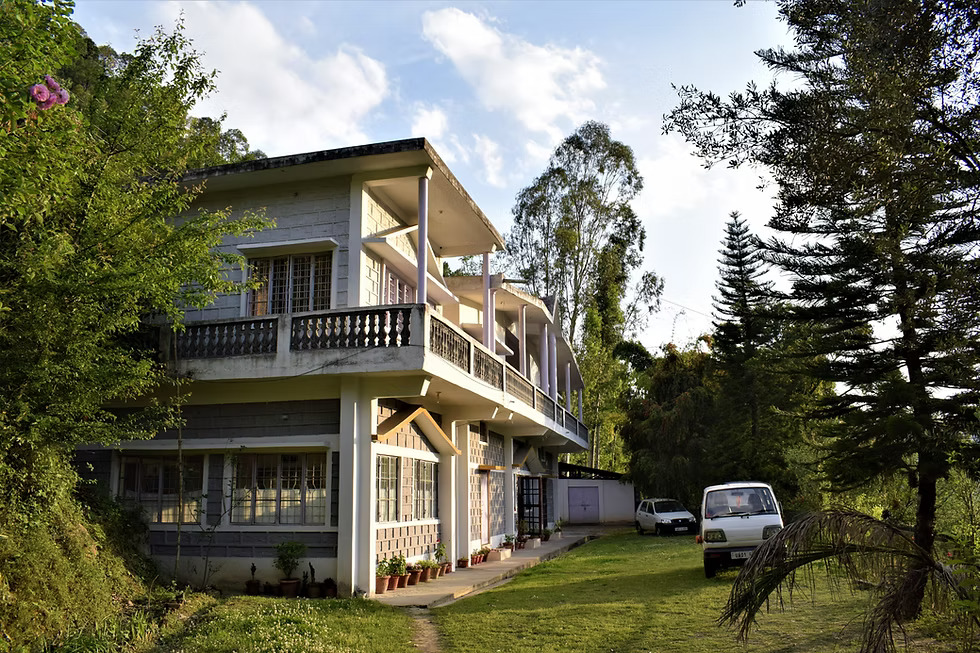
I was told to stay in the guestroom within the building itself as the arrangements were already made there. The INHERE campus could be said to be a sort of residential office. My room was more spacious than I could’ve hoped for. It had previously been a meeting room, which they later transformed into a residential chamber. The only person residing here other than myself and Puranji was Geeta (a field coordinator working at INHERE for the past 8 years). So all in all it was a rather empty building. Geeta occupied the room at the east end and Puranji stayed in his quarters downstairs. I soon began to realize that privacy would never be an issue here, in fact, it’s the isolation that I should watch out for.
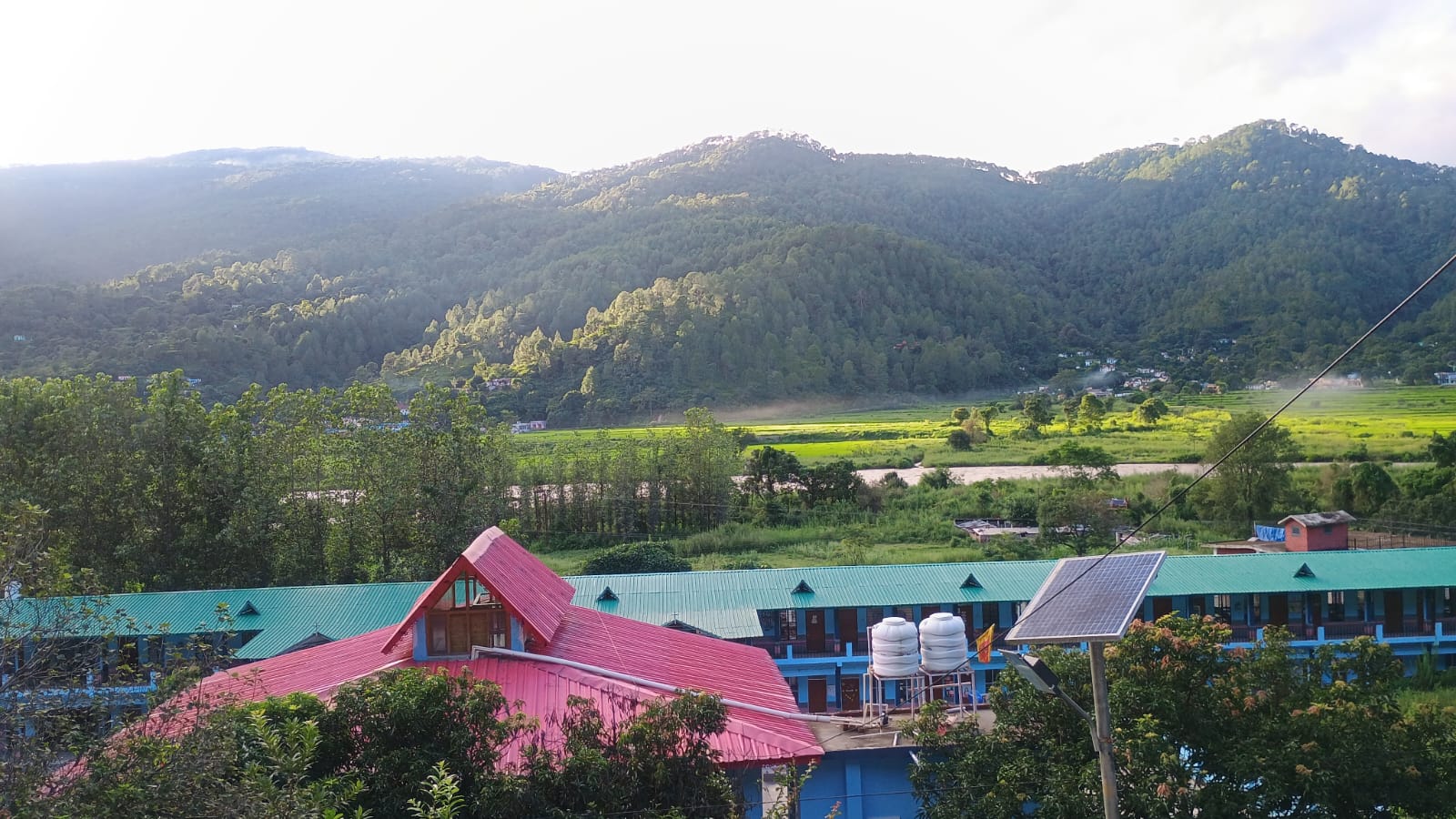
The view when stepped just outside from the room feels like it’s straight from a child’s cliché scenery drawing – three hills side by side, a luscious green pasture and an ever flowing river below it . The only thing missing is a sun popping out from the corner or between the mountains. There’s also a school right in front of the institution. Back in Kerala, most schools begin around 9 AM, this school starts around 8. I am definitely not an early bird, never have been. So while my co-fellows probably wake up to the bell of an alarm, I rise and shine to the band drums played for the national anthem during the morning assembly. Although, I do like the fact that the classes end by 2 PM, unlike Kerala – which go on till late 3 in the afternoon.
The language barrier was something that I had given much thought before reaching Uttarakhand. I did have Hindi as a subject during my early schooling days but my grip on the Hindi language was absolutely terrible; so terrible that it could be easily outmatched by any four-year old from the region. However, the bare minimum Hindi which I did have served me well. Lucky for me, the people here do have a bare understanding of English. That reminds me of an anecdote. I was under the arrogant assumption that people in a remote village as such, within the hills of Uttarakhand, probably wouldn’t speak a single word of English. However, I was humbled real quick; In the first week of moving here, there was some irritation in my left ear and I needed to buy some earbuds (Q-tips). Luckily there was a small convenience store just two-minutes away by foot from my NGO. While I was walking towards the shop, my mind was immersed in the thought of figuring out a way to convey my need or rather formulating a sentence to make the shopkeeper understand that I needed earbuds. The shopkeeper was a moderately old villager. He definitely would know what they were but probably wouldn’t understand if I asked using the word ‘earbuds’. I reached the shop, gave a classic 5th-grade-Hindi-text book greeting – ‘‘Pranam ji’’ and continued, ‘‘Aapka paas ye …kaan saph karna wala…sticks…hai?”. He paused for a second and gave me a puzzled look. I thought it was because either my sentence wasn’t good enough to convey my need or that he didn’t understand the English word ‘sticks’ from my sentence. The puzzled look on his face then turned to pity and then into that of slight amusement as he reverted back with a simple “Earbuds chahiye?”. I was immediately flushed with embarrassment and replied with a quick and soft “Haan ji”. The old man watches over the shop during the day and his son takes over in the evening. Even now, I don’t go back to that shop during daytime.
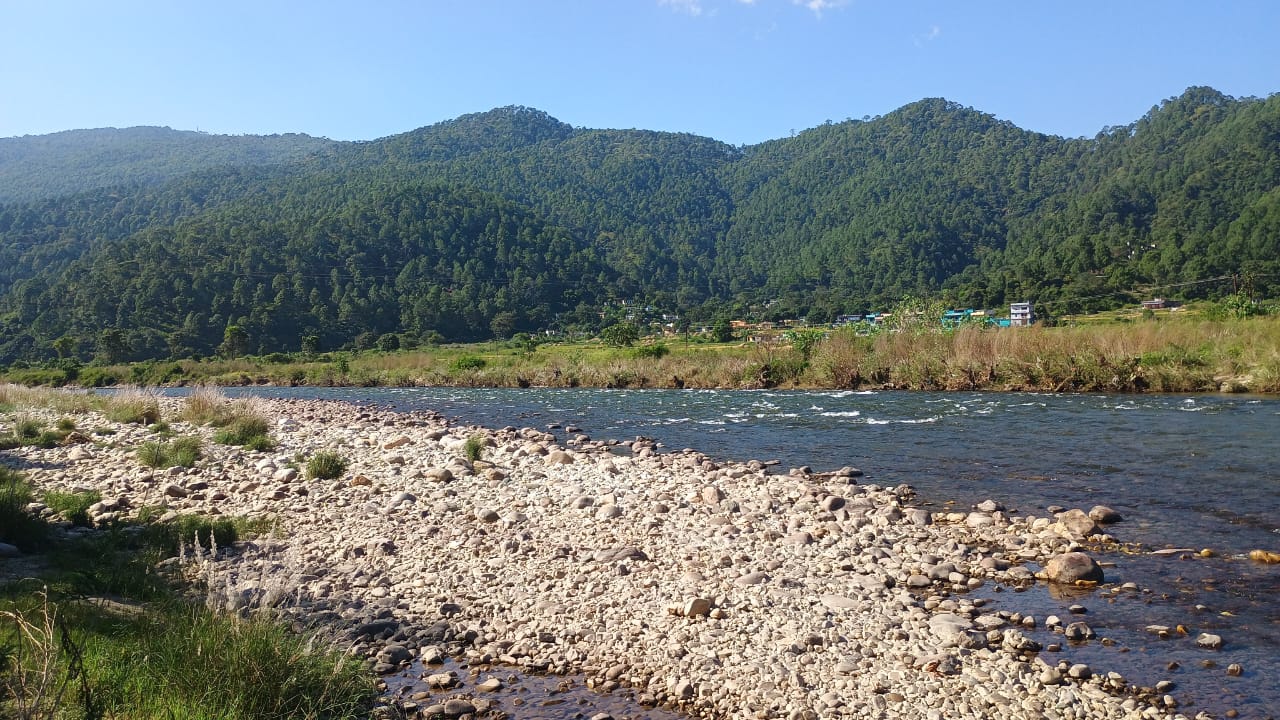
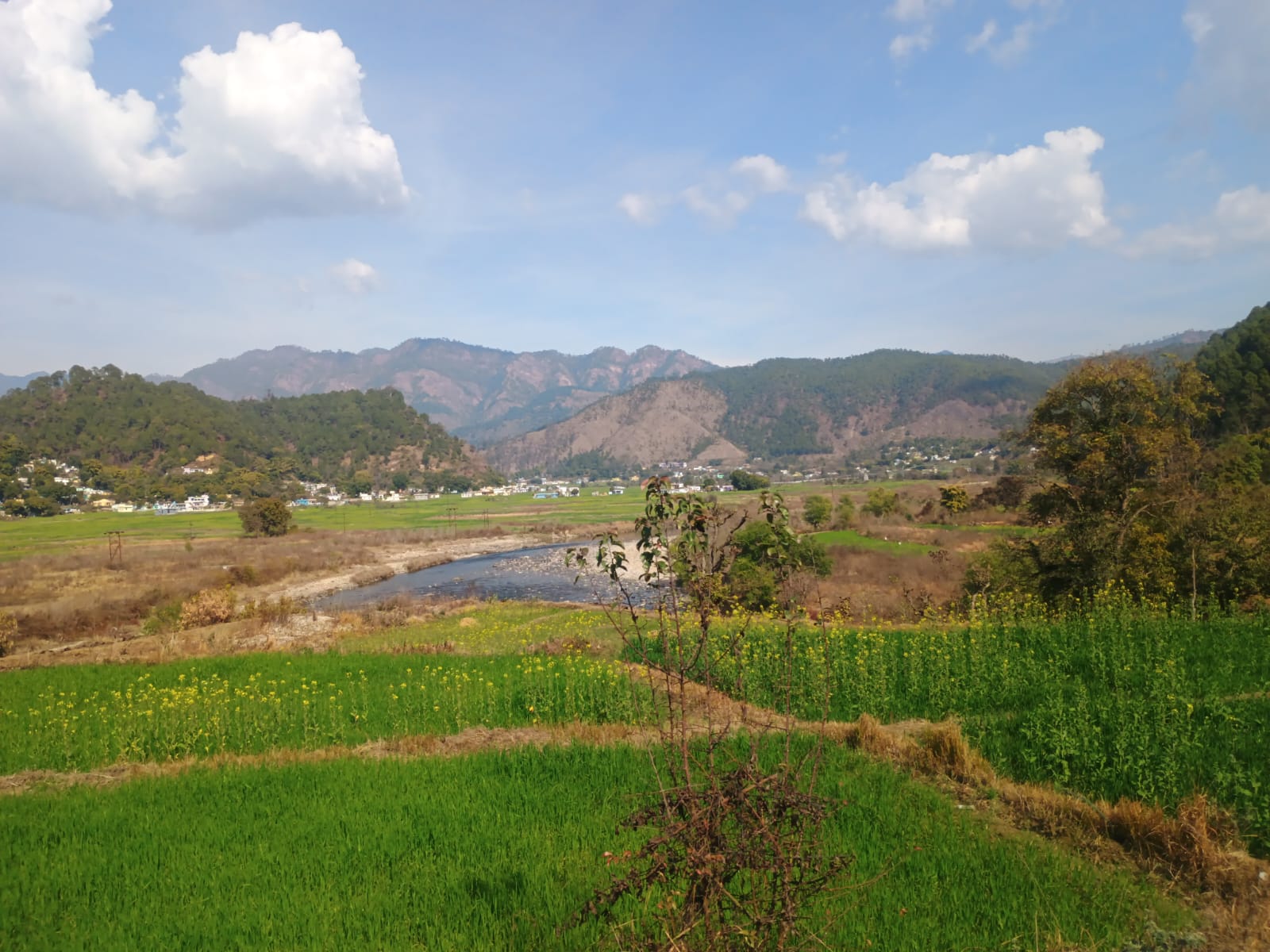
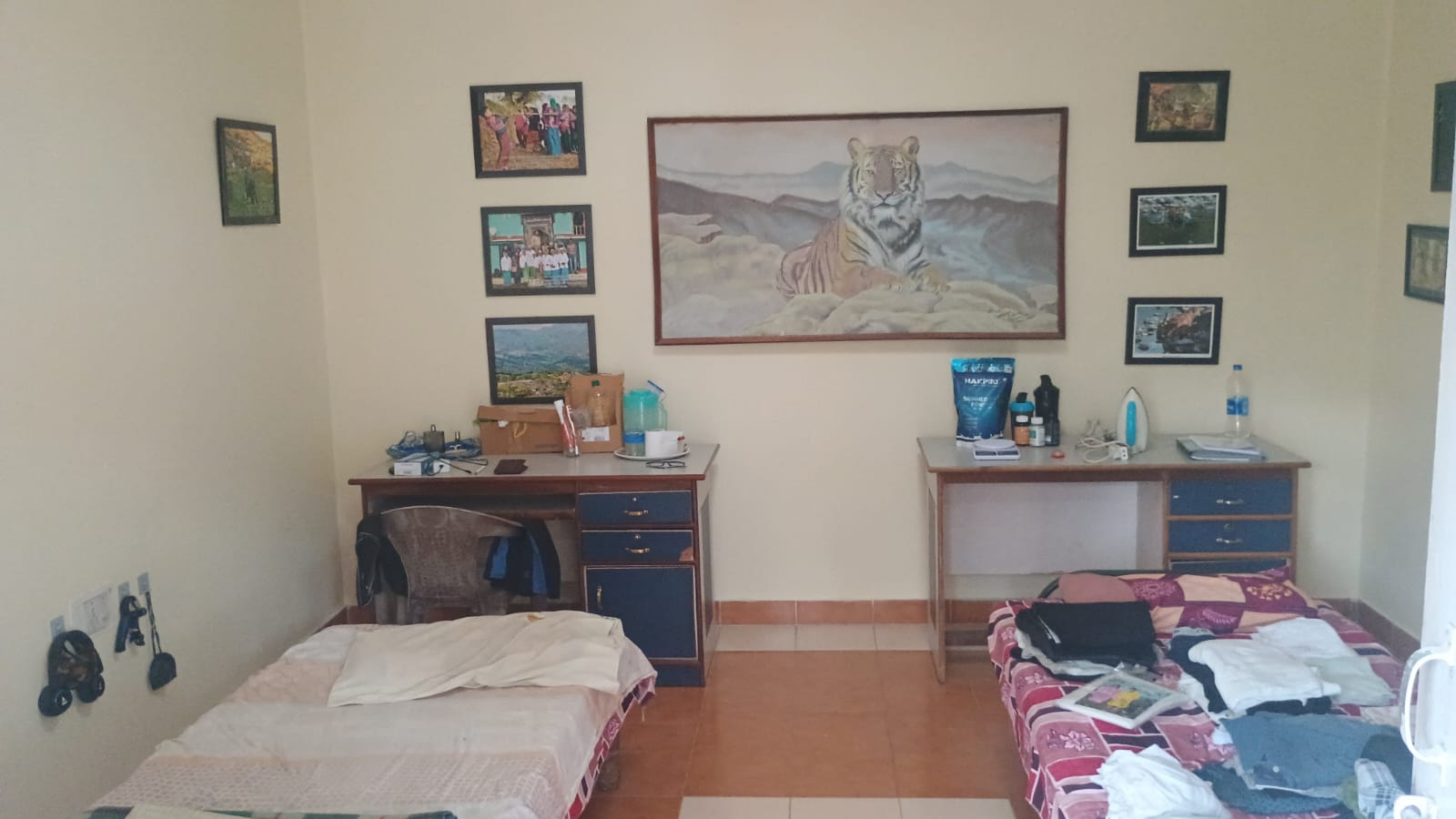
The availability of several serene ‘spots’ for quiet and sweet reflection so near to my institution are my favorite aspects and indeed a true blessing. I enjoy solitude and hence going to these special spots and settling down in my room is something I look forward to after a tiring field day. A prime reason why I love my room is because there is a large tiger portrait there, which is about four feet in width – how cool is that!
Overall, I feel quite glad to receive the opportunity to be here and engage in a work that feels meaningful. So far everything seems good and I look forward to exciting field days that’ll help further delve deeply into the project. The visits will definitely be exciting, considering the unfamiliarity of the landscape, diversity in culture and other challenges such as the language barrier. I hope to receive notable events during this phase of my journey that will shape me better to deal with challenges and come out as a stronger, more capable and understanding person.
 iVolunteer Blog - everything about volunteering