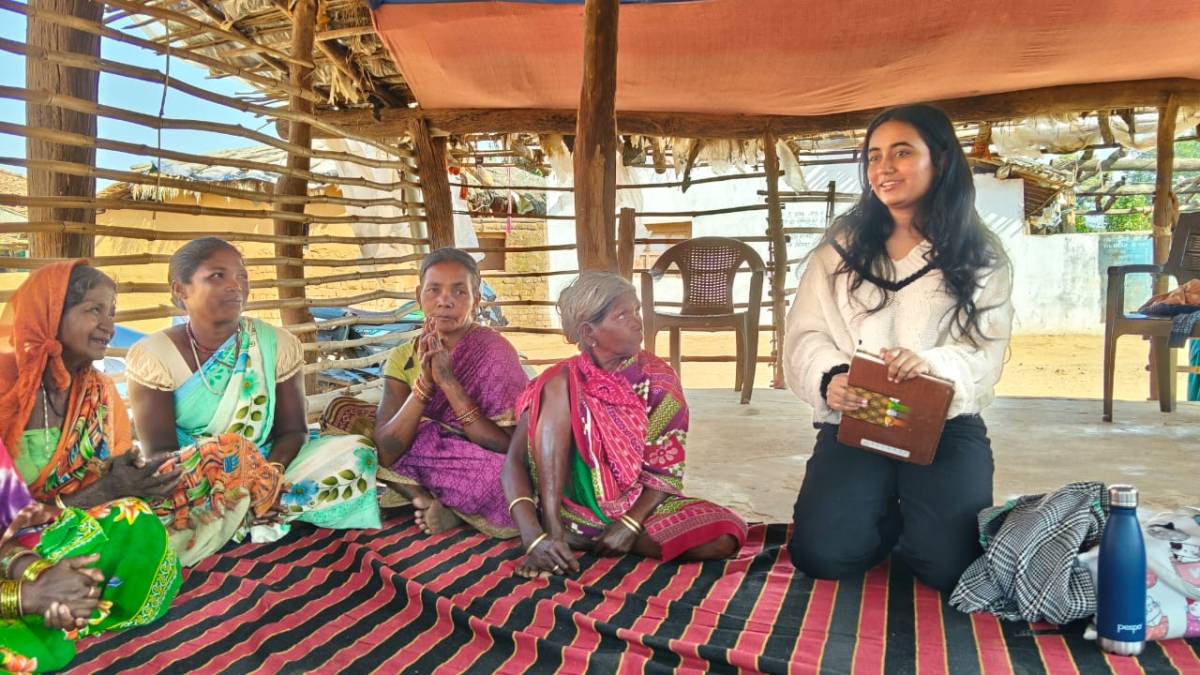
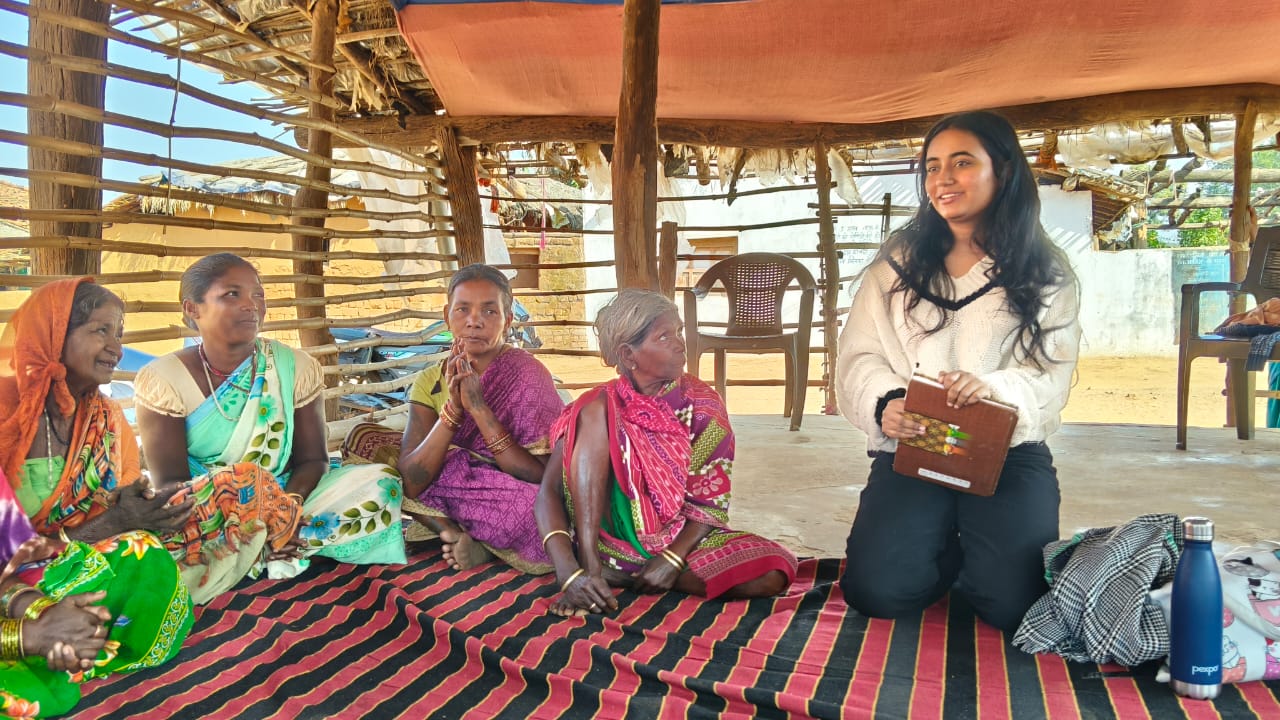
One of the most powerful parts of my Swar Fellowship has been learning how differently women experience life, opportunity, and oppression. In the beginning, I used to think “women’s issues” were similar everywhere mobility, safety, income, workload. But as my fieldwork deepened, I realised something more complex: every woman’s struggle is shaped by the multiple identities she carries.
This is where intersectionality first introduced by Kimberlé Crenshaw became real for me. Intersectionality says,
a woman is never just a woman; she is also defined by her caste, class, religion, age, marital status, location, and more.
Seeing this on the field changed my entire understanding of empowerment.
In one village, two women attended the same VO meeting. Both were mothers, both struggled with household work, both wanted to earn. But their lives were completely different. One belonged to an OBC family, had studied till Class 10, and had the support of her husband. The other was a Dalit woman who worked as a dailywage labourer, had never been to school, and faced taunts whenever she spoke in meetings.
The first woman said, “Mere pati support karte hain isliye main meeting aati hoon.”
The second woman said, “Meeting mein hum bolte bhi hain toh log sunte nahi.”
At that moment, I understood what Crenshaw meant- they were both women, but their experiences were worlds apart. Dalit Women Carry an Extra Burden. Reading Sharmila Rege’s Writing Caste/Writing Gender helped me make sense of what I was seeing. Rege says Dalit women live at the intersection of caste and gender they face both simultaneously, often invisibly.
During field visits, Dalit women often walked behind others. They rarely took the first or last seat. They spoke softly even when they had important things to say. Some had internalised comments like “tumhari baat kaun sunega?” Some avoided participating because “log kya kahenge?”
Their silence was not shyness it was survival. Their hesitation was not lack of awareness it was a history of exclusion. Dalit feminism taught me that empowerment for them must look different. They don’t just need gender awareness. They need safe spaces, dignity, and equal recognition inside their own community spaces.
‘Gender Is a Performance ‘. Judith Butler on the Field. Judith Butler’s idea that gender is a “performance”a repeated set of behaviours we learn was something I didn’t fully understand until I watched how women behaved in group settings.
In VO meetings, many women didn’t sit confidently. They kept adjusting their dupattas, covering their faces, waiting for permission to speak, or speaking in a tone so soft it nearly disappeared. It felt like they were performing the expected role of “good women”obedient, polite, quiet. But in smaller informal conversations after the meeting, while walking home, or during field visits the same women laughed loudly, shared opinions boldly, and even teased each other freely.
That’s when Butler’s theory made sense- gender roles in public are learned performances shaped by society, caste norms, and family expectations. Many women were not naturally silent they had practiced silence because the world around them demanded it.
One thing the field taught me is this: empowerment must be customised. While a middle caste woman may need financial confidence, a Dalit woman may need a safe space to be heard without judgement. A young girl on the other hand, may need mobility and education. A married woman may need negotiation skills to handle household restrictions, while a widow may need social acceptance and emotional support.
If we give everyone the same training, we help some women but leave others behind.Intersectionality reminds us that fairness is not giving everyone the same thing it is giving each woman what she needs
One day, after a gender session, a Dalit woman said something that still rings in my mind: “Didi, hum bhi bol sakte hain. Bas hume mauka nahi milta.”. Her words were simple, but they held a history of generations who were denied space, denied voice, denied dignity.
Another woman once said, “Aap sunte ho, isliye hum bolte hain.” It made me realise that sometimes empowerment begins not with a training module but with listening.
This fellowship is teaching me that if we truly want to support women, we must see them fully not just as “women,” but as individuals shaped by multiple layers of identity. Caste, class, gender, age, and culture all intertwine. Ignoring these layers means misunderstanding their reality. Acknowledging these layers means creating real, sensitive, and meaningful change.
Empowerment is not about telling women to speak. It is about creating rooms where their voices will be heard. It is about challenging the structures visible and invisible that silence them. Intersectionality, Dalit feminism, and field experience together have given me a deeper truth: Women don’t need us to define empowerment for them. They need us to understand the weight they carry and walk beside them as they rise.
 iVolunteer Blog - everything about volunteering