
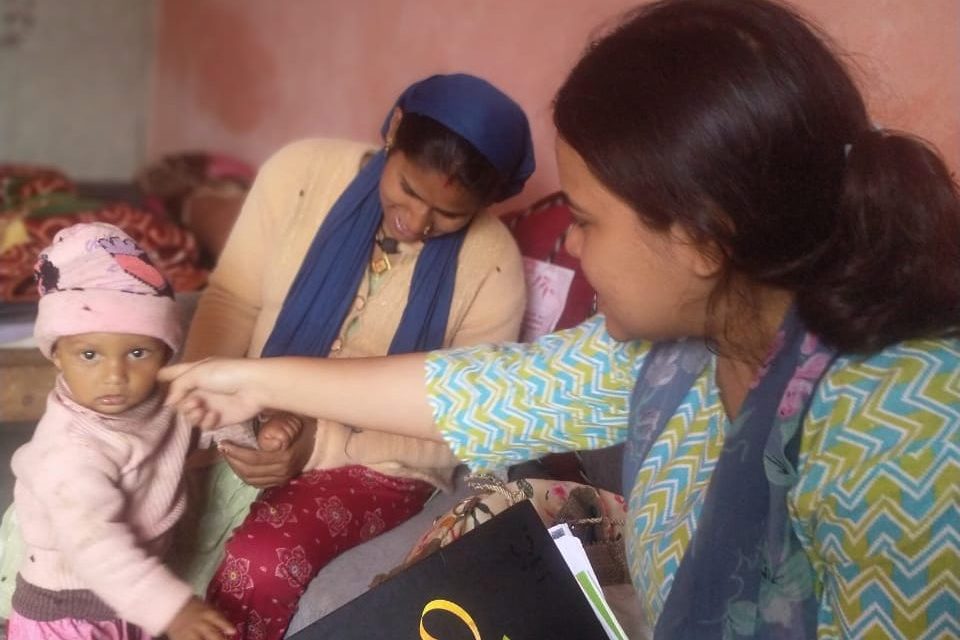
It’s been more than a month now since I’ve arrived in Pati, a quite, hilly block of Champawat, Uttarakhand. I came here as a fellow, hoping to serve- whatever that truly meant. But I think it’s Pati that’s serving me- with lessons, with warmth, with simplicity that we often forget to value.
One thing I noticed about the people was their simplicity and humility. They have very little but offer everything. Whether it’s a daadi amma offering you a plate full of madua ki roti soaked in ghee or just a few kind words, there’s always something which is shared with love and a lot of warmth.
Oddly, in the middle of these real life challenges- new language, unfamiliar food, unpredictable power cuts and raw, emotional interactions – a fictional character kept flashing in my mind. I won’t lie- at times I’ve thought of Dr. Zubiya from Yaqeen ka Safar. She too left behind her comfort, came to a place that was far away from easy and started over in the mountains, in healthcare surrounded by strangers who slowly became her own.
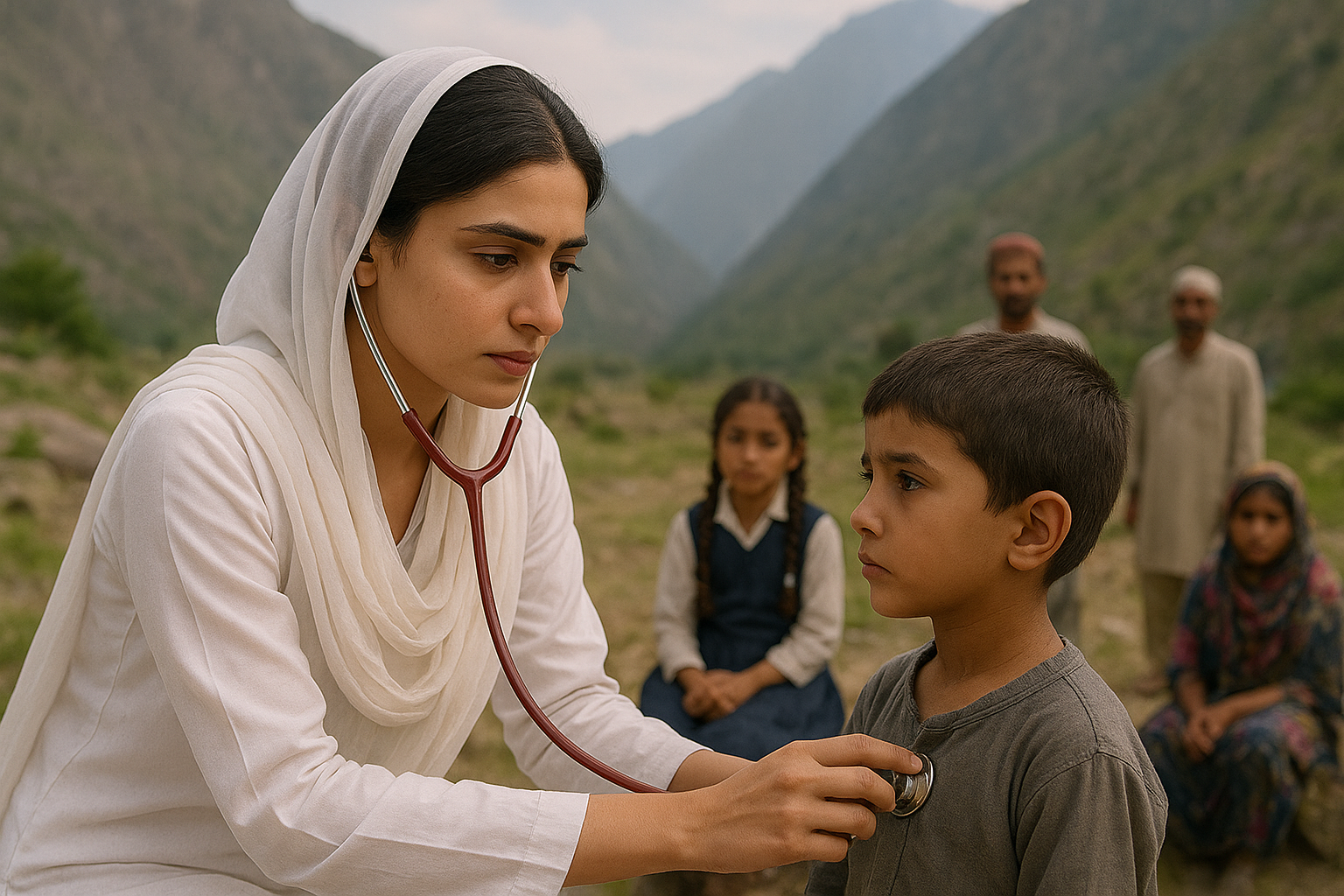
While I don’t wear a white coat, my work in the field still brings me face to face with communities struggling with access and awareness. And in those moments I feel a strange familiarity with her- fictional as she may be, her jazba lives on in many lives. I don’t know if I’m as brave as her but I do relate to her journey.
The first week I struggled to understand people – not just the language, but their tones, silences and customs. But then I remembered something Zubiya once did- she listened. Now a few weeks later, I know that an ASHA worker or a PNC mother finally opening up and telling you about their hopes, dreams and desires because they trust you is special.. Or a child waving me from hillside means I’ve become familiar. Or maybe the adolescent girls checking up on me whether I’ve reached home or not. While I still mess up a lot of Kumaoni phrases, there’s always someone patiently correcting me with a smile.
Koi naraaz nahi hota agar aap unki zuban na samjhein – bas aapka lehja imaandar hona chahiye.
Ofcourse, not everything is poetic. There are long walks, days with no network, miscommunication, moments of loneliness – days when nothing seems to move and then there are days when a health worker finally opens up or a village elder acknowledges you or a child remembers what you taught them.
My first month here in Pati taught me that healing isn’t always about medicine. Sometimes its about showing up for someone who didn’t expect it. It’s about Patience. Presence. Quite Work. It’s about knowing when not to speak and when just your being there is enough. Now I know the biggest thing is sometimes sitting on a chatai with a woman who finally tells you the truth about her life- because she trusts you.
Her name was Ganga. She was twenty one, already pregnant with her second child. We sat under a malta tree that day, the chatai between us. Ganga had been quite in our previous interactions – polite, yes but distant. That day, something shifted.
She didn’t start with complaints. Instead, she asked if I wanted tea. When I declined, she laughed and said, “Pee lijiye, pahadon mein chai se hi baatein khulti hain.”
And they did.
She told me how she’d been married at eighteen, how she dreamt of becoming a teacher once but that dream now quietly lived somewhere behind the responsibilities of motherhood and managing a household.
“I don’t mind hard work,” she said, “but sometimes I wish someone asked me what I wanted… just once.”
She looked down at her belly and whispered, “Sab dua karte hain iss baar beta ho. Mujhe toh bas yeh chahiye ki dono bachiyan achhe se bade ho jaayein.”
There was no bitterness in her voice. Just an ache I couldn’t un-hear.
Before I left, she handed me a malta , freshly plucked. “Khatti – Meethi hai,” she warned, grinning. “Par asli hai.”
That evening, I walked home slowly. The fruit still warm in my hand. That moment—her honesty, her presence, her trust—felt like the real work. No forms, no registers, no awareness drives—just a young woman on a chatai, letting someone see her truth for a few minutes.
Sometimes, the work is just that.
Kabhi Kabhi Kisi Safar ka Maqsad Manzil se Zyada uss Raaste Mein Chupa Hota Hai.
I don’t know what the next few months will bring. But for now, I’m learning to walk with them, at their pace, on their soil. And in that slow, silent walking – something in me is healing too.

Yaqeen ka Safar is a Pakistani television drama series written by Farhat Ishtiaq based on her novel Woh Yaqeen Ka Naya Safar which revolves around the journey of the protagonists Asfandyar and Zubiya.
 iVolunteer Blog - everything about volunteering