
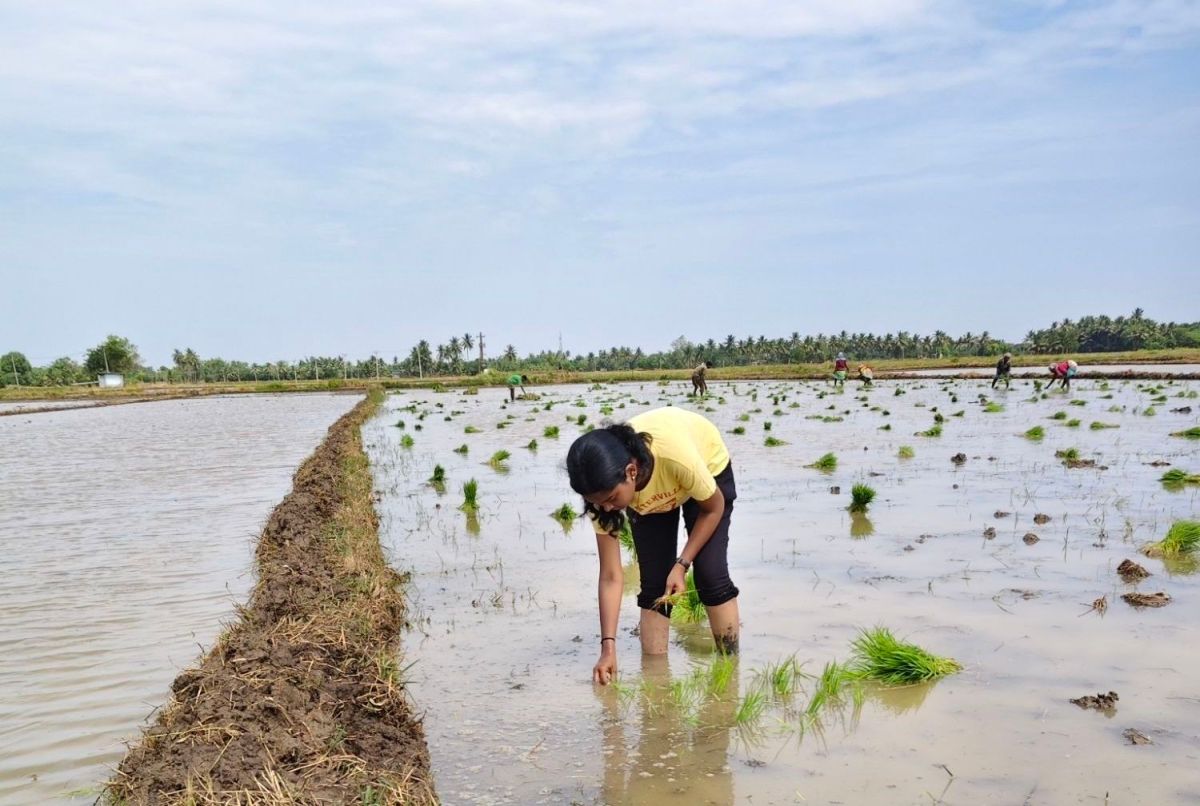

“Wake up early, wear something old, and don’t forget to bring your curiosity”. That was the only instruction I got before spending a day in the paddy fields of Needamangalam. And that one day turned out to be one of the most grounding and humbling experiences I’ve ever had.
It all started when I asked Sangeetha akka, the chairperson of Needamangalam Farmer Producer Company (FPC), if she could teach me the journey of paddy farming — from seeding to harvesting and selling. Without a second thought, she smiled and said, “come with me to the fields. I’ll show you everything.”
A Warm And Crazy Welcome
That morning, I woke up unusually excited, dressed in clothes that wouldn’t mind a little mud, and walked to Sangeetha akka’s house. Her family welcomed me with a warm breakfast – hot rice, flavorful brinjal curry, and sweet mangoes. That simple meal set the tone for the day: wholesome, grounded, and deeply connected to the land.
The Fields Whisper Stories
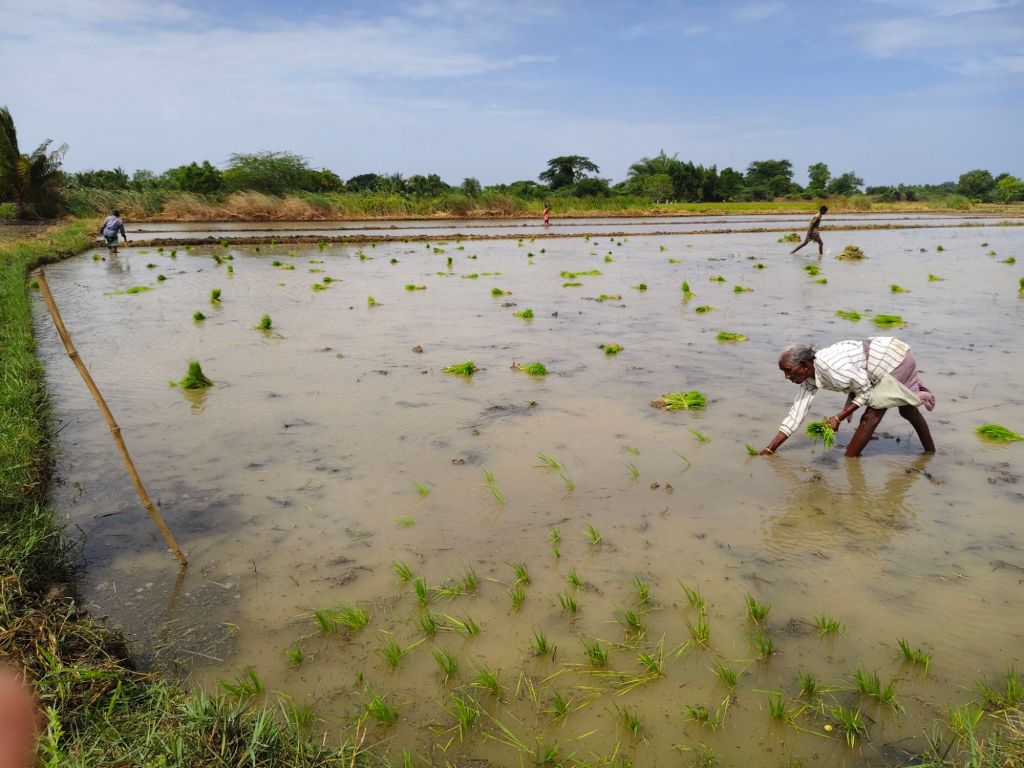
We walked to her fields, where planting saplings was underway. As soon as I stepped into the field, I realized I had entered a different world. One where time slows down, and every grain of soil has a story to tell. The fields were divided among several farmers, each in a different stage of cultivation. Some were still leveling the land, some were preparing for sowing, and others were already planting.
I was surprised and asked why it was so varied. Akka explained, “Needamangalam is known for cultivating rice all three seasons. So, farmers begin the process based on what suits their schedule and resources best.”
Muddy Feet and Fearful Steps
The walk into the field was not easy. The land was soggy, my foot sank deep into the mud, and I had to carefully walk only on the varappu (narrow raised boundaries between fields) to avoid slipping. While I wobbled and panicked, farmers casually walked across, laughing at how used to it they were.
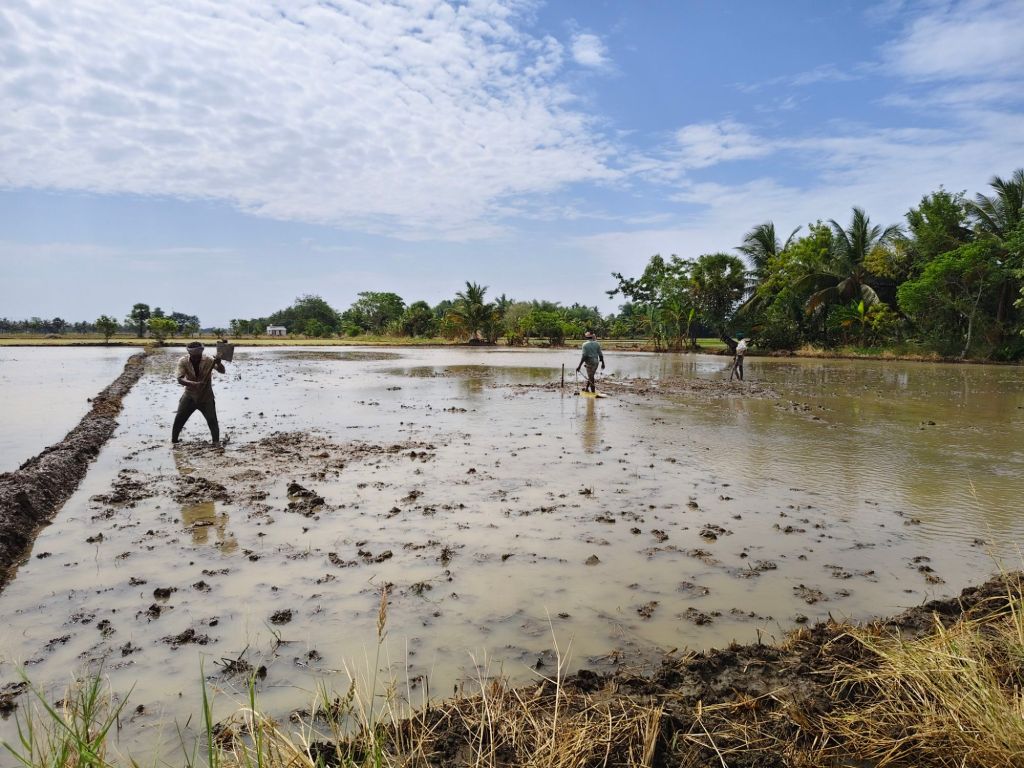
I approached one farmer who was smoothing out the field. “What are you doing, Anna?” I asked. “I’m leveling the land,” he said, pouring sand into uneven patches. Later, water from borewells would be released to prepare the field further. All this happened before any sowing even began.
He offered me tea, not in a flask, but from a bottle kept cool under a shady tree. I sipped it, feeling like I belonged, just for a moment.
Seeds, Choices, and Realities
Moving to the next field, I watched workers sow seeds. When I asked whether they used government-supplied seeds, they shook their heads. “Too many rules,” they said. “We buy from local stores – easier and flexible.”
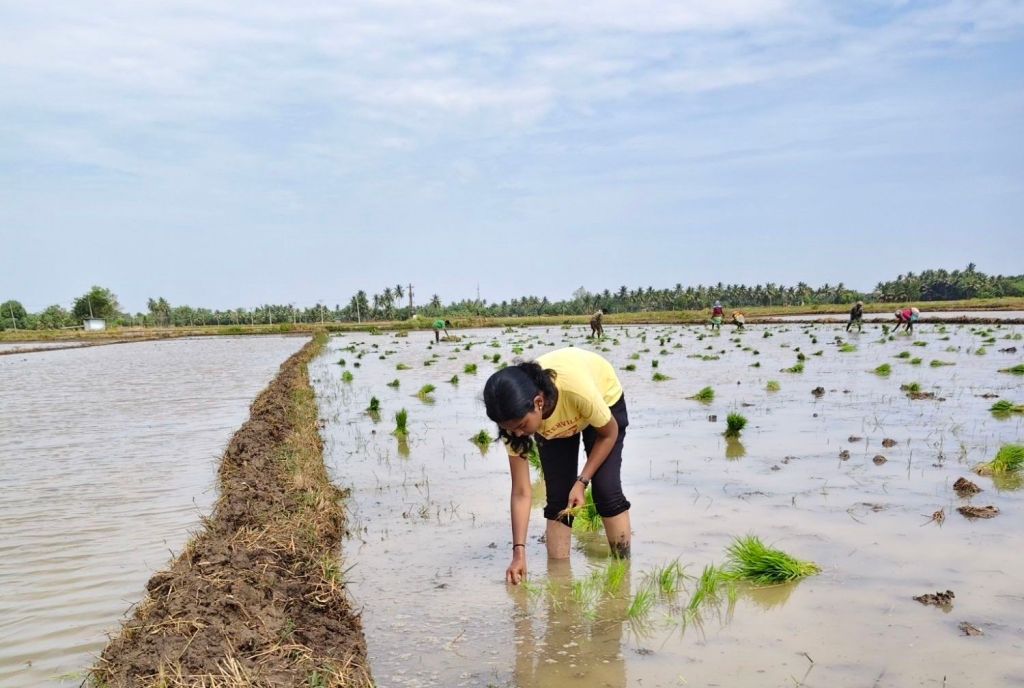
Later, in Akka’s field, the saplings were being planted – row after row by hands that had done it thousands of times. I wanted to try it too. I stepped into the slush, nervous, but determined. It was tough. My legs sank, my balance wobbled, and the work demanded more patience than I expected. Planting alone takes an entire day – usually from 7 AM to 5 PM – and each worker earns ₹500 a day.
Three Months, ₹10,000 Profit, and a Lot of Heart
Over tea breaks, I chatted with farmers about their cycle. It takes nearly three months from planting to harvest. Most farmers sell their paddy at the Tamil Nadu Direct purchase centre (DPC) where it’s sold in tons.
When I asked Akka about profits, she gave me a thoughtful smile. “We invest about ₹30,000 per cycle. If we’re lucky, we get ₹40,000 in return. That’s ₹10,000 profit – which again gets invested into the next cycle. The money is not big, but this is our life.”
I stood silently for a while, realizing how little we value the food that takes such effort to grow. These farmers don’t earn much, but their work is laborious, constant, and essential.
What I Took Back With Me
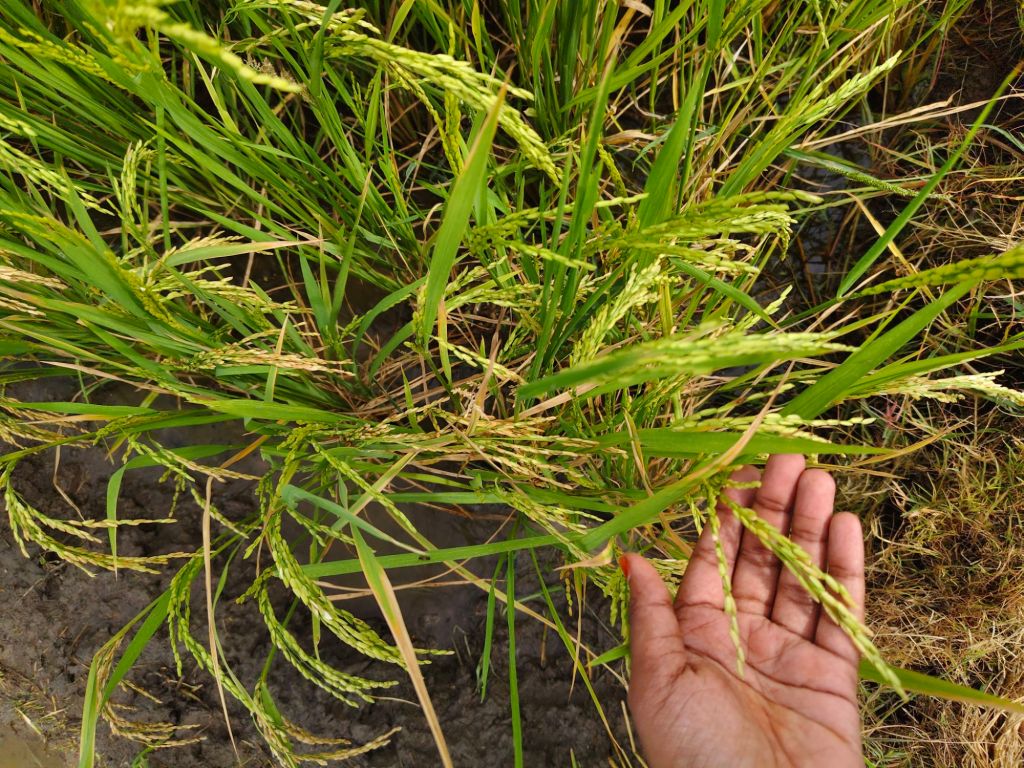
By sunset, I was muddy, tired, and deeply moved. It wasn’t just a lesson in farming – it was a lesson in life, in humility, and in resilience. That one day in the fields reminded me that behind every grain of rice on our plates is a farmer who wakes up at dawn, walks barefoot through soggy fields, and pours love and labor into the land.
And now, every time I eat rice, I remember those muddy steps, the homemade tea, and the stories the fields whispered to me.
 iVolunteer Blog - everything about volunteering