
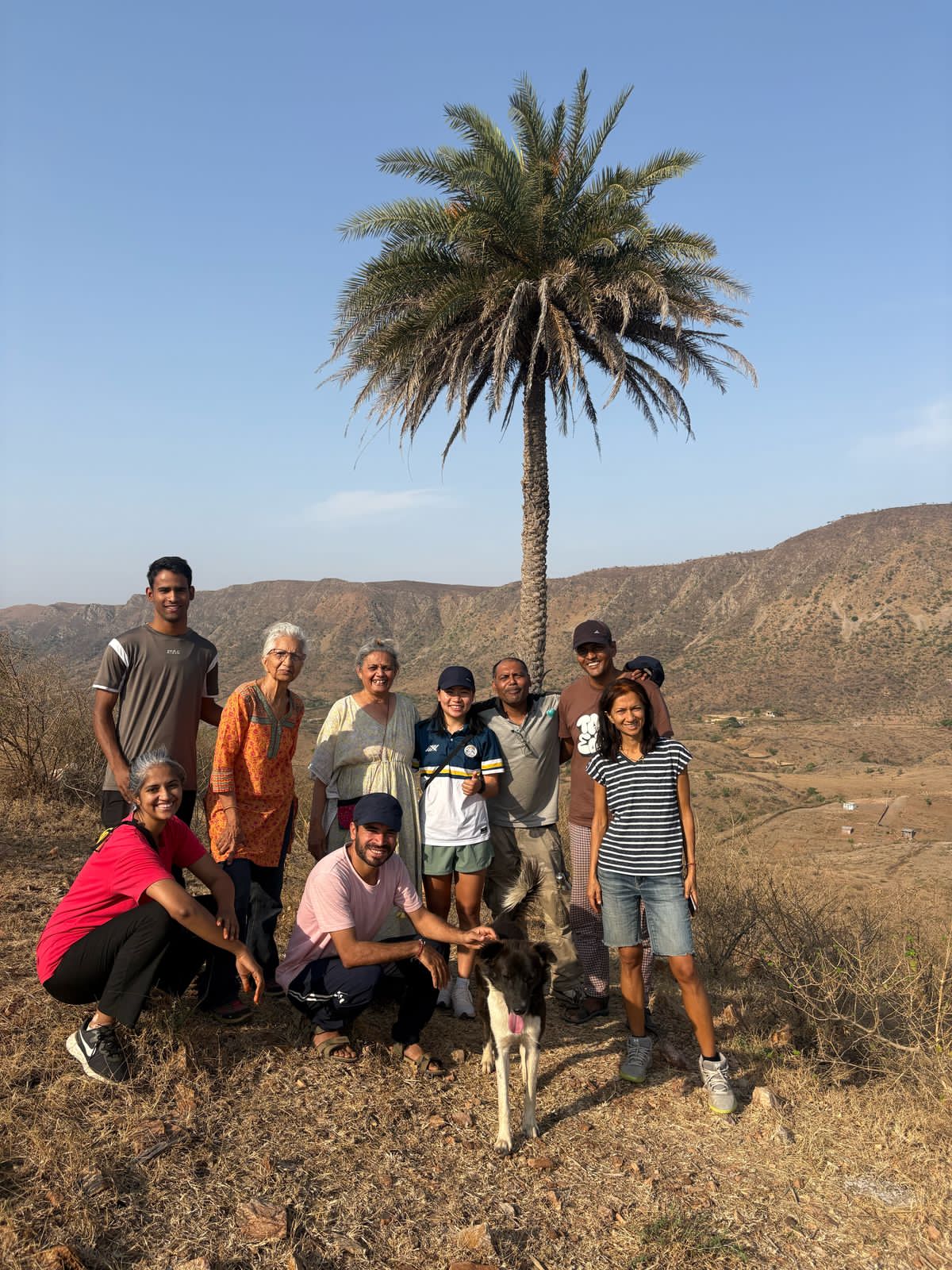
This blog is a reflective piece on the Reimagining Life workshop led by Manish Jain.
The workshop placed community rituals at its heart. Mornings were filled with games and treks. Hugs, compliments, and collective care flowed naturally. Fluids were passed around to beat the heat of Rajasthan. We even had swimming as a last resort when the sun became too harsh.
This space offered a stark contrast to the collapsing structures of modern education, economy, and ecology. The fast-paced, tech-driven, and unequal world has left us grappling with rising mental health crises, climate change, and unemployment.
So, should we return to our fulfilling traditional ways of living?
But wait, this workshop was sponsored by the JSW Foundation. Would I have been part of it if I were a farmer in Gandhi Ji’s village economy model? Traditionally, we exchanged goods and services through barter. Then came precious metals, followed by currency as a medium of exchange. Now, to satisfy our egos, we’ve arrived at Bitcoin with no underlying asset.
Money is perhaps the greatest invention of the human race. Should we abandon it and return to the Stone Age?
Not everything should be reversed. We cannot time-travel to the past. But we must ask, Were traditional systems truly better? If they were, how did we reach this point of self-destruction?
We often blame colonial powers and the European Industrial Revolution for putting humanity on this path. But if village economies once served us so well, why did people pursue wealth and expansion?
Greed may be the root cause.
Our first economics lesson teaches us that human wants are unlimited, while resources are limited. Thomas Malthus warned that we’d perish from hunger by now. Yet, thanks to innovations in cropping patterns and fertilizers, we survived. Should we reverse these advancements and return to organic farming? Don’t forget the collapse of Sri Lanka’s economy when it attempted such a transition.
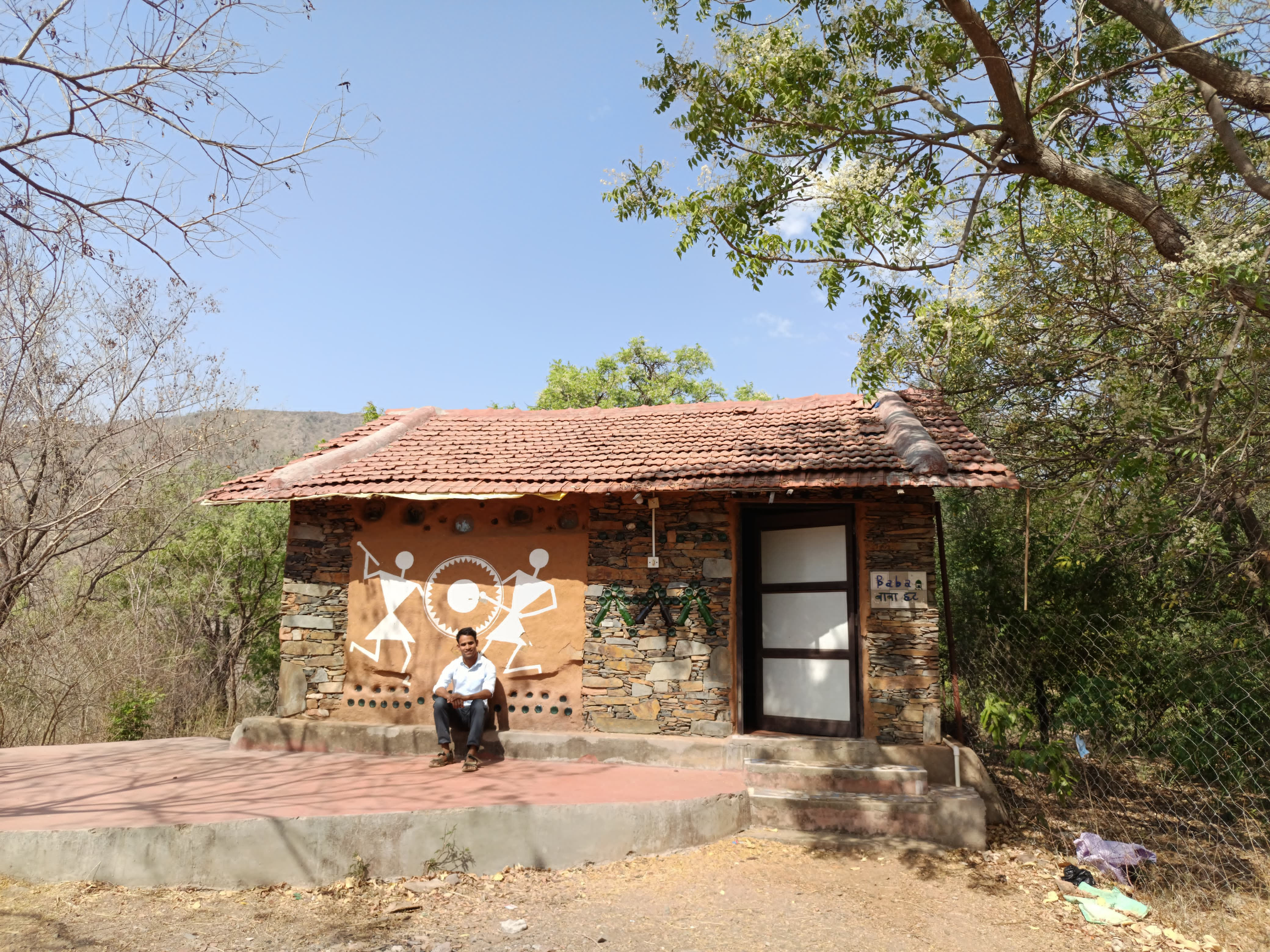
Hypothetically, if we were to go back to old times: where would we begin? At the village level? District? State? Nation?Is India ready to dismantle and redesign its systems while meeting the demands of the global economy? How long could we sustain ourselves during such a massive reboot?
If it were truly possible, wouldn’t we have more self-sustaining NGOs instead of ones dependent on foreign aid and CSR funds? Even if we build a locally sustainable model, is it scalable? replicable?
Do we have the luxury to experiment with returning to past systems without risking becoming global fools?Or should we look back… or design forward?
And what about democracy, freedom, equity, and gender justice?Would women be pushed back into kitchens? Would tribals be pushed into forests?
Would a return to tradition mean sacrificing progress?Let’s also remember, the collapse of the Soviet Union is a living example that extreme socialism doesn’t work either.
The answer isn’t to go fully backward or fully forward but inward, toward a more balanced life. We must first work on self-development as individuals and communities to let go of greed, entitlement, and inertia. Only then can we begin to transform the outer world.
Let’s move beyond sectoral interests. Let’s reimagine humanity as a shared journey. Vasudhaiva Kutumbakam – The world is one family!
 iVolunteer Blog - everything about volunteering