
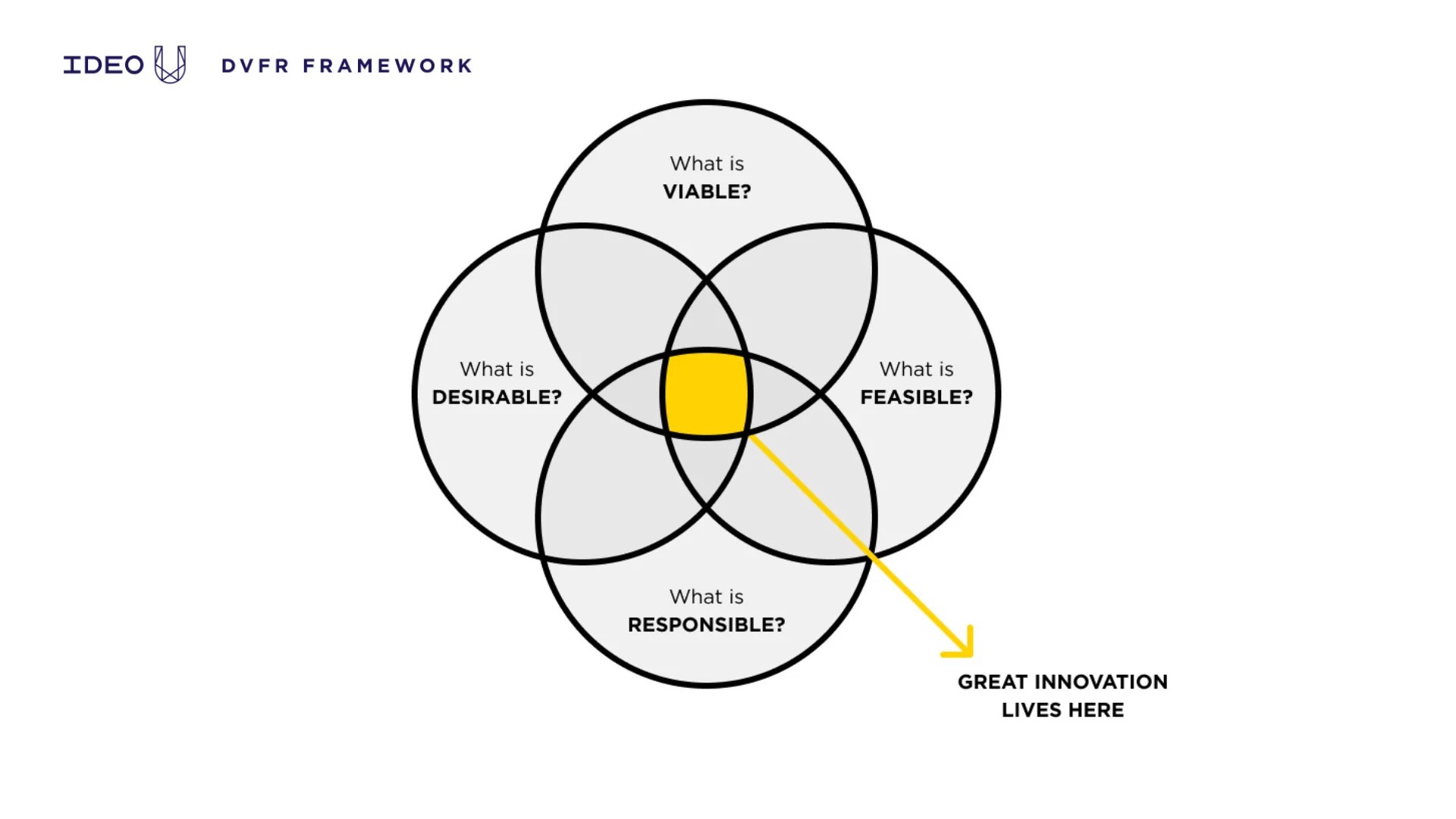
A term commonly heard in the innovation domain is ‘design thinking’. A non-linear, iterative process, design thinking is used to create innovative solutions that are prototyped and tested. It is considered a highly effective tool to tackle ill-defined and unknown problems. As a tool, design thinking enables innovation to adapt to rapidly changing environments, with the end goal being a technical solution that fulfils 3 criteria:
- Desirability – What does the end user want?
- Feasibility – Is it possible to build the solution?
- Viability – Can the end user benefit from the solution?
Despite being familiar with the elements, I was highly sceptical about utilising this tool in the development sector, where programs (as iterations) require a significant investment of effort, time, and money and where failure to impress might have substantial consequences. Hence, when Mr Harsh Chauhan took up a session on design thinking during our initial training in December 2023, my attention was piqued. The session covered multiple stages of the design thinking process, and the experience of utilising it in the field is mentioned below.
Stage 1 – Empathize
While conventional problem-solving techniques might place the upcoming stage as the first one, design thinking incorporates the human perspective by prioritising user needs. Before defining any problem, we need to know who we are doing all this for.
The User Profile, the product of the first stage, is a crucial tool in the design thinking process. It provides a detailed analysis of the individual or user group for whom the problem-solving exercise is undertaken (even if we solve for a group, it is helpful to represent the collective as a single entity). Empathy, a key component of this stage, is highly effective as it allows the design thinker to gain deeper insights into the user group, its background, and needs. In my fieldwork with the farmer community of Sandur Taluka, conducting interviews, surveys, and focus group discussions was instrumental in gaining significant insight into their lives, backgrounds, and decision-making rationales.
Stage 2 – Define
With the information gathered and the User Profile created, we can now move to the next stage. The Define stage is an iterative process where we analyse the observations and synthesise them to define the core problem statements. By keeping the spirit of empathy alive, we can identify the hurdles the user wishes to overcome. This iterative approach ensures a comprehensive understanding of the user’s needs.
Having surveyed the local populace, I defined the problem as ‘Income from the farm is insufficient to meet farmer financial needs.’ The catch was that simply targeting income was not enough since the populace was not overly dependent on farm income. This implied that the focus towards any initiative should be innovation-driven, and the alternative must justify the time and effort spent with its return. A pilot would be a good way to disburse benefits while maintaining a closely monitored space for the idea.
Initially, I thought I had nailed this portion, but I had to revisit this statement after executing stage 5. Read on to find out why.
Stage 3 – Ideate
The most enjoyable part of the design thinking process. At this stage, brainstorming takes precedence as we view the problems defined in Stage 2 through multiple lenses and identify innovative solutions to the problem statements.
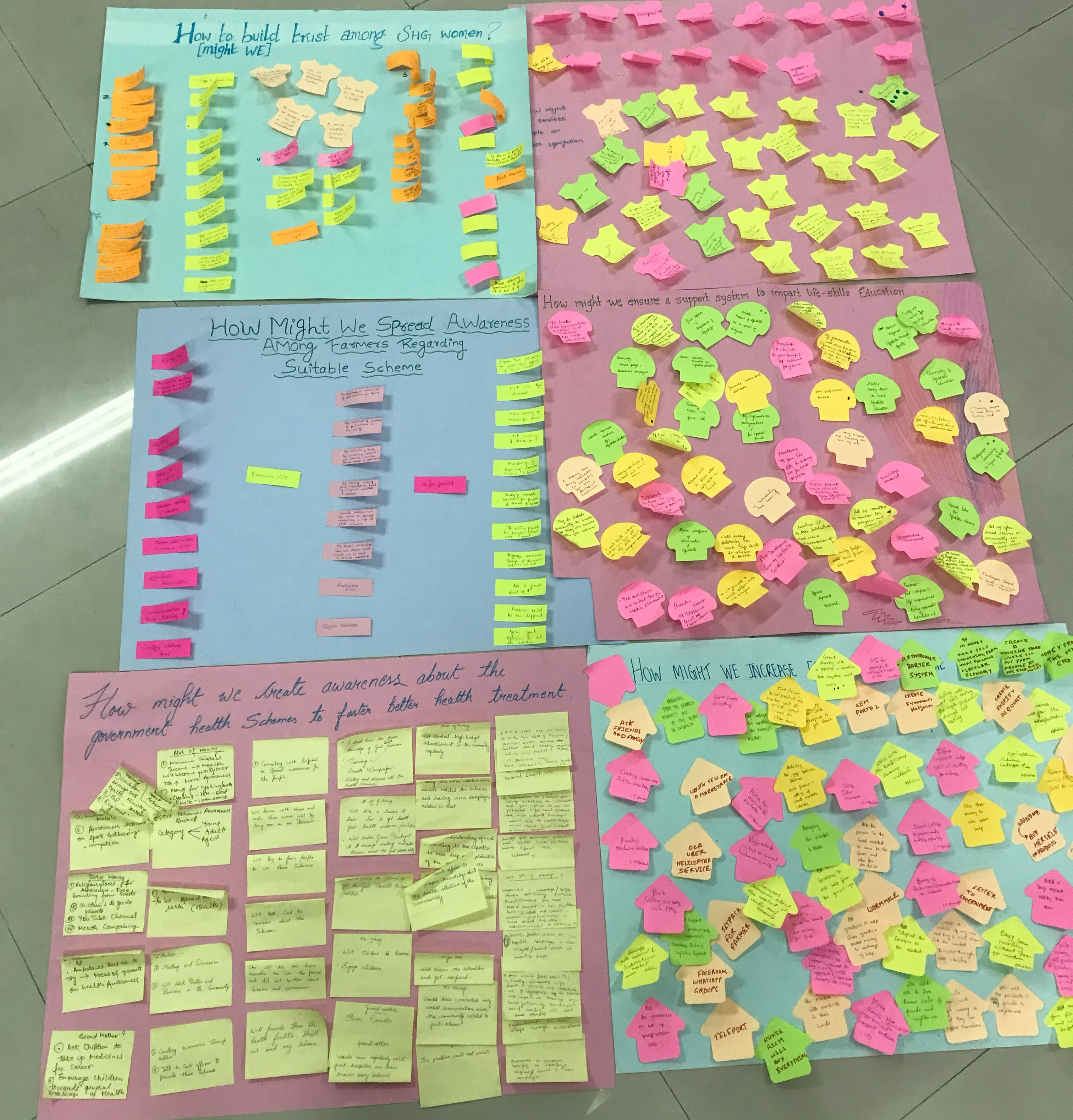
After consulting with agricultural experts, farmer groups, FPOs, and KVK researchers, I approached each of them independently to generate ideas for solutions. In meetings where time was a constraint, I laid a discussion-based approach to ideate for potential solutions. With my co-fellows and the farmer groups, I adopted innovative techniques, such as the Four-Panel Concept and the Round Robin technique. (Reference website is cited below.)
Stage 4 – Prototype
While stage 3 tends to have no restrictions (ideas can be executable, fanciful, imaginary, or impractical for specific situations), the prototyping stage introduces constraints. Despite being an experimental phase, the aim is to produce scalable versions of ideas centred around desirability, feasibility, and viability. This stage gives shape to ideas.
Having arrived at a large solution set, I got down to brass tacks: estimated budgets, analysed feasibility and risks associated with ideas, and brought a structure to the idea I wished to pursue: horticultural intercropping. A set of multiple crops on a single field with scattered harvest periods to ensure perennial revenue for the farmers.
Stage 5 – Testing
The prototype is now put to the test. Solutions are executed with the user’s needs as the top priority. The process is monitored, and results are analysed to determine the success of the idea. This stage is crucial in ensuring the viability and effectiveness of the proposed solutions.
With innovation at the forefront, I was able to encourage a farm group to pool certain unused land portions to create the test space for executing the pilot. What followed were unceremonious delays and unprecedented early rainfall, and the group decided to proceed with their own ideas. Bigger issues – such as resource ownership, weather, personal situations, and the like – will always outweigh ‘potential’. With the here and now mattering, the idea of a pilot had to be fine-tuned.
Following further research, additions to the user profile, and exposure visits, the addition of poultry farming was made in an area that possessed demand but lacked sufficient supply. The reception to this step was more favourable, reaffirming that problem definitions need to be constantly iterated with changing user demands.

Design thinking is a powerful tool for identifying complex problems and providing a platform for creative ideation. While the approach cannot guarantee immediate success, trusting the process will generate solutions that can benefit the end user, provided we continue to empathise and understand them.
Shout out to Mr Harsh Chauhan for conducting a thorough session and incorporating several activities to ensure that the fellows gain a complete understanding of design thinking.
Image Sources – https://www.ideou.com/blogs/inspiration/what-is-design-thinking?srsltid=AfmBOorCWye9mBe6q7pl1SOtWGvRMYoun2v8Bk6CF-ordImcCTFBN6Ax; https://www.interaction-design.org/literature/topics/design-thinking?srsltid=AfmBOoqs0Ahu9JG3Od4-uNPWrdD262ODRAIWmdbJXKP74sUtb3_Seb4A#what_is_design_thinking_(dt)?-0
Ideation Methods – https://www.workshopper.com/post/ideation-exercises
 iVolunteer Blog - everything about volunteering