
Presented by: Sibani Singh, JSW Foundation Fellow
Misogyny in the Mud
One of the most unexpected and eye-opening experiences I had during my entire pond rejuvenation journey—spanning the intense summer months of March, April, and May—was not just about water. It was about power. About gender. And about resilience.
If you’ve followed my blog series, you’d know that I’m currently working on a water governance and management project in Mahal, a village nestled in the rural coastal belt of Odisha. Here, like in many other parts of India, water is not just a resource—it’s a lifeline, shared across caste, class, and gender. It’s an issue that unites us all. Or at least, that’s what I believed when I began.

In the early months of my JSW Foundation Fellowship, I spent a lot of time understanding the community’s problems. When I first sat down with the villagers, men and women alike voiced the same concern with equal urgency—“We’ve been facing a water crisis for more than a decade.” Everyone agreed that something needed to change.
Fast forward to the implementation phase. My solution focused on reviving existing resources, specifically a large village pond that had been non-functional for over six years. The pond had potential, and so did the people.
My idea was simple: empower the community, build their capacity, and ensure that they themselves say, “Yes, we will rejuvenate this pond together.” And they did. After weeks of consultations and meetings throughout March, the community agreed. I ensured everyone was clear—no one would demand money or raise complaints later; this was for us, by us.
But as we moved forward, a strange dynamic began to surface. Despite initial enthusiasm, the panchayat’s support dried up. Political barriers meant I couldn’t access government labor schemes. And suddenly, the men who had promised support began to disappear.
In meetings, the village heads (all men) would smile and say, “Madam, empower the women. Water is their responsibility. We go to work. We’ll always support from the back.”
Fine, I said. I’ll empower the women.

And I did. We held sessions with SHG members and even non-SHG women, helping them understand their critical role in water governance. The women grew stronger with every meeting—raising their voices, asking questions, and leading conversations. It was powerful to witness.
But as the day of Shramdaan (voluntary labor) arrived, the truth emerged:
The same men who encouraged “women’s empowerment” refused to participate—unless they were paid.
It was a moment of deep irony and clarity. While women were being “empowered,” some men had merely used it as an opportunity to step away, putting the gun on women’s shoulders and firing their own agenda. It wasn’t support; it was convenient abdication.
Yet, what happened next moved me.
The women stood up. Together. United. Unshaken.
“We don’t care who supports us or not,” they said.
“We will do this ourselves.”
And they did.
Over 70% of the participants in the pond rejuvenation were women—digging, lifting, clearing, reviving not just the pond, but a shared sense of dignity and purpose. They proved what society often underestimates: women are not just caretakers of homes; they are the stewards of natural resources and community resilience.
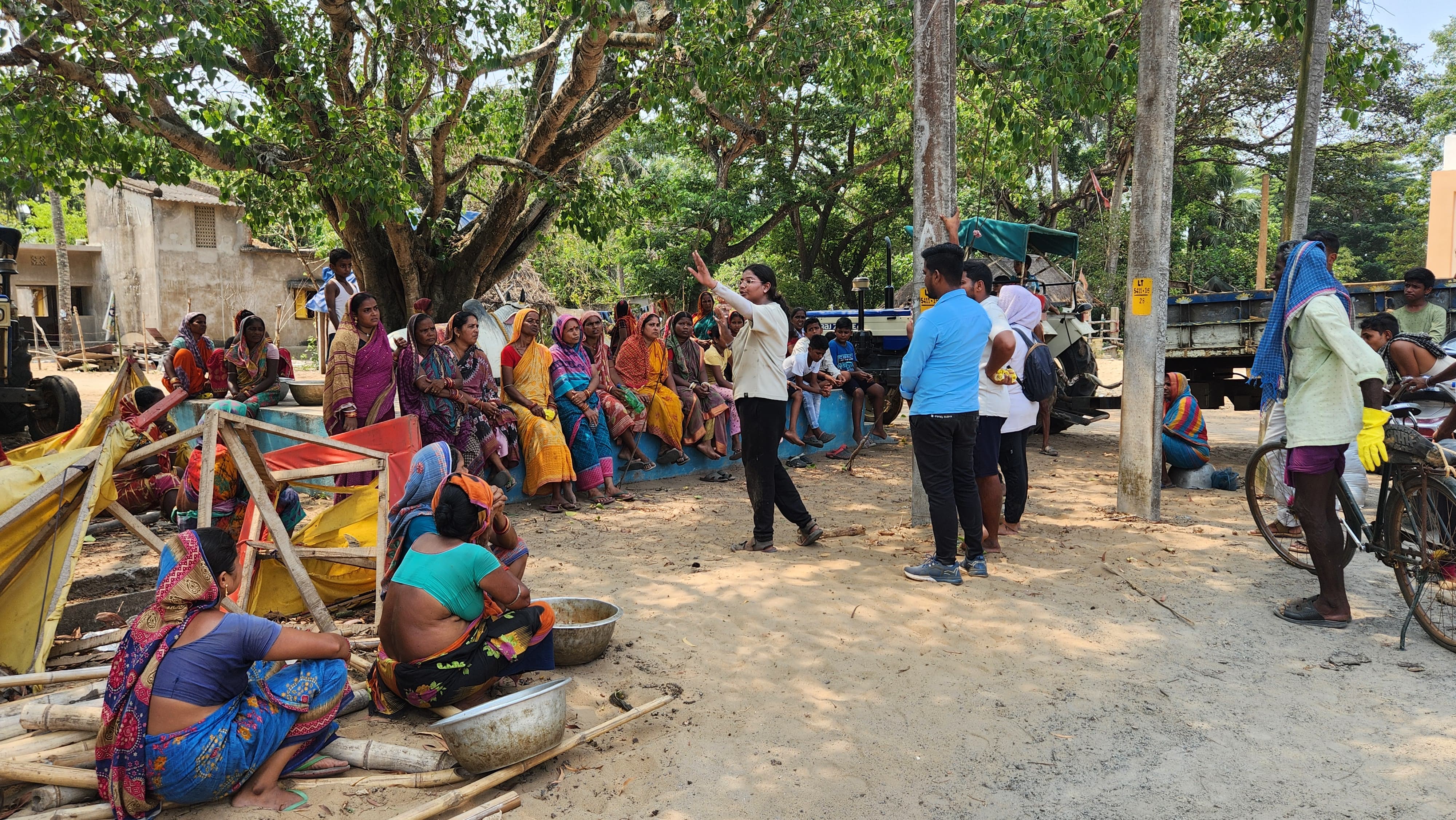
Yes, I cried. The younger version of me would have broken down in a moment like that—watching the disconnect between words and action, between men’s promises and women’s burden. But now, I cried out of pride.
Because I am a woman.
And she—
She cooks.
She cleans.
She conquers.
Disclaimer:
The views expressed in this blog are my own and do not represent the official position of JSW Foundation. This blog is based on my personal field experience in Mahal village. Every location and community comes with its own unique social dynamics and complexities. Situations and behaviors may differ across regions. This is not a generalization, but a reflection of one lived reality. This reflection includes light sarcasm to highlight social dynamics. It is intended to provoke thought, not offend.
 iVolunteer Blog - everything about volunteering
One reply on “She Cooks. She Cleans. She Conquers.”
love this blog Sibani
LikeLike