
Passion is a keyword associated with activities considered close to the heart. Described in the Oxford Dictionary as ‘a powerful feeling’, passion possesses the ability to push humans beyond conventional boundaries by evoking emotions, sometimes in a way which defies logic. The results derived from passion projects cannot be explained by traditional trends and analyses. For instance, conventional trends suggested that no foreign team has won at the Gabba Stadium. However, the Indian Cricket Team, driven by their passion for the sport, defied these trends and emerged victorious.
Animal husbandry, a key component of our agricultural system, holds immense potential as a sustainable and profitable venture. What began as a subsistence activity has now become a major driver of growth and sustainability in our economy. India, with its effective system that can feed its population of 1.43 billion, is a testament to this potential. This system not only involves the cultivation of food crops but also encompasses allied agricultural activities, such as animal husbandry, as an alternative source of income for farmers and a source of nutrition for consumers.
However, the Sandur Taluka of Ballari District paints a vastly different picture when compared to conventional agricultural areas. The industrial belt of Ballari District has been existing for a quarter of a century. Locals are used to the industrial presence, which seems immovable. Hence, adaptability is the golden word. The rise of alternate income opportunities – whether in the manufacturing industries (skilled and unskilled labour), housing domain (rentals), transport sector (ferrying passengers and goods) or service provision (housekeeping, education, restaurant and the like) – implies that the local populace does not have to rely on agriculture for income generation. Farm involvement is seen as a responsibility rather than an opportunity for innovation and growth. Hence the lack of on and off-farm innovation.
However, where one door closes, another opens.
Stationed in a village near the Telangana-Karnataka border called Rampura, Mrs Kavitha Girish was an individual passionate about pursuing animal husbandry in a region where the practice was commonly outsourced to the nomadic tribals. Married to Mr Girish Mitte, she was passionate about combining her passion with her husband’s entrepreneurial skillset to create an alternative income and nutrition source in an area dominated by the import of animals. They established a small animal husbandry unit overlooking NH 150A, initially focusing on sheep farming.
The couple’s business principle was simple – start small, establish profitability, and expand. They undertook significant studies to understand the nature of the breeds they reared – the conditions required for growth, the equipment and machinery needed, prevalent diseases and their treatments, and the sales supply chain – and incorporated these findings into their unit. With labour support provided by local individuals, the animal husbandry unit was able to generate profits only after a year following their initial investment. Following that, the unit branched out into goat farming and poultry farming and has recently successfully incorporated dairy farming.
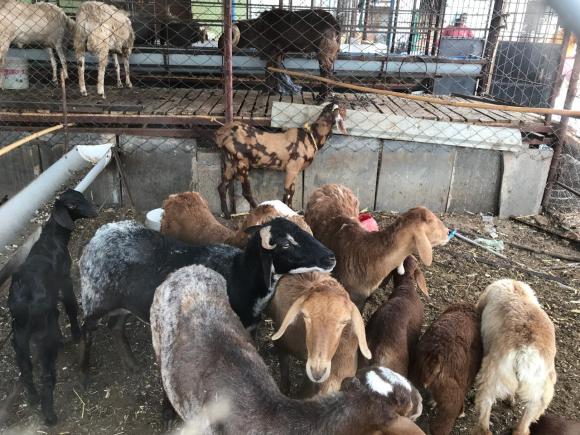


During the research phase of the initiative, I was looking forward to visiting such an ideal unit. When the opportunity presented itself during the visit of the fellows’ field guide, Mr. John Nelson, I set out to see the unit with my co-fellow, Manjunath Meti. The primary objective was to collect data on the poultry unit, which contained the Swarnadhara and Giriraja breeds of chickens. What followed was an enlightening discussion with Mrs Kavitha and Mr Girish about the benefits and perils of animal husbandry. The primary issue being tackled was the prevalence of diseases in the animals. With the space being slightly constrained, diseases easily passed on within the individual animal units. Hence, preventive care and maintenance of the units is their topmost priority. The productivity of the animal husbandry products (milk, meat, etc.) is subjective to the quality of feed provided and the maintenance of the storage units. Patience is the biggest asset of any entrepreneur, and it is no different in this sector. A significant benefit was that the per-capita return on investment was higher for animal husbandry when compared to conventional farming due to the ready market and the ongoing development of the local supply chain, which includes improved transportation and marketing strategies.
In a geography where complacency, a state of self-satisfaction that often leads to stagnation, had become the modus operandi, Mrs Kavitha’s passion and propensity for calculated risk-taking hit like a breath of fresh air. Hugely motivated by this visit, I was able to take the following steps in my poultry project with confidence. I was able to model the structure of the poultry program and training in line with practices recommended by institutions such as the Krishi Vigyan Kendra (KVK) at Hagari while fine-tuning a few steps in the methods developed by Mrs Kavitha. The future, post-handover to the farmers, seems cautiously hopeful.
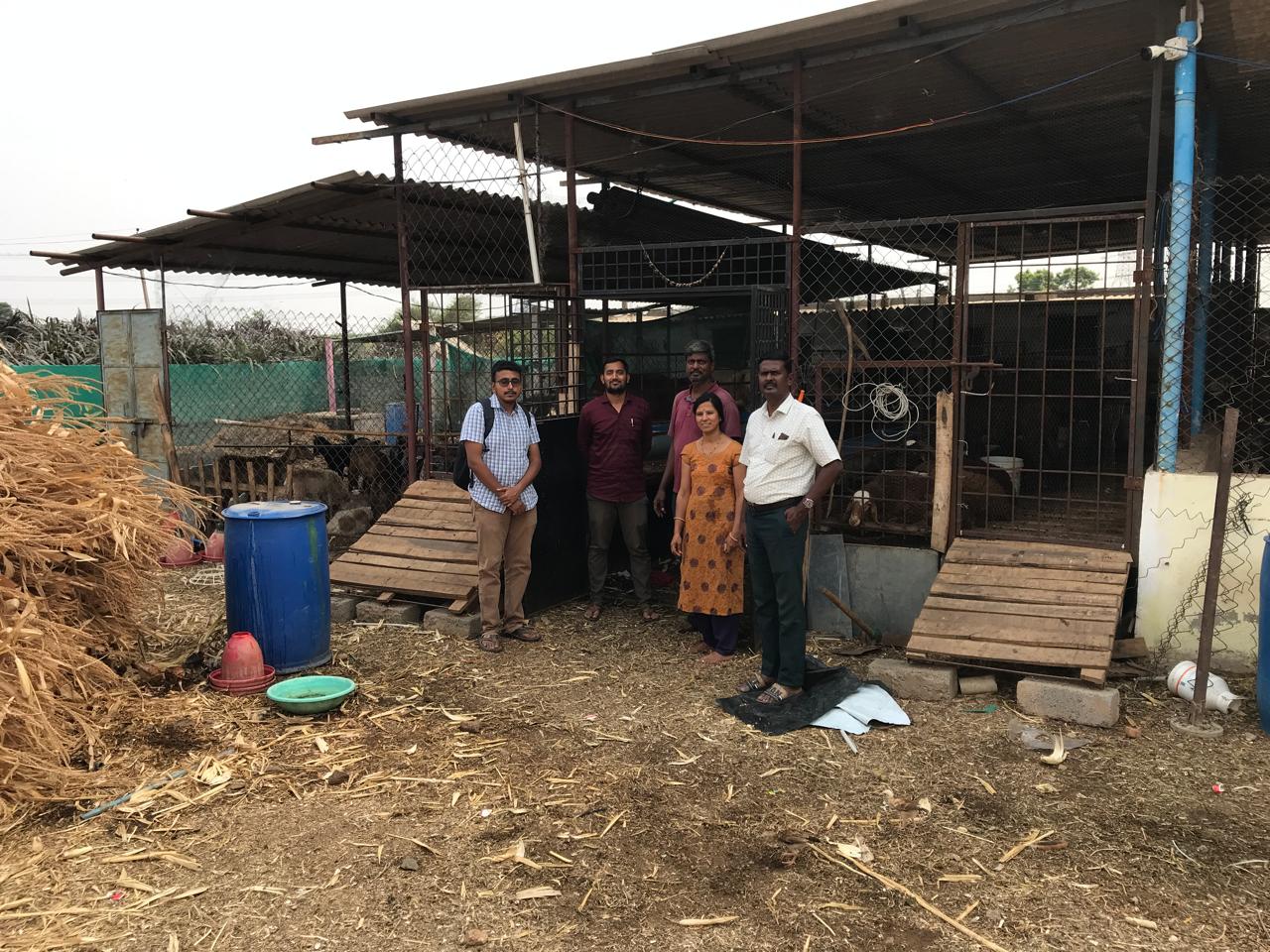
The biggest takeaway, though, was the fine-tuning of passion. Mrs Kavitha’s enthusiasm for animal husbandry can rub off on anyone. Even a thoroughly inexperienced city-bred like myself.
 iVolunteer Blog - everything about volunteering