Weaving together the rich experiences from Salem Heritage Market Festival and personal learnings highlighting the connection between tradition, sustainability and wellness.
While evolving at a lightning speed, the world carries its heritage along. People today are expected to carry the weight of heritage. It contains the ingredients and recipes required for wellness, health and peaceful life – tools that can save us from the chaos of much required development.
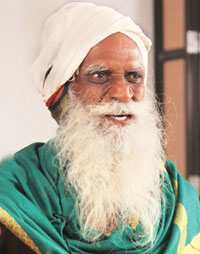
Nammazhavar, a revolutionary organic agricultural scientist from Tamil Nadu, championed the ideas of zero budget natural farming (ZBNF) by creating a circular agricultural system where interdependency is key. ZBNF is an agricultural method deeply rooted in tradition but scientifically efficient as well. The bottom portion of the stem is for the land, the middle is for cattle and the top is used for human consumption. Using cow dung and urine as a fertilizer on farm land creates and enriches the microbial factory in the soil. The worms and insects are then later pecked by the chickens. Excess water is later absorbed by the fencing trees which protect the crops from pest attack in return. In this small ecosystem, fished can also be introduced if rice is cultivated.
ZBNF doesn’t mean farming at zero cost; rather, it emphasizes farming without external inputs. Everything in the farm field is considered as an input holding internal value. Through keen observation farmers understood the plants cultivated their odour, colour and taste. Later, formulations like Panchakavya, Jeevamrita, Beejamrita were developed using cow dung, cow urine, jaggery, plant-based materials were used to make bio-pesticides and bio-fertilizers. This was possible with a profound understanding of behaviour of insects towards cultivated plants and weeds. Incurring zero external expenditure made the ZBNF a possibility and a profitable agricultural method.
People focused on sustenance and multi-purposing by befriending innovation. It was a necessity to live under challenging conditions. That’s how pottery, terracotta art, bead-making, jewellery making, handicrafts were born. History holds evidence for this fact – challenges have pushed humans harder to invent, discover and create. Today, rather than making entirely new discoveries, we are refining and finetuning our inventions from the past.
However, we are also striving to keep our heritage alive as they hold the anchor to our evolutionary advancements. Heritage, the scientifically tested heritages – I mean, has been immensely helpful in designing agricultural policies well-suited for changing climatic conditions in today’s world. Weekly heritage market is a good example of future meeting the past. Ancient records tell us about town marketplaces where local produces are sold and foreign traders purchase & sell goods at a competitive pricing. This made the economy localised and circular.
Today, in every major city, there is a growing crowd that consciously chooses heritage-centred lifestyle. These weekly markets have three major sections – organic food products, oils, etc., organic vegetables and fruits and traditional handicrafts – wooden toys, pencils, combs and palm leaf plates, containers, purses and more. I had the opportunity to witness the birth of one such heritage market during my fellowship journey. The market was to be established in Salem city and the produce sold in the stalls will be from farmers cultivating organically. Salem’s first heritage market launching festival was one learning experience for me.
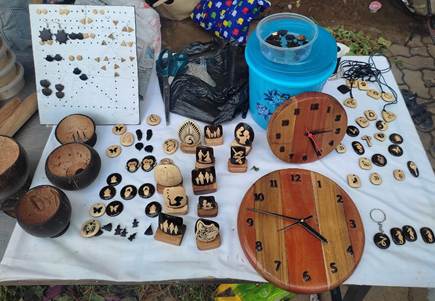
By 8 in the morning, the market was bustling. A floating crowd of 500 – 600 people visitors eagerly purchased vegetables, rice, plant saplings, handmade keychains & dollars made of coconut shells and much more. The people providing organic food in their stalls were over-worked that day as the Salem people turned up in large numbers. The steaming hot kuzhi-paniyarams and kozhukattais, payasam rich with ghee and fried cashews and crispy hot vada made of millets and traditional rice varieties were the show-toppers. It was a delight to see the shop keepers selling and the people eating happily. There was a group of ardent Tamil Social Workers who offered one groundnut ladoo to children reciting one Thirukkural. The deliciousness of the ladoos made the children recite more and more poems from Thirukkural. Every corner of the market was so active and happening.

I was thoroughly enjoying the entire festival. There was also an exhibition of making keychains, dollars and showcase pieces from coconut shells. The patience required is unimaginable. I was truly fascinated by the artisan’s attention to detail. This incident reminded me of the pottery-maker from Sattanatapuram in Sirkazhi, a town in Tamil Nadu known for its religiosity and agricultural prosperity. I was standing there watching him for nearly 30 minutes trying to understand how he is balancing the wheel, clay and form – all while conversing with a stranger. The potter invited me to have a try, offering me the potter’s seat. But he mistook my puzzled mind for eagerness and left the potter’s wheel with me.
As I touched the clay, I loved how smooth and silky it was. The potter added water, it became smoother only to collapse under my hand’s pressure. I wasn’t even applying any hard pressure. The technique was such that the potter should apply balanced pressure on the clay and pay full attention while creating. I was even more puzzled now. The artisan working with coconut shells left a similar impact on me.
What was more striking was the support this heritage market was receiving. Quality food is an emergency today as the younger generation is succumbing to diseases sooner than the earlier generations. I would like to quote my friend Siva, “In the coming future, the parents of today’s generation are going to be the first ones to witness the death of their younger generation.” Though unsettling, the statement reflects an alarming but growing reality. A technician from a diagnostics centre said ‘when I opened this clinic, the patients were from the age group of 40-60 yrs. It has been 5 years and the age group of patients is from 5 – 60 yrs.’
This grim truth reminds us to be more conscious in our choices. Food, healthcare, lifestyle, education, thinking and many more aspects of our life needs to be put through a master health check every now and then to stay on track. Our cultural roots are inevitable to guide us towards a sustainable lifestyle and also to preserve our identities.
Please do share your experiences from attending Heritage markets in your area or performing any form of sustainability promoting activities. I’d love to hear your lived experiences.
The author is currently a fellow with the JSW Foundation Fellowship Program, working on themes related to dryland agriculture, rural development, sustainability, and cultural preservation. Her interests include public policy, community storytelling, organic farming, and documenting lived experiences through writing and podcasting.
 iVolunteer Blog - everything about volunteering