“Children are the future of the nation” a phrase we hear so often that it’s almost lost its meaning. For many tribal children in Ashram Shalas, the future doesn’t feel like a promise. It feels like a court sentence in a locked room. A childhood lived behind invisible bars of neglect and ignorance.
Do we ever pause to reflect on the dreams we lock away inside emotional cages?
Take a closer look at the lives of students in Ashram Shalas, residential schools meant for children from tribal and marginalized communities. Many of them enter these institutions as early as age five, admitted into Class 1. At a time when children should be developing social, emotional, and cognitive abilities within their community. They are expected to wash their own clothes, clean their rooms, do their own dishes. Alongside managing emotional turmoil of being separated from their parents at such a tender age.
The government proudly showcases schemes targeting the upliftment of PVTGs (Particularly Vulnerable Tribal Groups), backed by dedicated departments like the Adivasi Vibhag. Policies are made, budgets are allocated, tribal boards are formed, and representatives are appointed. On paper, everything looks perfect.
But in these schools, education is often the last priority.
Teachers claim to be overburdened with maintaining records and following administrative procedures just to meet the basic survival needs of the kids. Everything functions at the lowest acceptable standard.
Amidst this, the real loss isn’t just in academic learning. It’s in the trade-off students make. They give up their childhood freedom and fun to be part of a system that promises to uplift them.
With one warden assigned to each hostel (one for boys and one for girls), the “easiest” way to manage children after school hours is to lock them in their traumatic rooms. Outdoor games are discouraged altogether – because they bring with them the risk of injury and the burden of extra (expected)supervision. Indoor games? Those are often locked away too, to prevent disputes over scarce resources. The simplest way to avoid problems is to eliminate amusement altogether.
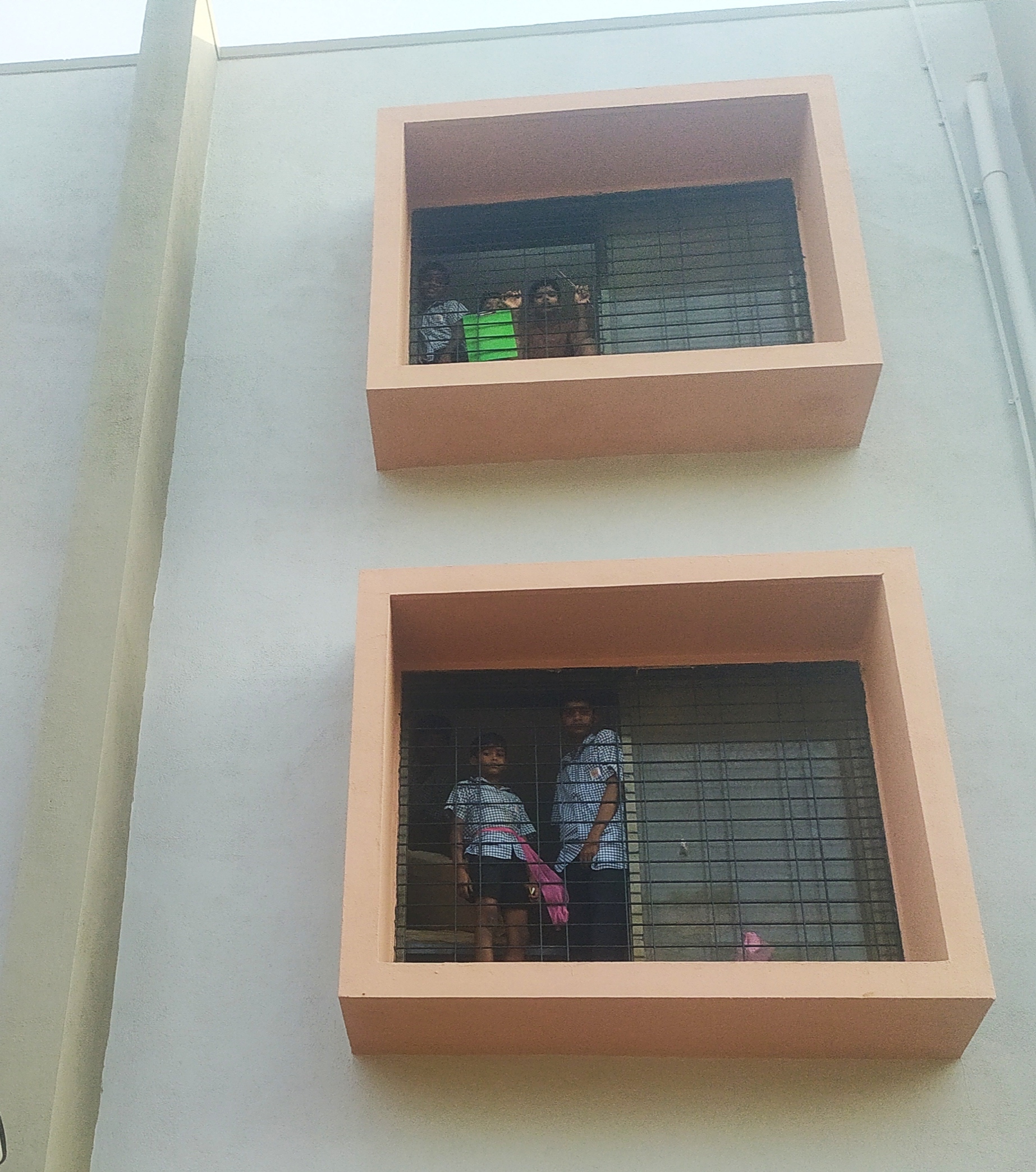
And so, the highlight of a child’s day in an Ashram Shala is to sneak through the window to watch vehicles pass by, freedom pass by, and life passes by…
We have created a system that removes children from their roots, promises them growth, but denies them basic emotional and social well-being.
We pretend to offer opportunity, but provide them with menial, unskilled jobs after schooling.
If children are truly the future of this nation, then we must ask:
What kind of future are we building?
Students deserve schools where their dreams can blossom not be buried.
 iVolunteer Blog - everything about volunteering