Mahal, Odisha | May 14, 2025
Nestled along the rural coastal belt of Odisha lies Mahal, a small but vibrant village in the Dhinkia panchayat, rich in culture and resilience. Over the years, however, the community has grappled with one of the most pressing issues of our times—water scarcity. With handpumps running dry or delivering contaminated water and tanker dependency growing, the people of Mahal found themselves on the brink of a water crisis. Amid this backdrop, a quiet revolution began to take shape—a movement to revive their own forgotten water heritage.
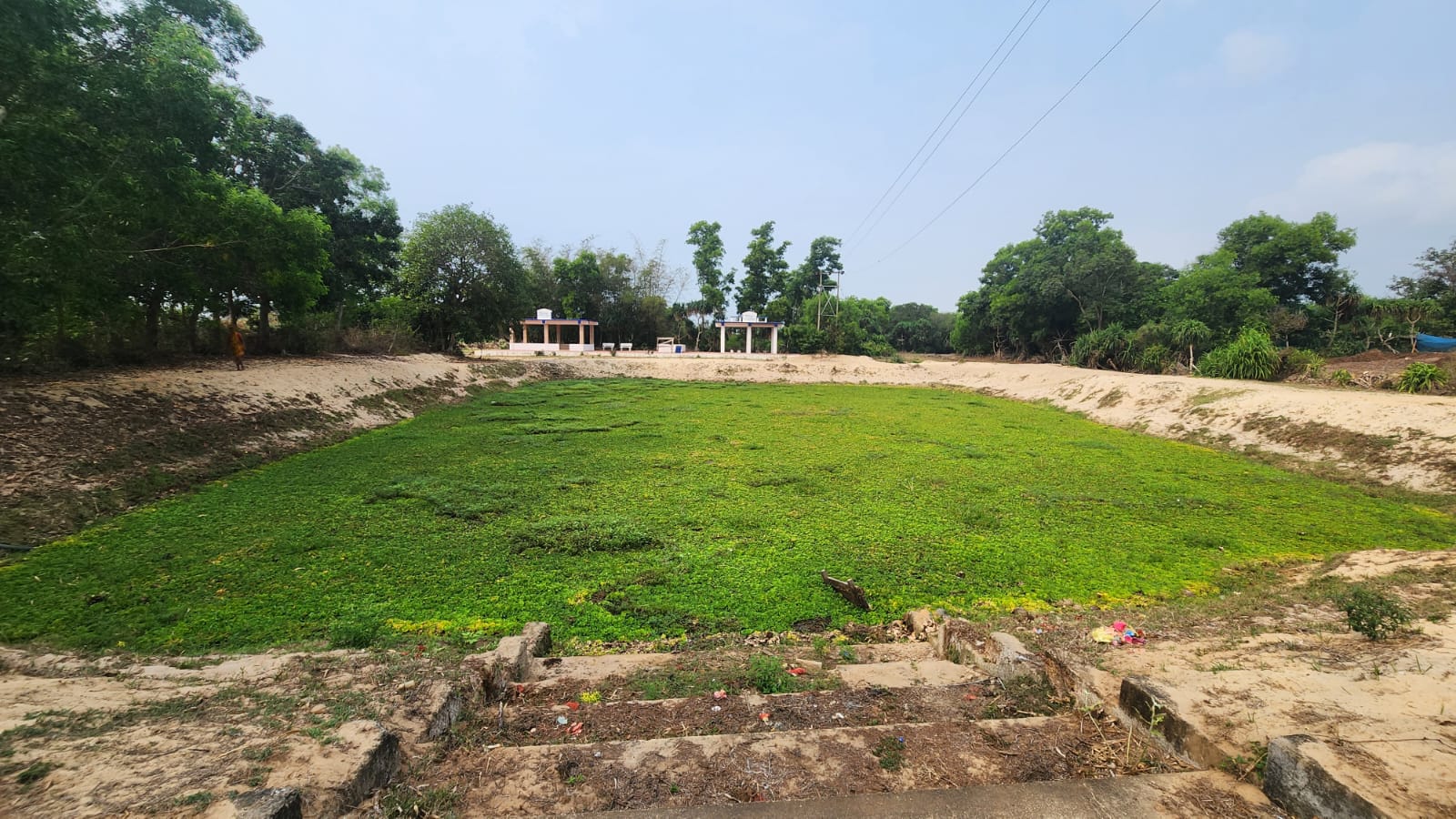
At the heart of this transformation is Thakura Gadia, a historic pond believed to be 30–40 years old. Once a vital source of water for daily needs, rituals, and recreation, the pond had fallen into disuse over the past five years. Choked with invasive weeds, covered in silt, and forgotten by most, it stood as a symbol of neglect—but also of untapped potential.
As part of my two-year journey as a JSW Foundation Fellow under the “Jal Swaraj: Water Governance and Management” project, one of my foremost objectives was to rejuvenate existing, community-owned water sources. Thakura Gadia stood out—not just because of its location behind the community clubhouse—but because of what it represented: a chance to return water stewardship to the people of Mahal.
Pond Profile:
- Area: 2508.38 sq. meter
- Perimeter: 201.17 meter
- Location Coordinates:
- Latitude: 20°14’22.82”
- Longitude: 86°35’9.50”
With technical insights gained from hands-on field experiences and training, and support from the NGO iVolunteer, we identified this pond as a key intervention point in our water governance strategy. Pond rejuvenation was not just an infrastructure task; it was about rekindling community ownership, reviving traditional knowledge, and restoring an ecological asset.
The journey wasn’t easy. But what unfolded next was nothing short of remarkable.
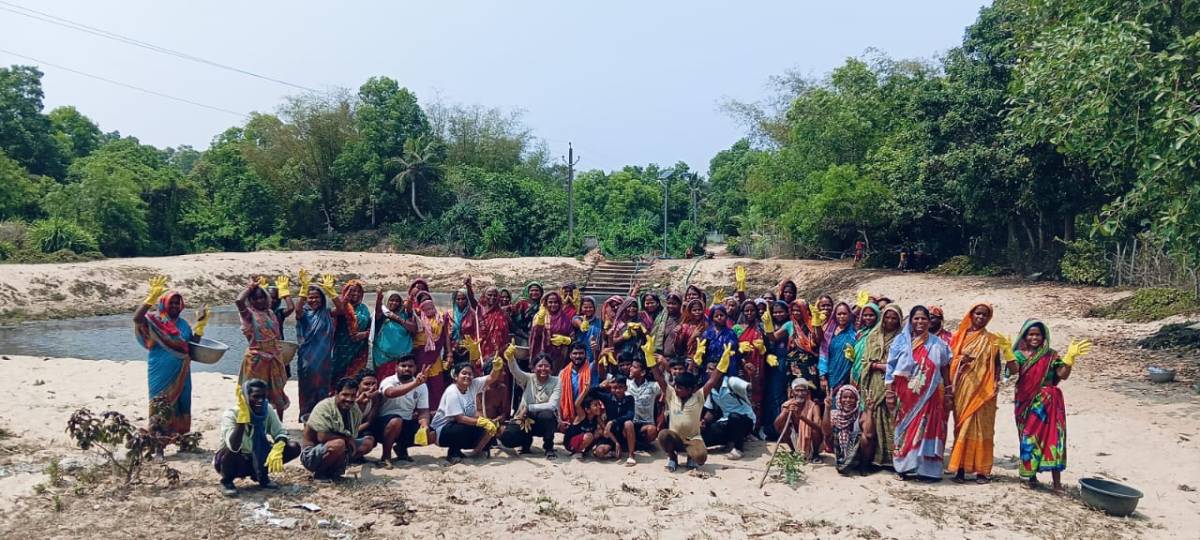
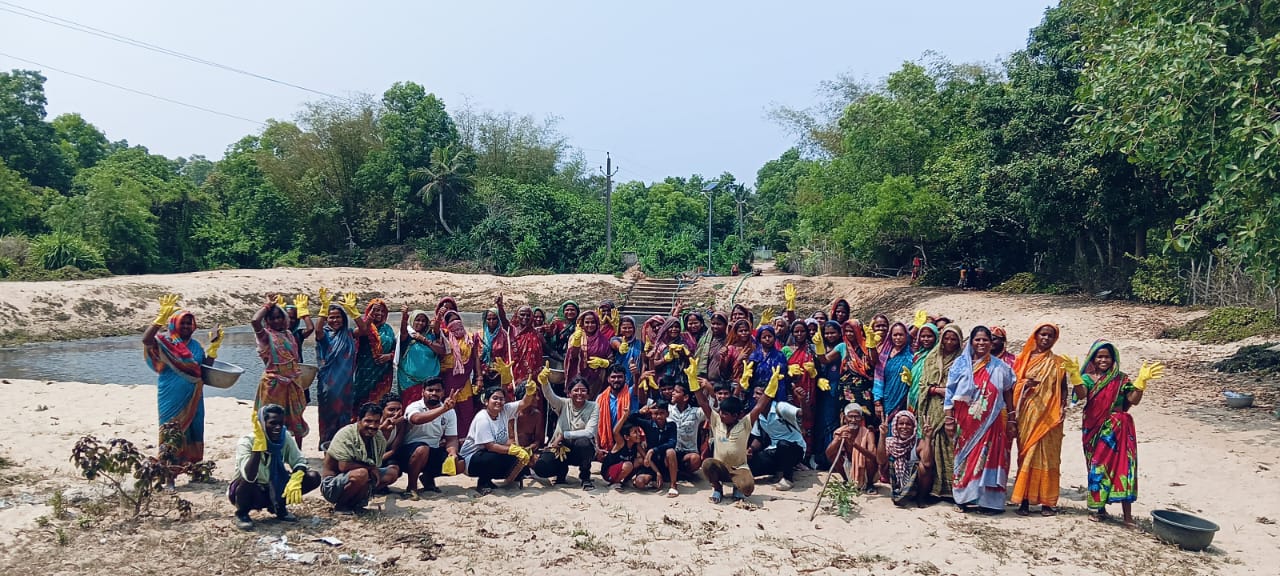
On May 14, 2025, over 90 villagers, including 70 spirited women, came together in a stunning display of solidarity and purpose. Armed with basic tools, boundless energy, and the spirit of Shram Daan (voluntary labour), the people of Mahal brought Thakura Gadia back to life.

This was the first phase of rejuvenation—focused on removing invasive weeds and clearing access pathways. Despite limited resources, the entire activity was driven by the community. The villagers organized logistics, brought their own equipment, and most importantly, showed up—not for a wage, but for a cause.
“Water is not just a need—it is a right, a responsibility, and a relationship. When people come together to restore a water body, they are restoring faith in themselves and their future.”
— Sibani Singh, JSW Foundation Fellow
Thakura Gadia is once again usable for bathing, post-cremation rituals, and recreation. But more than that, it has become a living symbol of what collective action, deep-rooted ownership, and local leadership can achieve.

 iVolunteer Blog - everything about volunteering