
The month of February marked the fulfilment of one promise I’ve been making for over 5 years now, doing an exposure visit/ trip with my entire team including the Swasthya Sanchalikas of Project Koshika. We spent a lot of time moving backwards and forwards on dates, dodging between harvest season timelines and festivals, land and water conditions, weddings, and more. Finally we chose a 3 day window that almost everyone agreed with.
Me and my team member (Devi), made a lot of lists, from schedules and logistics and also brought a bunch of things we thought would be helpful. Diapers, oil, snacks, shampoo and soap, and so much more. We packed puke bags and medicines by the bundle. We thought we were prepared with everything, and had planned for all scenarios. But even with all the hyper planning, we encountered many things that were completely unexpected to us. Here are some of them:
The idea of travelling for fun: For people who travel regularly, there is a lot one gets used to, and are comfortable with travelling long distances to get to a certain interesting place. But for our Sanchalikas, it was way more than they bargained for. They were absolutely tired at many points of the trip and needed immediate rest. There was some resentment and a few choruses of ‘are we there yet’, by the end of the day. The bus trips were the hardest, as the motion made them sick and the children cried to go back home. Some of them made the best use of their time by chatting non stop, though these were the women who hadn’t brought children along, and could really laugh at the top of their voices without waking up a child.

Carrying a child for 8 hours is tedious. 6 out of the 10 women who came for the trip had children, some as young as 3 and 6 months. Normally, in the village, a woman doesn’t need to carry her child all the time and walk. Often, when they are doing their chores, the child is left with younger family members or grandparents. There is a support system that keeps the children happy and engaged. On the trip, with long walks and visits to different places, the constant travel fatigued these mothers. Some of the other sanchalikas volunteered to carry the children for some distances. But even then, most of the onus of feeding and cleaning is on the mother. The children also became increasingly anxious when their mothers weren’t around, so leaving them for a long spell was often hard.
The trip definitely brought in its wake a kind of freedom that is not often afforded to the women of the community. Living in a room together, without other family members, dressing up and walking to places to just see the view, with not much work to do in the day. They were tired but they still made the most of it. Talking late into the night and finding spaces to talk to one another and relax together. They joked and made fun of one another, complained about the food, and even got the younger unmarried team members to wear sarees.
We differed greatly on food. Many of the sanchalikas were not impressed by the ‘differences’ or ‘different kinds of food’ encountered in another region of Madhya Pradesh. It was often too spicy or too oily. Or just plain wrong. The idea of novelty wasn’t appealing to them, especially in food and they looked more for familiarity than something new to try. They also differed in these tastebuds but overall the food wasn’t a big crowd pleaser. The dal baffle, spicy dal and sweet kadhi (things I loved!) was very weird for them. They did buy their packets of ‘Kurkure’ as and when they missed snacks from home. I found myself feeling grateful for the spectacular marketing of these snacks that has imploded in the local village markets of Panna as well.
Some encounters were grim, others awkward. We got to experience first hand how women from seemingly rural areas are often treated. Shop owners, hoteliers, even a driver made a comment with the phrase ‘in logon ko’. Often to remark on poverty or backwardness or in one case where the guest house owner didn’t ‘slippers inside the home’. We found ourselves subconsciously getting very annoyed and having to fight for the smallest of things. You begin to notice just how much remarks are steeped with implications of caste, class and gender. And in places where they might not be, we still look for them. For example, at a children’s clothes shop, a facilitator was worried to say no to the array of clothes shown to her by the salesperson. She was worried he would shout at her for wasting his time.
Jumping in clean Narmada water was a treat for all of us. For some it was the religious significance of a cleansing dip in the Narmada, for others it was a nice cool splash in a clean river. We also got to do some boating, which was an interesting experience, since the community holds the belief that a child and its maternal relatives can’t get on a boat together. They believe it brings bad luck, but they did not know the origin of that belief. We managed this task by dividing the group into children and their relatives and found a way where everyone could go for the boat ride, a first time experience for most of our facilitators.
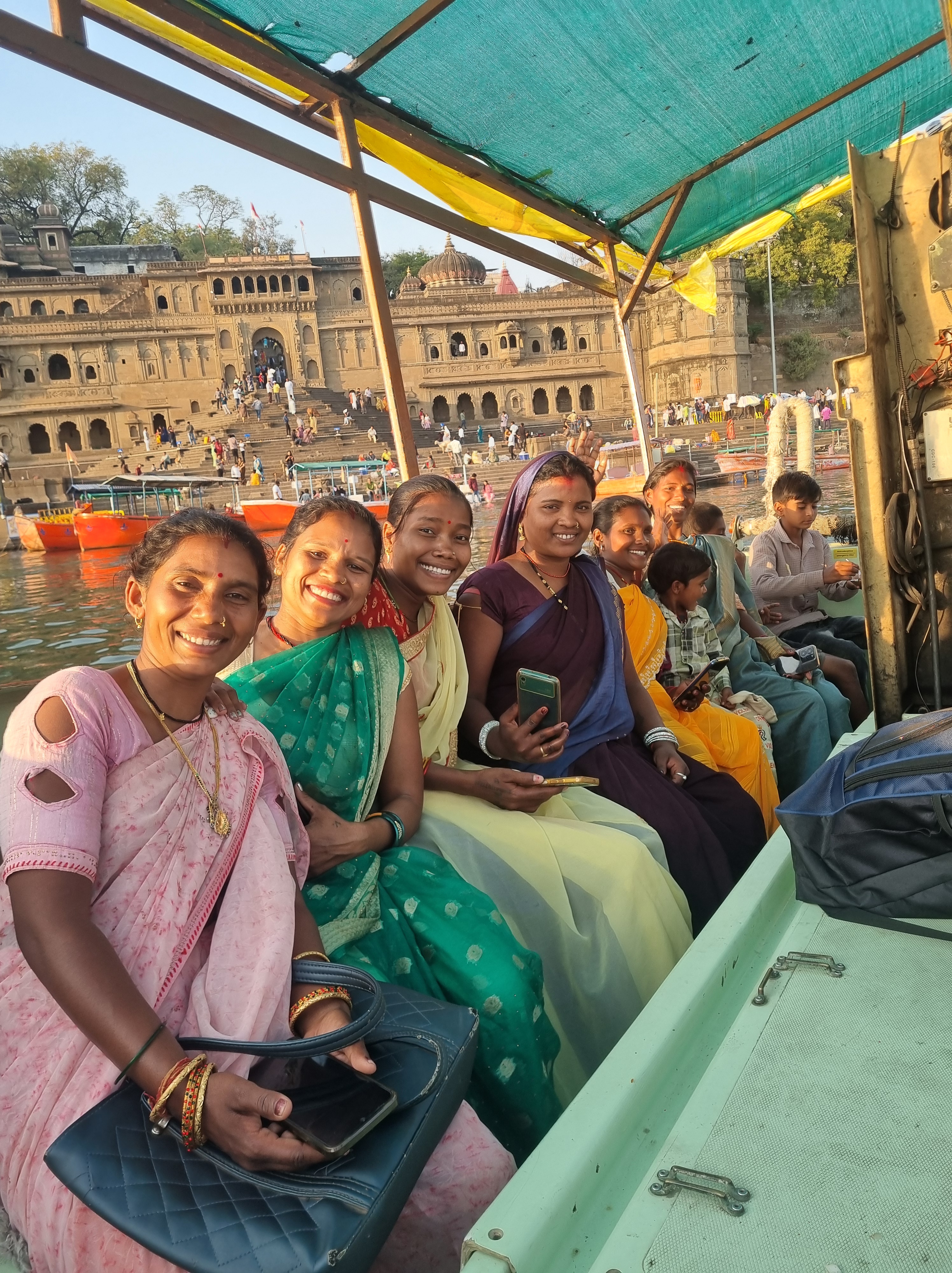
I am still not sure if they had a good time, or if they would carry memories of this trip with them into the future. For me, I was constantly juggling timelines and ensuring everyone was okay and didn’t want for anything. I was anxious for the safety of the children and all the constant logistics that needed attending. But there were moments – when it felt like all of that faded away. When there wasn’t much difference between us, that we weren’t sanchalikas and program team members. We weren’t part of the families and the hierarchies we had left behind. We weren’t part of our daily limitations and worries of children and work deadlines and endless chores. We were just some women, who had travelled from a far off place, together, and were sitting on the banks of a river, looking at the view and enjoying an evening breeze.
 iVolunteer Blog - everything about volunteering