Please Note: This Blog does not support or oppose any religion, community, party, state, or country. The blog has been written for reading purposes only.
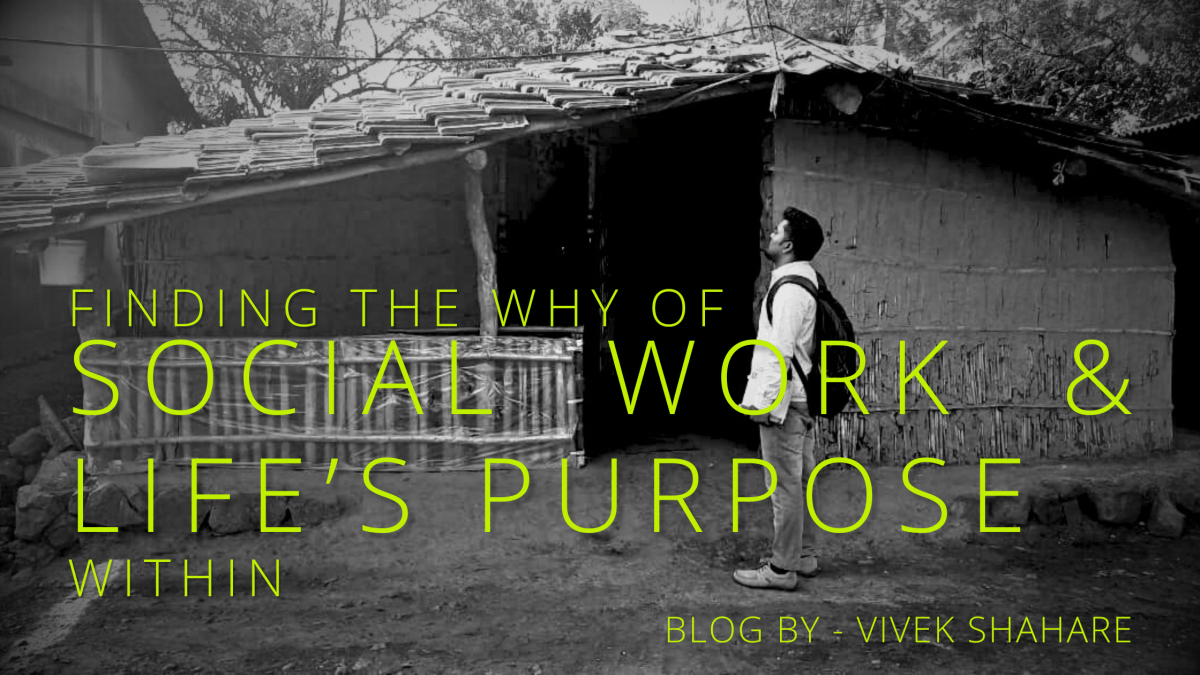
Hello, I am Vivek, and this is the story of why and how I became a social worker. During my school days, I used to sit at the back of the classroom and often punished by teachers. Later, from 9th grade, I started volunteering in school to support teaching and non-teaching staff in organizing school events like Independence Day, Cultural Fest, prayer assemblies, and many other events. This helped me gain a sense of appreciation from teachers. With that motivation, I also started to focus on my studies. Similarly, I started working as a volunteer at the Interact Club of my school, which was run by the Rotary Club from the district. This opportunity helped me to develop leadership qualities by participating in various activities like cleanliness campaigns, tree plantation events, and attending seminars, etc. I started participating in various workshops, events, and speech seminars to understand the social issues and people who are working as social workers. I got inspired by reading the stories, watching movies, and listening to my teachers, social workers, and social activists. They later supported me to become one.
Once was listening to Dr.Abhay Bang’s speech and I remembered the quote “First they came …” (German: Zuerst kamen sie …) is the poetic form of a 1946 post-war confessional prose by the German Lutheran pastor Martin Niemöller (1892–1984). It is about the silence of German intellectuals and clergy—including, by his own admission, Niemöller himself—following the Nazis’ rise to power and subsequent incremental purging of their chosen targets, group after group. Many variations and adaptations in the spirit of the original have been published in the English language. It deals with themes of persecution, guilt, repentance, solidarity, and personal responsibility.
First they came for the socialists, and I did not speak out—
Because I was not a socialist.
Then they came for the trade unionists, and I did not speak out—
Because I was not a trade unionist.
Then they came for the Jews, and I did not speak out—
Because I was not a Jew.
Then they came for me—and there was no one left to speak for me.
–Martin Niemöller
(Source: https://en.wikipedia.org/wiki/First_they_came_…)
“I feel the same when I get to know to such incidents…”
More than 30,000 killed in Gaza, Hamas-run health ministry says
(Report by: By Yolande Knell, BBC News, Jerusalem, 1 March 2024)
A Year After Manipur Violence, Youngsters Take up Arms to Protect Villages
(Report by: The Wire Staff, 06 May 2024)
‘Climate change biggest threat to human health’
(Source: The Times of India, TNN / May 28, 2024, 04:57 IST)
Self-reporting of mental health issues under 1% in India: Study
(By Neil Ghai, ET Bureau, Last Updated: Jan 30, 2024, 05:34:00 PM IST)
The Hasdeo Bachao Movement: How Adivasis are Challenging Paradigms of ‘Vikas’
(By Freny Manecksha, The Wire, 19 Feb 2024)
With high unemployment, is India losing its demographic advantage?
(By Kodoth Prabhakaran Nair, Deccan Herald, 27 May 2024)
As famine looms in Sudan, the hungry eat soil and leaves
(By MAGGIE MICHAEL, Visuals by EL TAYEB SIDDIG, Reuters, Filed: April 30, 2024, 11 a.m. GMT, OMDURMAN, Sudan)
I feel the same way when I hear about such incidents, “where people are losing their loved ones because of war or some genocide behavior, or does the life of people in this world have no cost? Somewhere the future of this world ‘The Youths’, are fighting for their rights, for their family or communities, for their education or employment, or the future of ‘Youths’ is getting ignored? Are the people who are dealing with mental health issues aware that they are suffering and can get healed or do they lack assistance? Or the environment in our homes, communities, workspaces, educational institutions, and other places is responsible for people killing themselves? Do people have to fight for their land or their basic needs like food and safety? Or who is responsible for creating a situation, where people are fighting for their land or their rights? Do we think that this beautiful Earth and the life on it are dealing with the change in climate and its disastrous effects? And the problems in this world are forcing me to think about WHAT, WHEN, WHERE, WHOM, HOW, WHY of such incidents.” I feel the same when I hear about such incidents, Like Niemöller said in the above Quote, Will the same thing happen to me, my loved ones, and the people around me? Or are we all going through the same suffering?
I used to feel helpless because I discovered many problems in the world. I wanted to make a difference, but I doubted that my efforts would be sufficient to solve them. I found that I wasn’t alone in feeling this way after watching, reading, or listening to the news. So, I decided to work on myself to develop a more positive mindset and plan my actions. I started by limiting my time on social media and giving more time to my thoughts and actions. I also began seeking out and focusing on good news, such as speeches by social workers, positive activities, and reading about the work done by non-profit organizations or NGOs. It’s surprising and makes me feel happy to see that so much good work is happening around the world. I started practicing meditation, mindfulness activities, and spending time with friends, family, and people who are working for the community. I realized that I can’t control events like wars, corruption, climate change, and injustice, but I can try to adopt sustainable practices in my daily life, such as practicing environment conservation initiatives and supporting charity events, raising voices against bad or other different positive ways. From a professional perspective, I am working with social organizations that are doing good for society through volunteering, or working with non-profits or civic society organizations that align with my values. Through this journey of working with good organizations, I have found a sense of living with purpose, working with communities, children, and youth to create a positive impact through holistic development initiatives.
Earlier, I had questions: How can I, and all individuals in this world, solve the world’s problems? Will people like me be able to achieve the goal of building peace in this world? How can I align my life’s purpose to support others for sustainable living and to address the world’s problems? Until I found one of the last notes left behind by Mahatma Gandhi in 1948, expressing his deepest social thoughts,
“I will give you a talisman. Whenever you are in doubt, or when the self becomes too much with you, apply the following test. Recall the face of the poorest and the weakest man [woman] whom you may have seen, and ask yourself, if the step you contemplate is going to be of any use to him [her]. Will he [she] gain anything by it? Will it restore him [her] to a control over his [her] own life and destiny? In other words, will it lead to swaraj [freedom] for the hungry and spiritually starving millions?
Then you will find your doubts and your self melt away.”
Which led me to become a social worker. I believe that my journey as a social worker is taking me towards Swaraj (Freedom). To me, freedom means living life on my terms, free from emotional barriers and mental stress. I feel that I will attain this freedom by living with purpose. Without a purpose, life feels aimless, like a journey without a destination, or as if someone else will set a destination for you. While we may think we enjoy freedom without a purpose, the truest form of freedom comes from living purpose-driven lives. True freedom doesn’t come from material possessions; it comes from within. It’s when you fully control your mind, body, and thoughts. When your mind feels free, that’s when you are truly free. Freedom allows me to express myself as I truly am. There are many interpretations of freedom in society, including political, social, individual, and religious freedom, but everyone should feel free. However, this does not mean that we can enjoy our freedom while disregarding or violating the rights of others. The full realization of freedom for all is not attainable when faced with widespread poverty, hunger, discrimination, inequality, and rights violations. To achieve true freedom, it is essential to collaborate and implement comprehensive initiatives to address these issues at the community or global level.
Can we collaborate to combat poverty? Is addressing the health impacts of climate change a top priority, or is it one of the daunting and persistent realities we must tackle? Should our primary focus be on repairing and restoring the planet? Can we safeguard our right to freedom of speech and access to information? Can we put an end to trafficking, looting, and violence against refugees, tribals, and vulnerable groups seeking asylum? Can we implement nature-based solutions such as wetland restoration, forest conservation, and preservation of floodplains? Can we create a safe, inclusive, and welcoming environment that accepts all gender identities? Can we recognize and resolve social issues within the community?
“Universal humanitarianism is essential to solving global problems” – His Holiness the 14th Dalai Lama.
My answer is yes! We can all build peace and bring change to the world. I understand that we have huge challenges, but we also have the huge potential to create a sustainable world for all. I started my journey by volunteering and then became a social worker, supporting charity events, and speaking out against injustice, and I am happy to work with NGOs, non-profit organizations, and community service groups. I have found and am living my life’s purpose to support individuals and communities for their sustainable development. And you can do this too!
“Be the change that you wish to see in the world.”
― Mahatma Gandhi

 iVolunteer Blog - everything about volunteering
6 replies on “Finding the Why (of Social Work and Life’s Purpose)”
Really inspired by your journey Vivek so thoughtful and beautifully explained.
LikeLike
Thank you Rutuja for yourvcomments.
LikeLike
And the line, truest form of freedom comes from living purpose-driven life.. 🙏
If people come together for better future every Goal is attainable.
LikeLiked by 1 person
Thank you Surbhi ji for your comments.
LikeLike
Thank you for sharing your thoughts on love, purpose and charity and how all these three intertwine to create a more meaningful existence especially for those who are willing to offer help for the ones who are less fortunate.
I hope your post reaches more and inspires more individuals to join in the course of volunteerism and charity.
LikeLiked by 1 person
Thank you to the OFH Soup Kitchen Team for your comments. Please feel free to share this blog with your network.
LikeLike