In the vast landscape of social development, where the quest for gender equality and women’s empowerment often takes center stage, there exists a world far removed from the urban setup, where these ideals are not just concepts but a way of life. This world, nestled in the tribal communities of India, offers a glimpse into a society where gender roles are not defined by tradition but by a shared understanding of equality and mutual respect.
As a social development professional, I embarked on a journey to explore the tribal community of Chambharshet, eager to understand their way of life and learn from their experiences. What I discovered was a world where gender equality wasn’t just an abstract concept but a lived reality, ingrained in the very fabric of everyday existence.
At the heart of this equality lay the equal distribution of roles between men and women. Unlike in many urban settings where traditional gender roles often dictate societal norms, in Chambharshet, men and women coexisted as equals, each contributing their labor and skills to the community’s collective well-being.
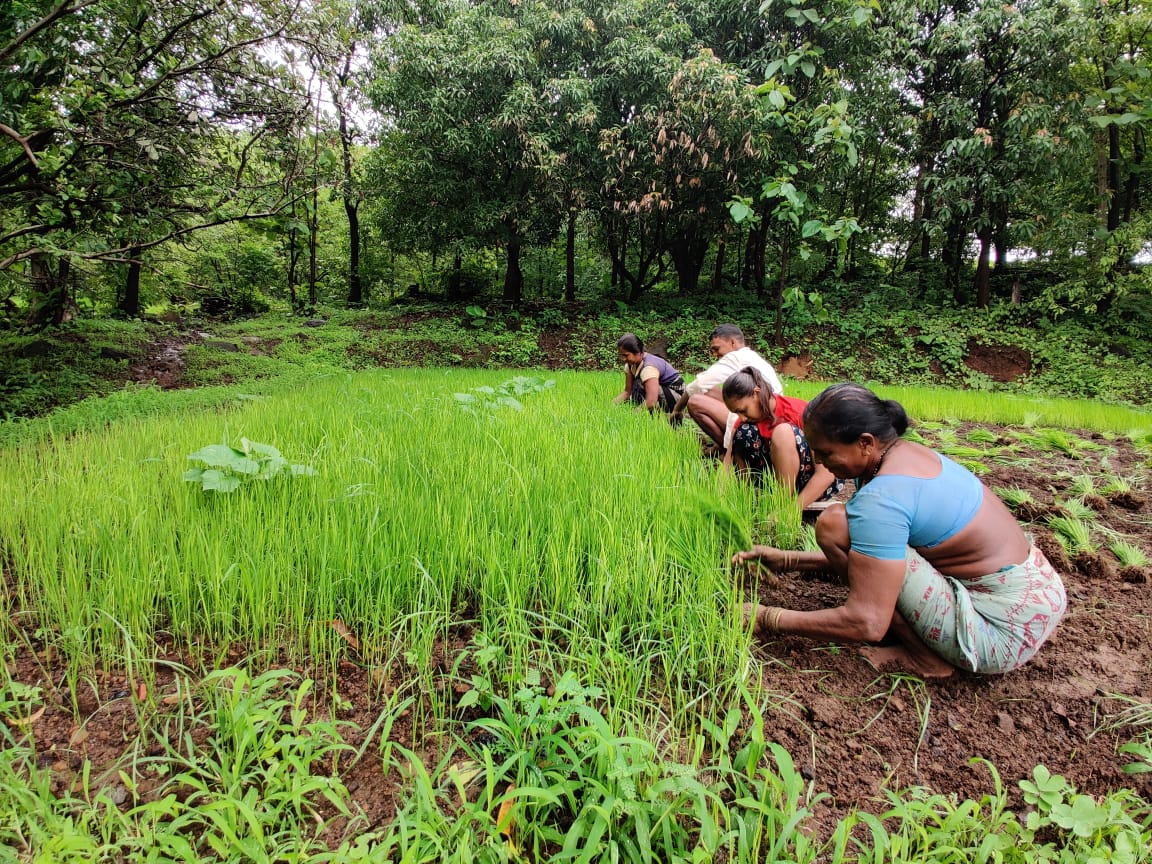
In the agricultural fields that formed the backbone of the community’s livelihood, women worked alongside men, tilling the land, planting crops, and harvesting produce. Their presence was not merely symbolic but essential, as they played a crucial role in ensuring the community’s food security and economic sustainability.
Moreover, women in Chambharshet held significant influence in decision-making processes, both within their families and the broader community. Their opinions were valued, and their voices were heard, challenging the notion that women in traditional societies are relegated to passive roles. If I speak specifically about my own project of rural tourism most of the decisions of planning and operations are taken by the women and men help them.


One of the most striking aspects of my time in Chambharshet was the role reversal that I observed within households. While traditional gender roles often dictate that women bear the burden of domestic responsibilities, here, it was not uncommon to see men taking on the role of caregivers, tending to the home and children while their wives pursued careers and passions outside the domestic sphere.
This inversion of traditional gender roles was not just a testament to the progressive mindset of the community but also a reflection of their deeply ingrained values of equality and mutual respect. Here, there were no rigid notions of what it meant to be a man or a woman; instead, individuals were free to define themselves on their own terms, unrestricted by societal expectations or gender norms.

As a social development professional, I entered Chambharshet armed with ideas about women’s empowerment and feminism, eager to impart my knowledge to the community. However, I quickly realized that the tribal communities were already practicing these principles in their daily lives, far removed from the theoretical frameworks I had encountered in college classrooms.
What struck me most was the naturalness with which these principles were embraced by the community. There was no need for workshops or awareness campaigns; equality was simply a way of life, ingrained in the cultural fabric and thought process of the community.
As I experienced their lifestyle deeper into the intricacies of tribal life, I came to understand that gender equality was not just about ensuring equal rights and opportunities for men and women but also about challenging the underlying power structures and societal norms that perpetuate inequality. I know in my village which is comparatively more mainstream than a tribal village if a woman becomes a sarpanch she never comes to the gram panchayat’s office. Opposite to that, I saw young women sarpanch coming to taluka place and putting their concerns in front of block officers. That was something we as development sector professionals want to see in society.
In many mainstream societies, women continue to face barriers to education, employment, and political participation, limiting their ability to fully participate in and contribute to society. However, in Chambharshet, women were actively involved in all aspects of community life, serving as leaders, decision-makers, and agents of change.
For example, women in Chambharshet held various positions of authority and leadership, including roles as Community Resource Persons (CRPs), Anganwadi workers, Asha workers, teachers, and representatives of NGOs. Meanwhile, their husbands took on the responsibility of managing the household and caring for the children, a role reversal that was both refreshing and enlightening.


This empowerment of women went beyond the mere allocation of roles and responsibilities; it was about recognizing and valuing their contributions in every aspect of life, whether at home, in the fields, or in the community at large.
In a world where discussions about women’s rights often center around what women should or should not wear, Chambharshet offered a refreshing perspective. Here, individuals were free to dress as they pleased, without fear of judgment or censure. It was a testament to the community’s progressive mindset and commitment to individual freedom and expression.
As I reflected on my time in Chambharshet, I realized that the lessons I had learned were not just about gender equality but about humanity as a whole. In the simplicity of tribal life, I found a profound lesson in humility and acceptance, learning to see beyond the confines of identity and appreciate the inherent dignity of every individual.
My experience in Chambharshet served as a humbling reminder that true progress lies not in grand gestures or lofty ideals but in the everyday actions of ordinary people. As we continue our journey towards a more equitable and just society, let us draw inspiration from the wisdom of tribal communities, who have long understood the transformative power of equality and mutual respect.
 iVolunteer Blog - everything about volunteering