Mountain of Jamsar Village, Jawhar
The very first thought that comes to our mind about mountains is- tall, rigid, gigantic natural structures with vegetation and wildlife. The beauty of nature remains incomplete if its fauna, and flora, vanish. My journey of the fellowship starts with understanding the concept of community first, then its needs, and finally the process through which such changes are achieved. The allocated location of my project area is Jawhar, in Palghar district. The place is well known for its waterfall, tourism, tribal art, and tradition-like warli art form with magnificent traditional folk dance based on the tribal music rhythm known as the ‘tarpa dance’.

Aarogya ki nazar se
On the topic of medical services, the place is having the challenge of timely medical treatment. The villages are far away and villagers need to wait for a long time or spend a lot of money to come to the Jawhar Cottage Hospital for child delivery, accident cases, etc. A pada (smaller hamlet within a village) does not have good internal roads along with a huge limitation of public transport. The same issue of accessibility is highlighted by the students coming to college here in Jawhar.
There are many unidentified, undiagnosed, and leftover cases of non-communicable diseases, and communicable diseases in the community.
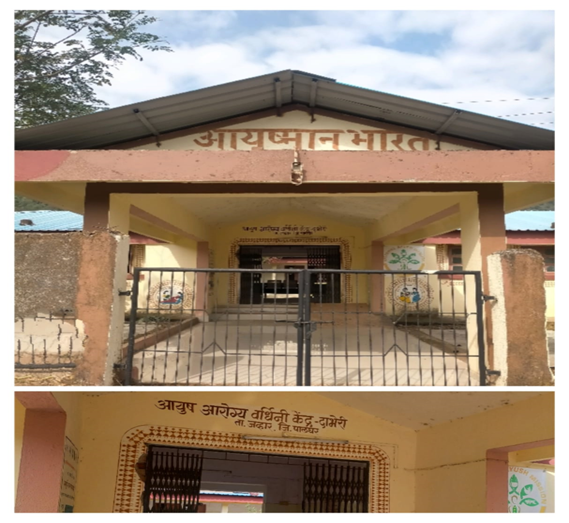
The reasons include- lack of awareness about diseases, lack of preventive measures, lack of staff at the primary level point of contact, and patient adherence to medication. Mobile medical camps are organized by a few NGOs but the frequency of regular follow-up rates is low or lacking. The benefits of such camps are getting OPD consultations, and free medicines to all at their village just a few distance away from their home. With such initiatives, skin and eye diseases have also been diagnosed and provided with free treatment.
Although the cases of severe acute malnutrition (SAM) have reduced here, the tribal community seems to be struggling with adequate daily nutrient-rich diet intake. Nutritional problems like- undernutrition cases are still present in the field nowadays. Some NGOs are working on this issue to build awareness in the community regarding the importance of eating healthy food, the concept of a balanced diet, and clean surroundings in and around the home.

The Aanganwadi centers have been working hard regularly to provide ICDS services for children up to 6 years for their holistic development. Later the child gets into the zilla parishad school for further education. Jawhar also has a residential school model for tribal students popularly known as Ashram Shala school. The school’s facilities are supported by the Maharashtra government. The school provides students with free education, lodging, food, and distributes free sanitary pads for menstrual health and hygiene to their adolescent girls. The other initiatives taken by the Prakalp Adhikari, Jawhar include supporting ITI students for their small business startups, scholarships to tribal students for pursuing higher education, and vocational courses for needy students to become independent.
Jawhar; ek Nazar
Jawhar (taluka) has a mixed population of tribal communities comprising Warli, Katkari, Konkana, K Thakur, M Thakur, and Bhilla that is spread over different gram panchayat. The Adivasi people here face many challenges every day of their lives, which are not only restricted to their day-to-day activity but also comprise migration, poor health, and financial struggle. Small businesses, like tea-samosa stalls, roadside vegetable stalls are not sufficient to earn well and raise their families. The livelihood of the community faces challenges from drinking water to agricultural water, and the nature of work from farming to daily wages.
Many times, houses in their padas (hamlets) look empty. This signals one thing- fewer job opportunities to raise their family. Those having agricultural lands are facing water issues, and are unable to invest in a second crop due to water scarcity. All this portrays the hidden faces of the lives of tribal people here in Jawahar.
Some NGOs work in the region to promote rural tourism, agricultural-farming support, mobile health camps, SHGs for livelihood support, promoting and teaching warli art, beautification and model Aanganwadi, breaking taboos for menstrual health and hygiene, promoting skill education, capacity building for teachers, and ASHAs. Etc.

Warli art form- The most important aspect of this style of painting is that it doesn’t depict mythological characters or images of deities, but social tribal life. It is inspired by the tribe’s coexistence with nature and forests. It is simple and liner. Pictures of human beings and animals along with scenes from daily life are created in a loose rhythmic patter with red and white colour.
The one thought that came to mind by looking at Jawhar’s mountain is; that these Pahar have been standing for many decades. They saw the tradition changing, forest cutting for construction work, and people migrating for jobs, but still, these giant physical structures remained strong, confident without selfishness, worries, and greed. Here the beauty of nature not only attracts tourism but also makes its environment pleasant for living. By looking closely at the tribal community their challenges, struggles, lifestyle, habits, rituals, languages, culture, etc., then you’ll find yourself motivated to make their life easy by bringing a small change from your support. That’s the reason which motivates me here every day, and I hope it continues to do so!
 iVolunteer Blog - everything about volunteering