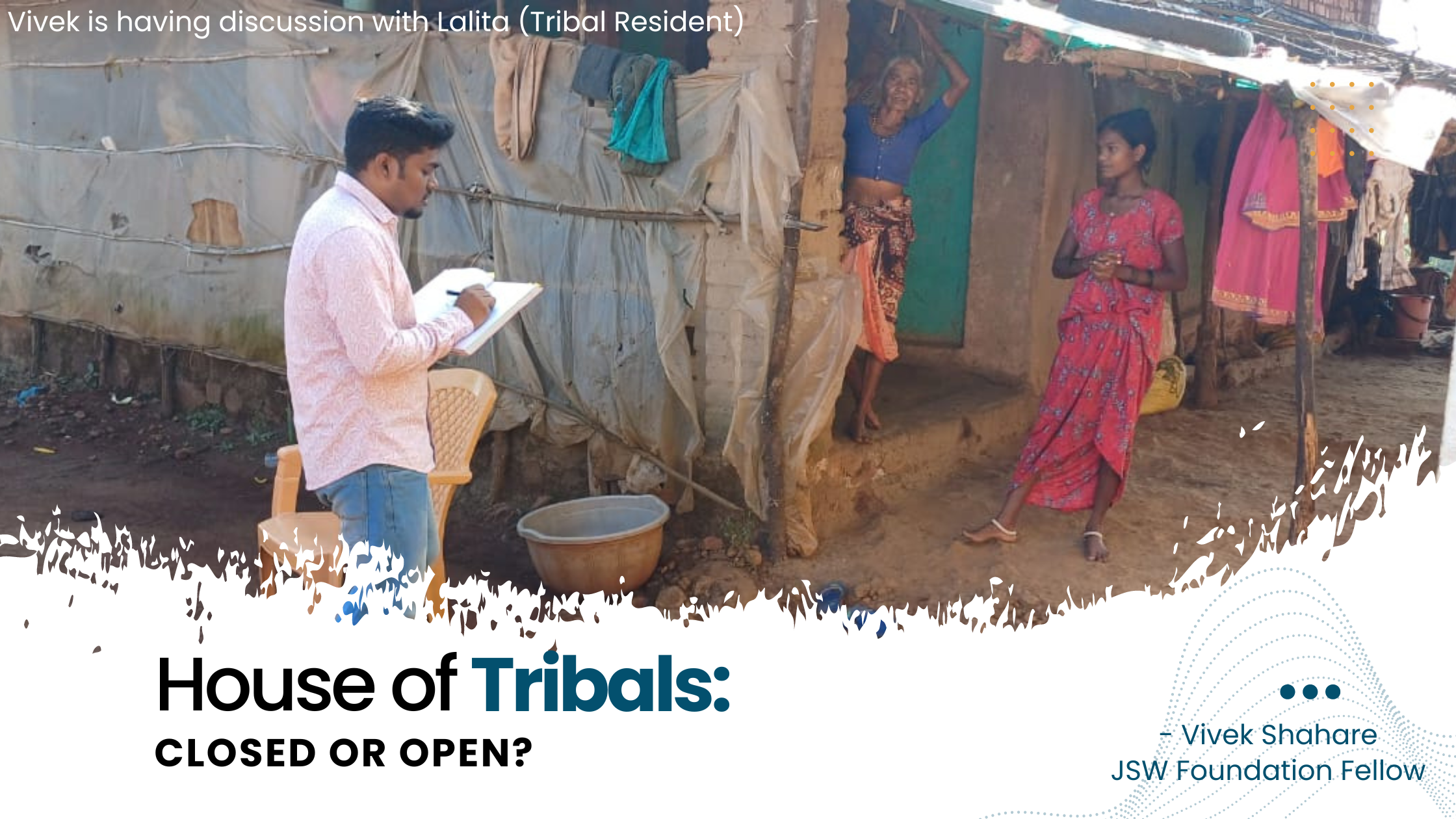
Mrs. Lalita Bhangre who is the villager from Gram Panchayat Khadkhad. She said, “Currently I am engaged in threshing of paddy cultivation. After some days, I am going to a different city to do labour work for sugarcane cutting with my family but my Mother-in-Law will stay here as she is very old and can’t contribute to farm labour! I don’t earn money from paddy cultivation because we use yield for ourselves only. I also don’t have enough land to cultivate paddy in larger quantities so I sell it to earn money. During summers my daughter got married and I took taken loan from a known labour contractor. And convince him to repay the loan by working for him after the Kharif season. Because I need to repay the loan taken from the Labour Contractor, I will work for six months and just earn minimal capital after repaying the Debt. My major source of livelihood is agriculture, but we don’t have water of irrigation to take rabi crops therefore for earnings we get to migrate.”
But this is not a single story. As per the report called “Tribal Livelihood Migration in India: Situational Analysis, Gap Assessment and Future Directions in 12 States of India”: Maharashtra has witnessed the largest in-migration and out-migration of the population during the last ten years. According to the 64th National Sample Survey 2007-08, About 14.22 percent of migration was found to be for employment reasons in 2007-08 which was 10.05 percent and 16.55 percent respectively during the 1991 and 2001 census in Maharashtra. Analysis of the National Sample Survey Organization’s (NSSO) 64th round also highlighted that in rural areas 99.4 percent of migrants were previously residing in the same state and 70.5 percent previously lived in the rural area of the same state. In urban areas, 68.3 percent of migrants previously lived in the same state and 33.9 percent had migrated from the urban area of the same state. According to the census 2011, 51.01 percent i.e. 573.3 lakh of the overall population of the state i.e. 1123.74 migrated to other states.
Similarly, Tribals from taluka Jawhar, District Palghar, Maharashtra; Migration is the annual practice for many families from Jawhar to other parts of Maharashtra or states, who leave their homes for 6 months a year, moving to work as farm labourers, hotel workers, etc. The migration of youths and families to sustain their livelihood is also one of the core issues due to the lack of irrigation facilities for agriculture for taking Rabi crops, lack of allied farm activities like animal husbandry, or because of not knowing about it. And there are fewer opportunities for non-farm activities due to a lack of skills, training, and exposure. The underprivileged conditions area hasn’t options for irrigation for agriculture duly unable to take cash crop, vegetable, or floriculture. Due to improper distribution of government schemes for water, farmers are unable to get water from natural water resources and the medium to get water like water pumps, machines, etc. are not affordable for farmers. However, the water level of Jawhar taluka gets low which leads to dried ponds and wells.
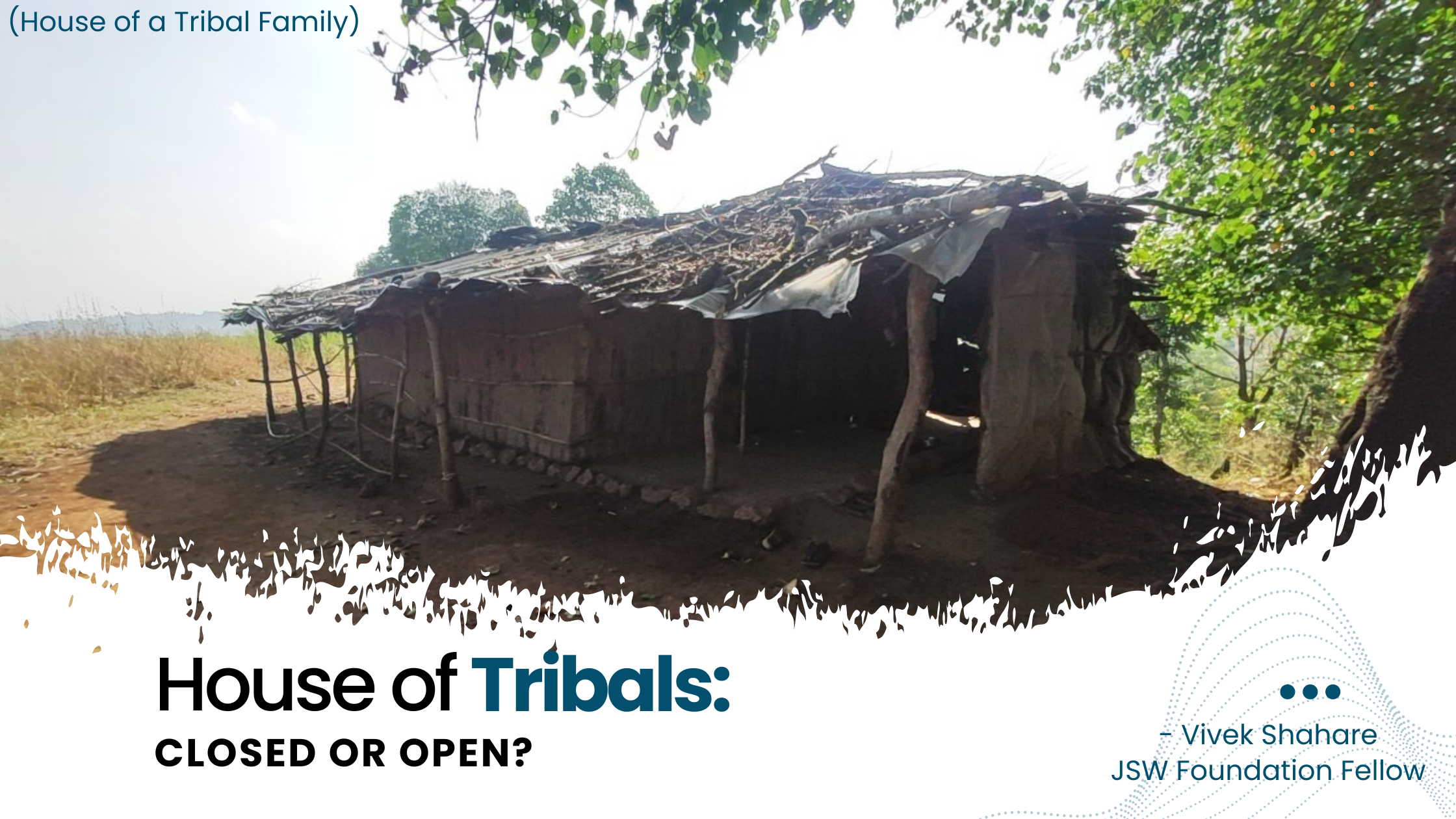
There are many villages from Taluka Jawhar, where many households are closed for six months with the remaining family members as they being old or young children because they are not able to do labour work. Sometimes, mothers take their children with them to the migrated location which affects the health and education of the children. After the labour work, families will come back to their villages to harvest kharif crops, and sometimes to celebrate festivals like Diwali, and Holi, and some tribal festivals like Bohada and for marriage functions. Due to a lack of support for agriculture irrigation and livelihood programs, employment opportunities, lack of MGNREGA Work opportunities, etc., migration is the only option for their livelihoods. Forests and Hamlets are the home of Tribals, they live a life of home got half a year.
Sometimes they are in their homes or sometimes they are homeless. Sometimes they are farmers or sometimes they are farm labourers. Sometimes they are Tribals or sometimes they are Migrants. Will all these problems be solved? Who is responsible for this? What should we do about this? Or the question will remain unresolved- House of Tribals: Closed or Open?

 iVolunteer Blog - everything about volunteering