
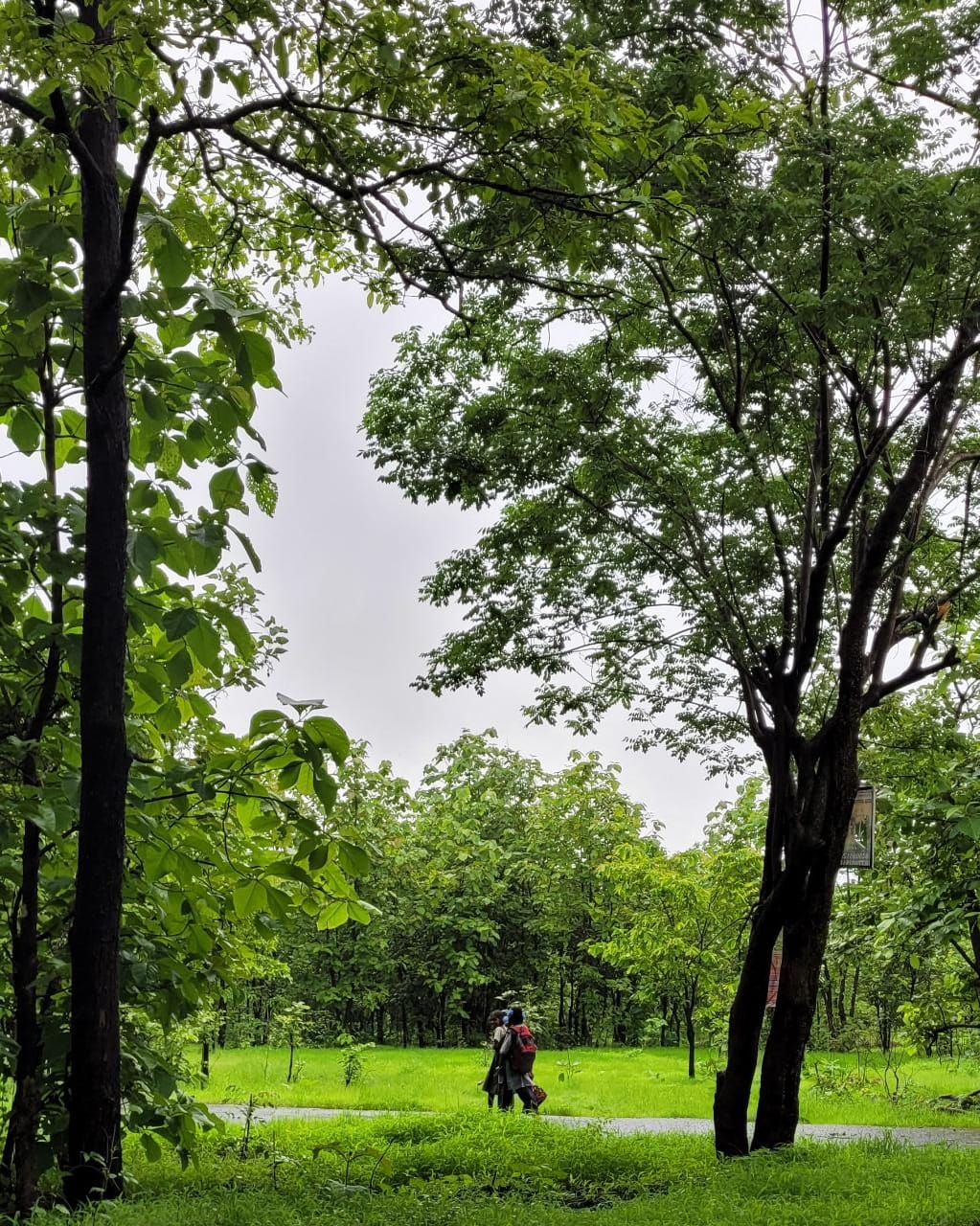
While working in the Pivali ashram school on menstrual health and hygiene of adolescent girls, I get to see different types of girls. Some of them are very confident, some are very shy and some are in between the spectrum .When you work on the taboo topic as menstruation it takes a long time for girls to open up and share . I have been alloted the last period of the day for my sessions in the school.
Though it is a residential school, many students from nearby villages don’t stay in the hostel, they attend the school and stay at their homes as this is the only school in the area which has classes till 12th standard and those who can not afford to go Vasind come here for their education after primary grades
Once I was returning from the Pivli Ashram school to Vasind on my bike after the session, making my way through the flocks of children going back home after passing 2, 3 kilometres on the empty lonely road, I saw 2 girls walking, from a far distance when I went near them they were fully drenched because of the heavy rain , upon asking they said they were returning to their homes. These girls were barely 13-14 years old walking almost 10 km per day just so that they could attend school. They said they will reach home around 6 in the evening. Their struggle doesn’t end here. After going home these girls have to cook for their families as their parents return late from the farms and again the next day have to leave their houses at 8.30 in the morning to be able to reach school by 10.
I have been working in this area for 10 months. There are some forms of public transportation that exist in the area , it is often unreliable and insufficient. Buses or other vehicles do not operate on a regular schedule, making it difficult for students to plan their journeys. The availability of the transport system here is in a very bad state. There is only one bus which comes from Wada to Vasind in the morning and the same bus goes back to Wada in the afternoon around 3pm . Both the times are not suitable for the students .
Maharashtra government has a scheme called Ahilyabai Holkar Free ST travel scheme for girls upto 12th standard but due to the timings and availability of buses and unaffordability and safety issues of private vehicles these girls have to walk this long just to be able to reach school .
Poverty is a prevalent issue in tribal areas, and many families struggle to afford even basic necessities, let alone the expenses associated with transportation to and from school. Girls have to contribute to household chores or work to support the family, which can further limit their access to education.
The long walks to school pose significant safety risks for young girls. These villages have wildlife threats . Girls have to travel through isolated paths, putting them at risk of harassment or assault. Consequently, their parents often worry about their daughters’ safety and are reluctant to send them to school.
I always complain about the backward mentality of parents for not letting their girls attain higher education but after talking to the girls, I realised that this problem comes from the concern of safety, concern of poverty in so many dimensions to one problem !
 iVolunteer Blog - everything about volunteering